Anatomy Lesson: Elspeth’s Extremity!

Dear students, before starting today’s lesson, I apologize for the poor quality of a few photos.  During the first several seasons, Starz allow screen shots but this was stopped a while back. If I cannot find a needed image online, I take a photo of my TV screen. The results are often iffy. 🙄

That said, on with the lesson!

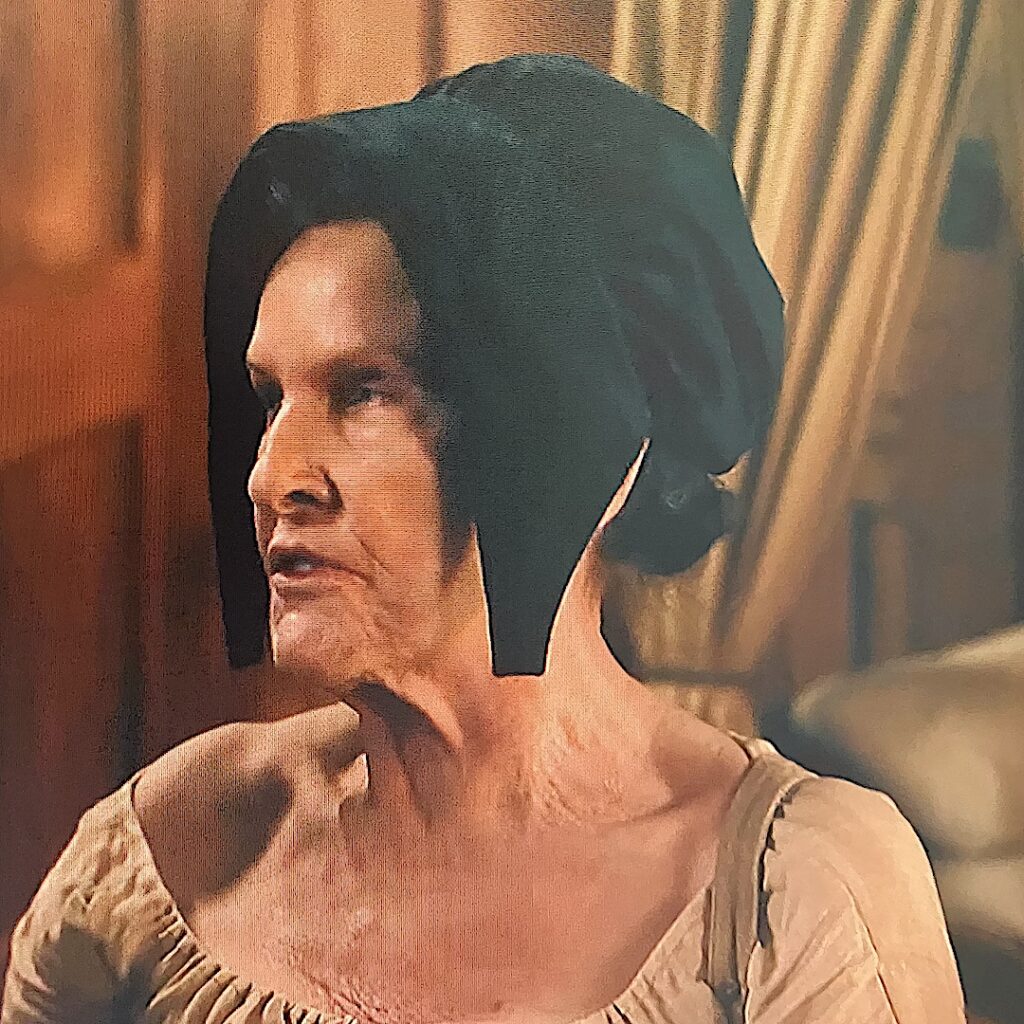
In Outlander episode 804, Muskets, Liberty and Sauerkraut, a strong wind announces an impending storm up so Claire closes a window and spies….
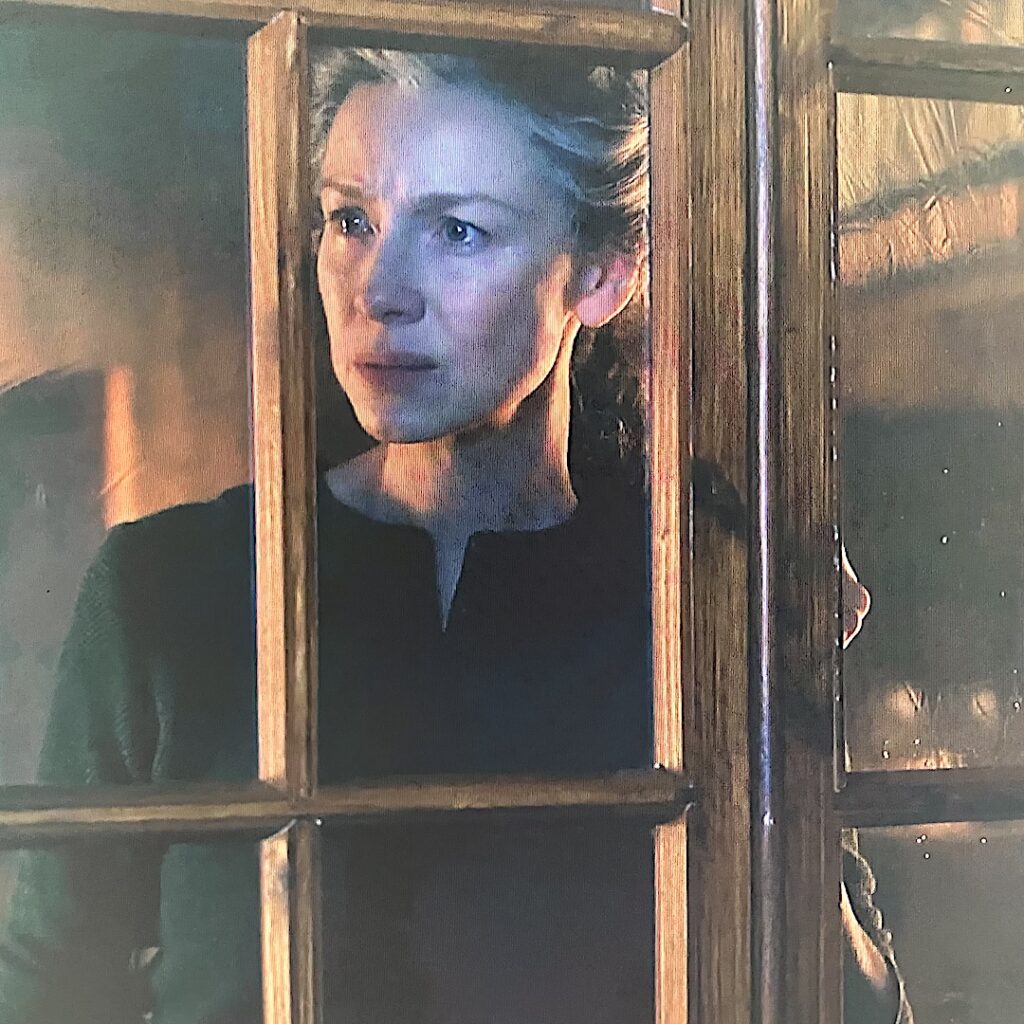
Guess who? None other than Elspeth Cunningham, aka, “wicked witch of the west” heading up the lane! 😜

Or, as Herself writes in “Go Tell the Bees that I am Gone” (Chapter 63, “The Third Floor”):

“As I leaned out with the shutter hook in my hand, though, I saw a tall black figure hastening toward the house, skirts and cloak flying in the wind.

“You and your little dog, too,” I murmured, and risked a glance at the forest, in case of flying monkeys.” 🐒
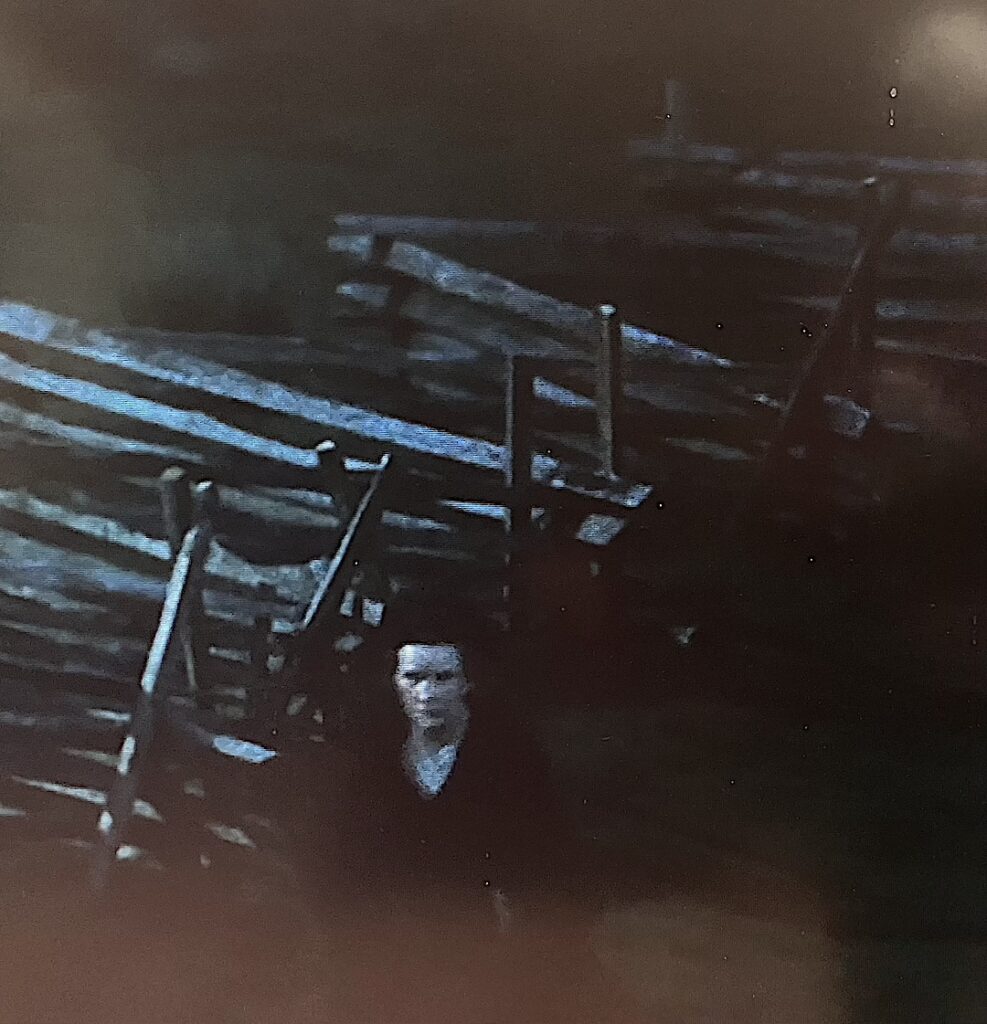
Mrs. Cunningham bursts through the door and lurches into Claire’s arms’ “I need your help.”
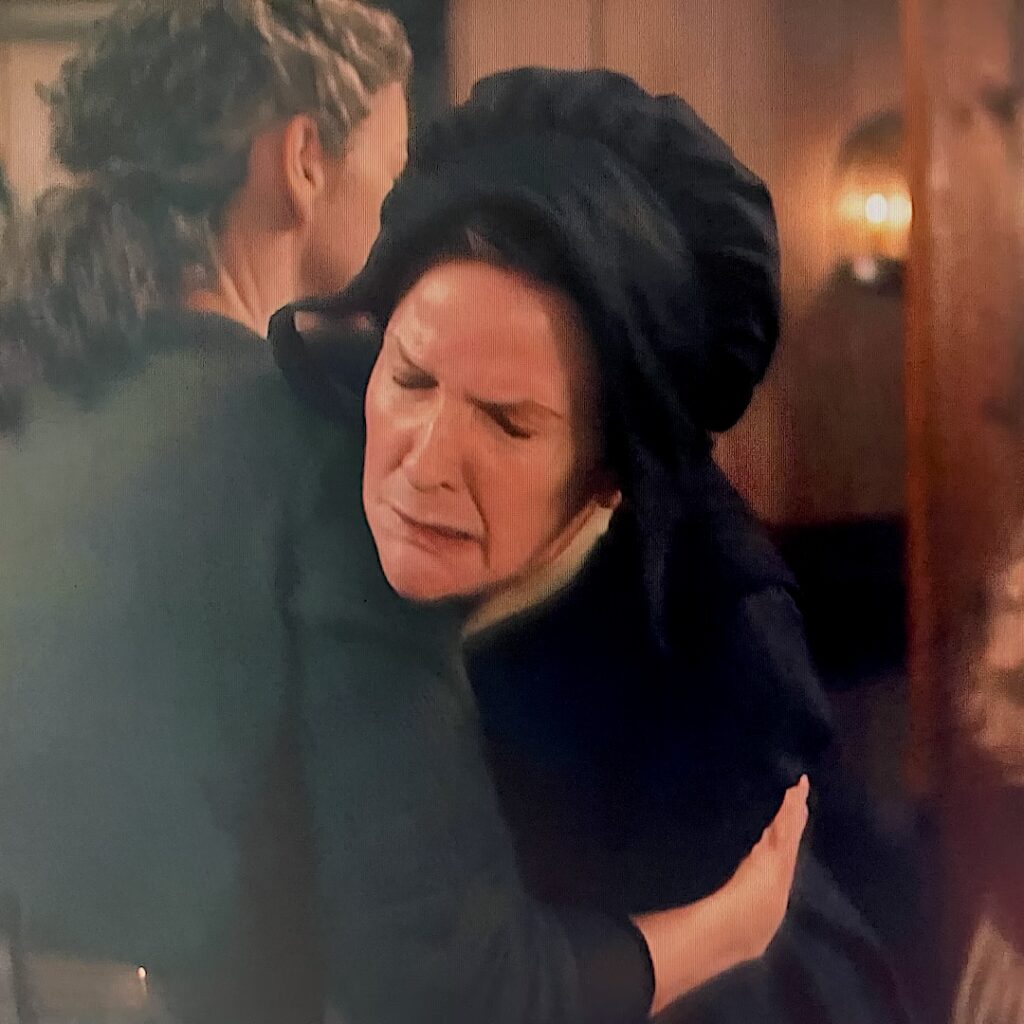
Yep! Elspeth does need Claire’s help! She fell against a settle and hurt her arm. (Pssst… A settle, if you don’t know, is a hardwood bench with arms and a high back) 😉

Wow! Claire knows what is wrong and claims she can fix it even before she examines the shoulder! 😳

This is pretty darn amazing, btw,  because most physicians examine the injury first before stating they can fix whatever ails the patient. But, as Jamie says, “Claire, ye are a brilliant healer!”
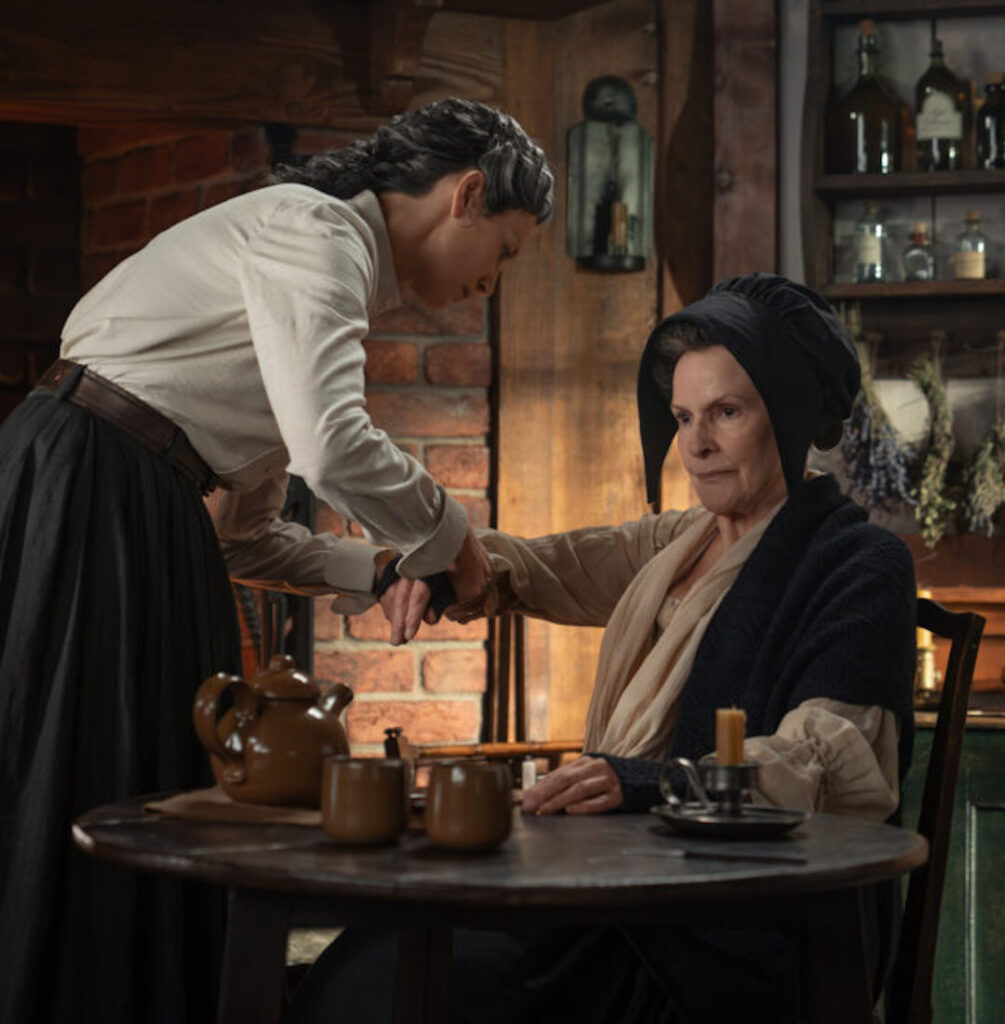
Claire expose Elspeth’s injured right shoulder.

The nicely rounded contour of a normal shoulder is not what we see. Instead, Elspeth’s entire shoulder is angular and bony.

Claire tells Frances to give her some whisky and  to “hold her,”
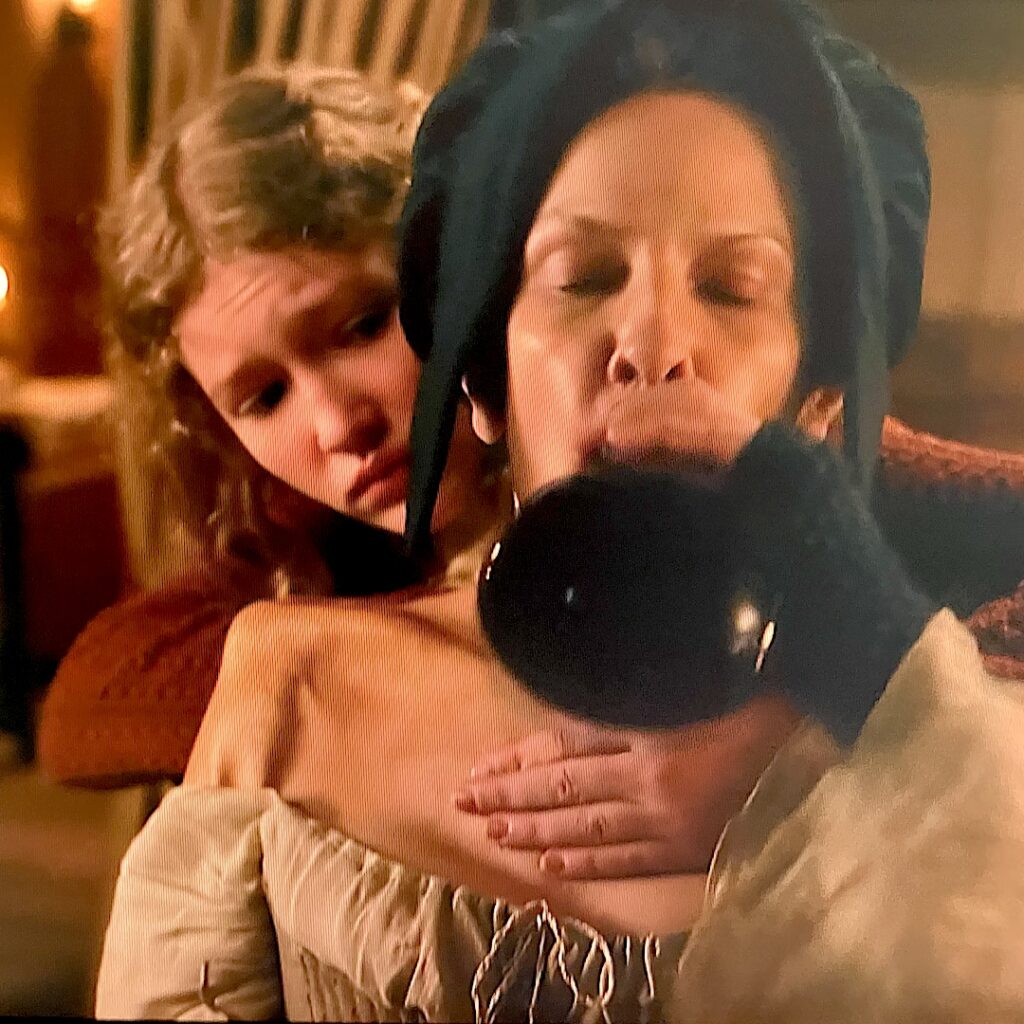
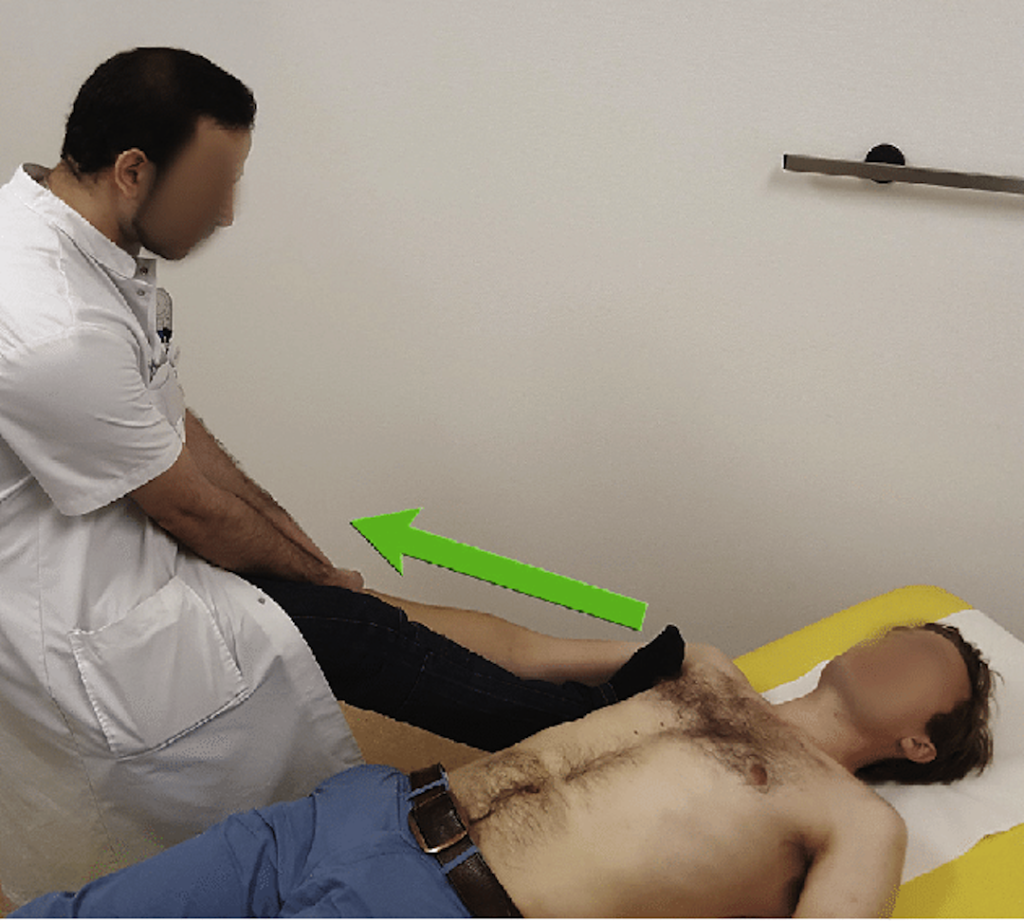
Claire warns Elspeth, it is gonna hurt. She grips the elbow and wrist and  performs a quick maneuver. (Psst… more about this below)
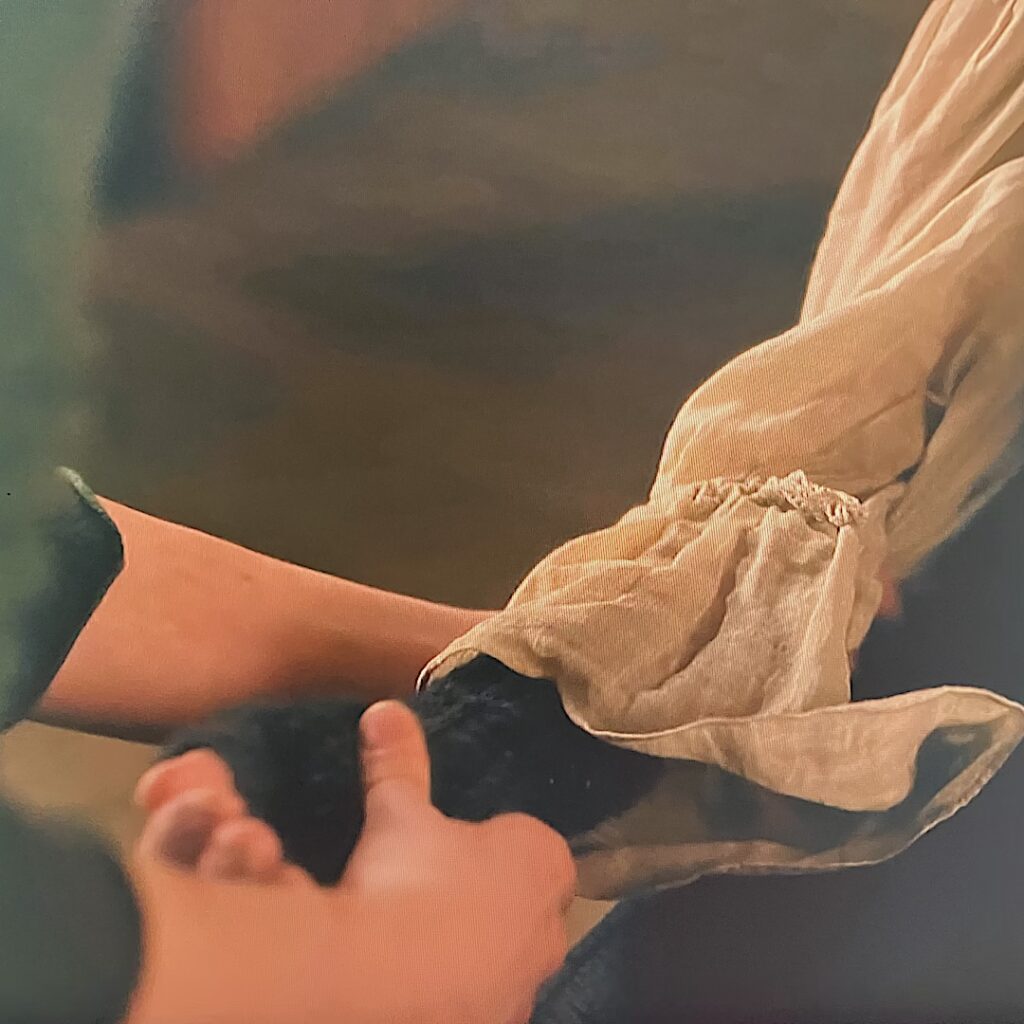
… and , voila! The shoulder pops back into joint.
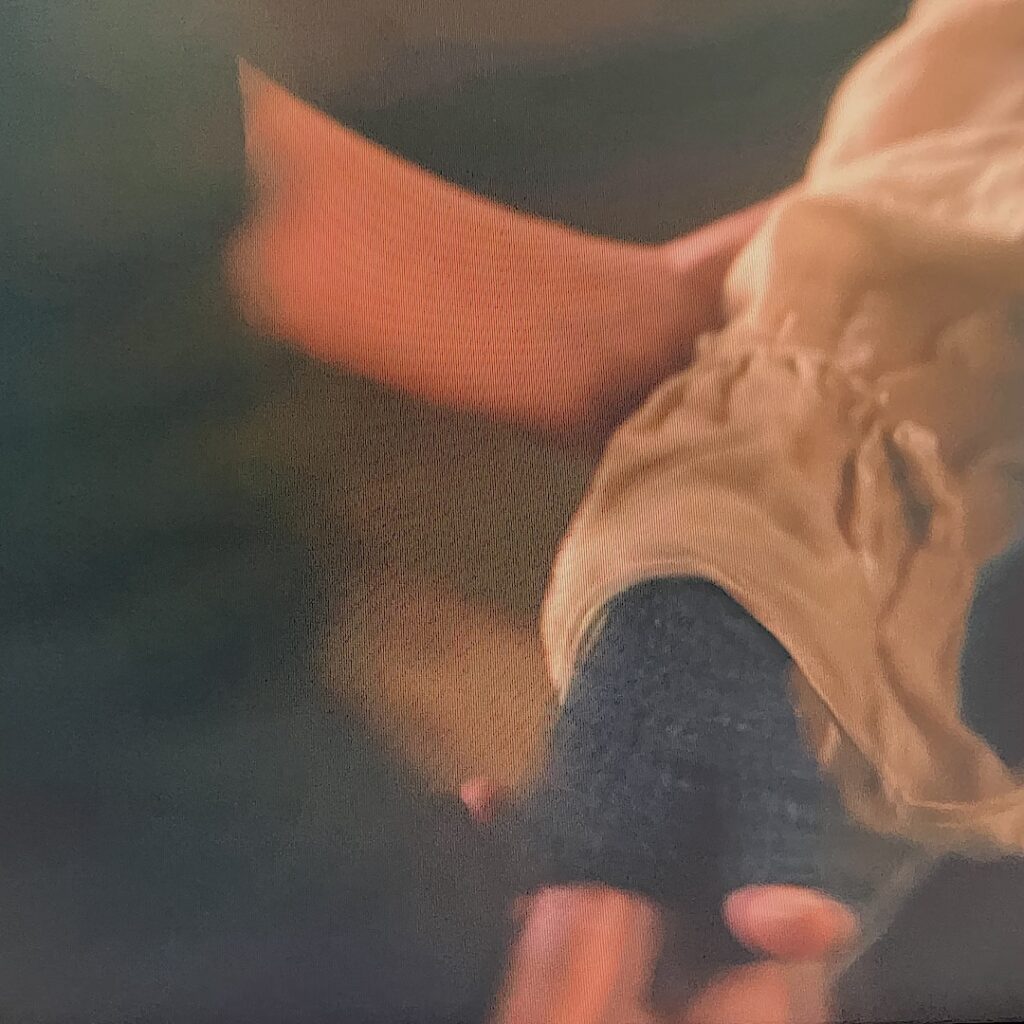
“Grass-combing son of a buggering sod!” Elspeth exclaims!
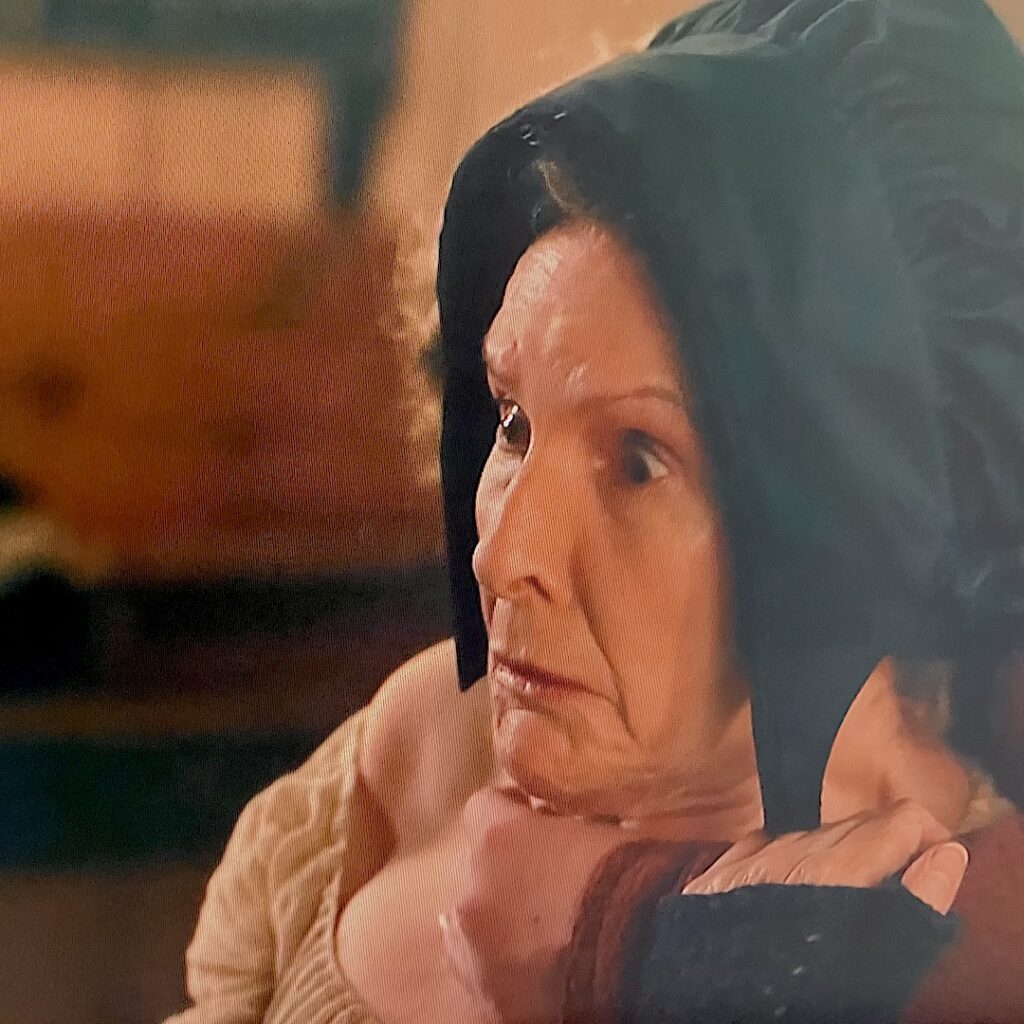
Here, an excerpt from “Bees,” Chap. 63, “The Third Floor:”

“It’s been a long time since I heard language like that,” Fanny said, her lips twitching.

If you have to do with sailors, young woman, you acquire both their virtues and their vices.” Elspeth’s face was still white and shone like polished bone under a layer of sweat, but her voice was steady and her breath was coming back. “And where, might I ask, did you her language like that?”

Fanny glanced at me, but I nodded and she said simply, I loved in a brothel for some time, ma’am.”

“Indeed.” Mrs. Cunningham drew her wrist out of my grasp and sat up, rather shaky, but bracing herself with her good hand on the table. “I suppose whores must also have both virtues and vices, then.”

“I don’t know about the virtues,” Fanny said dubiously. “Unless you count being able to milk a man in two minutes by the clock.”

I had taken a nip of the whisky myself, and choked on it.

“I think that would be classed as a skill rather than a virtue.” Mrs. Cunningham told Fanny. “Though a valuable one, I daresay.”

Mrs. Cunningham’s has a rather handsome shoulder, now. The rounded contour of the shoulder and function of her extremity is fully restored. Of course, it is going to be sore for a wee bit.

Note: I must say, the FX or prosthesis of the dislocation wasn’t too bad. My major criticism is the clavicle is too straight and long. It is a curved bone that stops short of the shoulder point as is evident in the next image (black star) post reduction. 
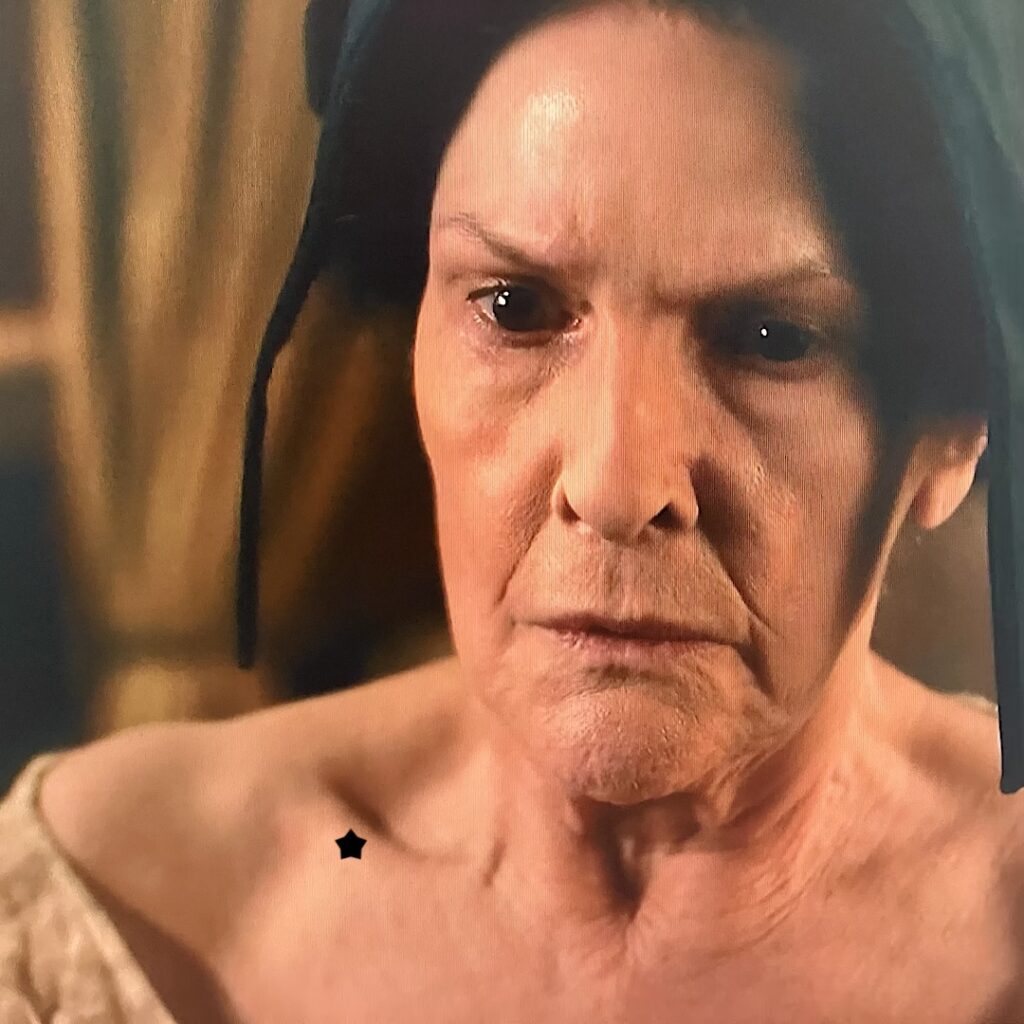
Now for the anatomy lesson. Yay! 🤓

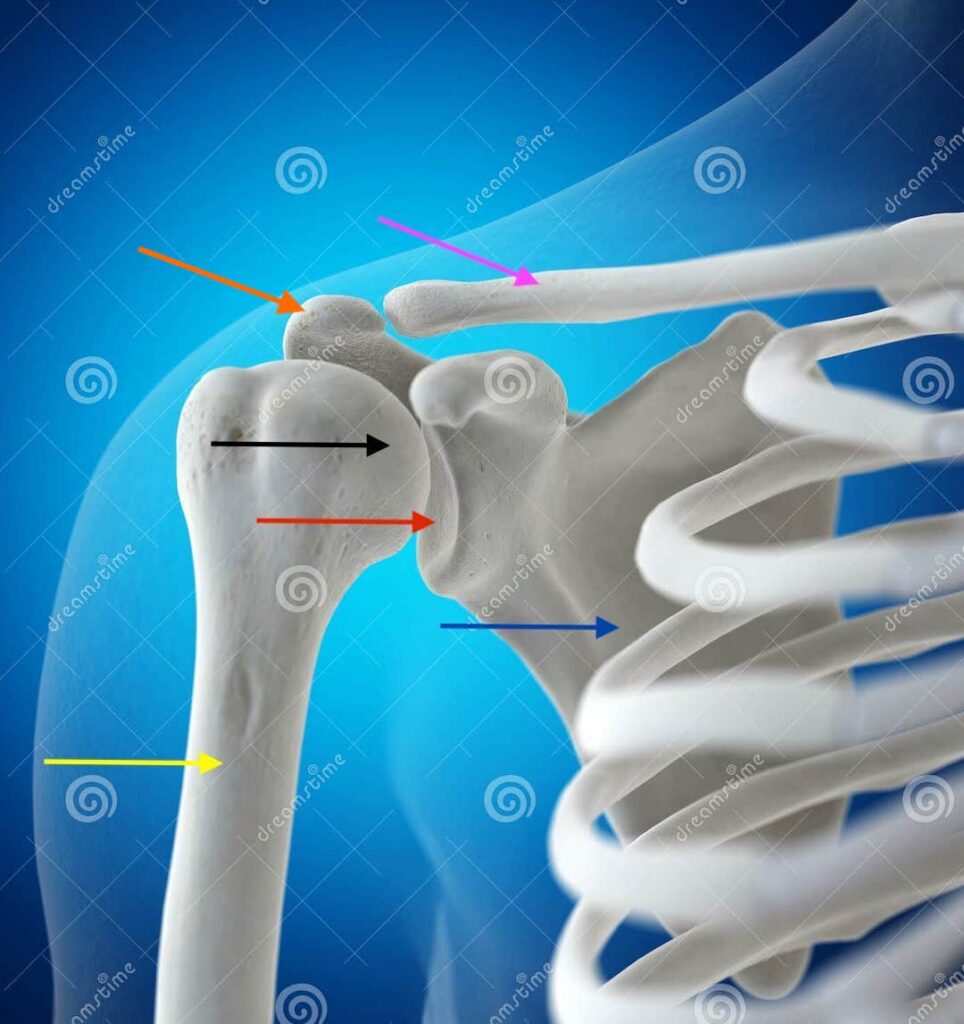
To understand what happened to Elspeth’s extremity and what Claire did to restore its normal anatomy and function, let us first examine the bones of the shoulder joint (next image).

Using arrows:

    • Pink: right clavicle (collar bone)
    • Blue: right scapula (shoulder blade)
    • Yellow: right humerus (upper arm bone)
    • Black: head of humerus
    • Red: glenoid cavity (socket for head of humerus)
    • Orange: acromion (bony tip of scapula = point of shoulder)

Normally, strong ligaments, a joint capsule, and muscle tendons snug the humeral head into the glenoid cavity. The proper anatomical name for this is the glenohumeral joint

Note: The glenoid cavity is shallow which allows greater mobility of the humeral head. Think of swinging your arm in a circle as in slow pitch. Unfortunately, this splendid anatomy sacrifices stability in favor of mobility.

An accident can force the humeral head out of the glenoid cavity resulting in a dislocated shoulder joint. Once this happens, it can happen again more easily because ligaments are stretched. 
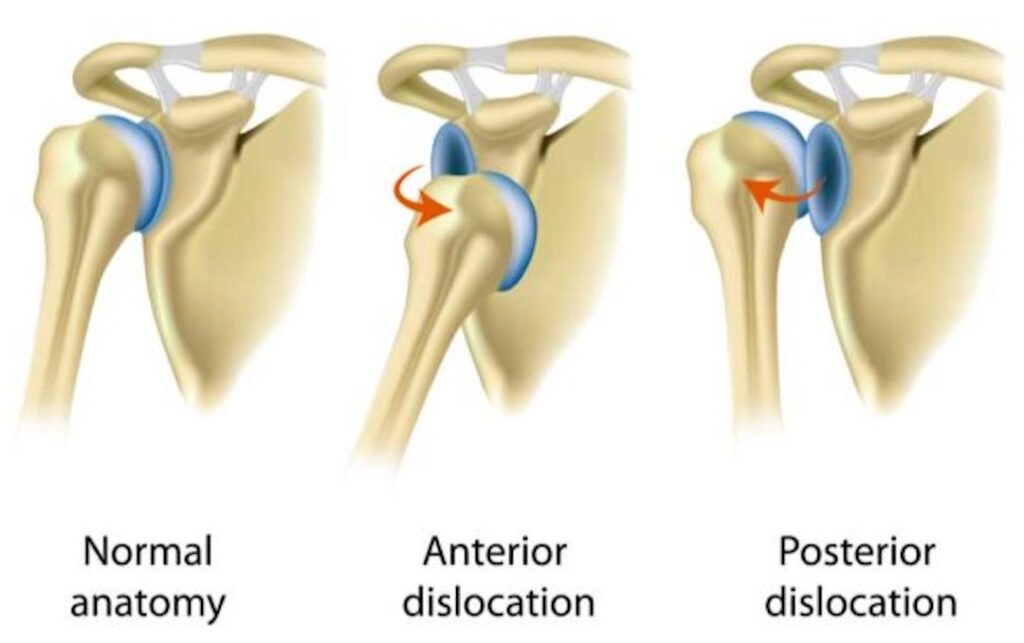
There are three types of shoulder dislocation. The next image shows two of the types plus a normal joint:

    • Left: normal shoulder joint
    • Middle: anterior dislocation (humeral head moves forward out of glenoid cavity)
    • Right: posterior dislocation (humeral head moves backward out of glenoid cavity)

A third type is an inferior dislocation wherein the humeral head moves downward out of the glenoid cavity. This type is uncommon and is not shown in the diagram.

An anterior dislocation is most common and is the type suffered by Elspeth.
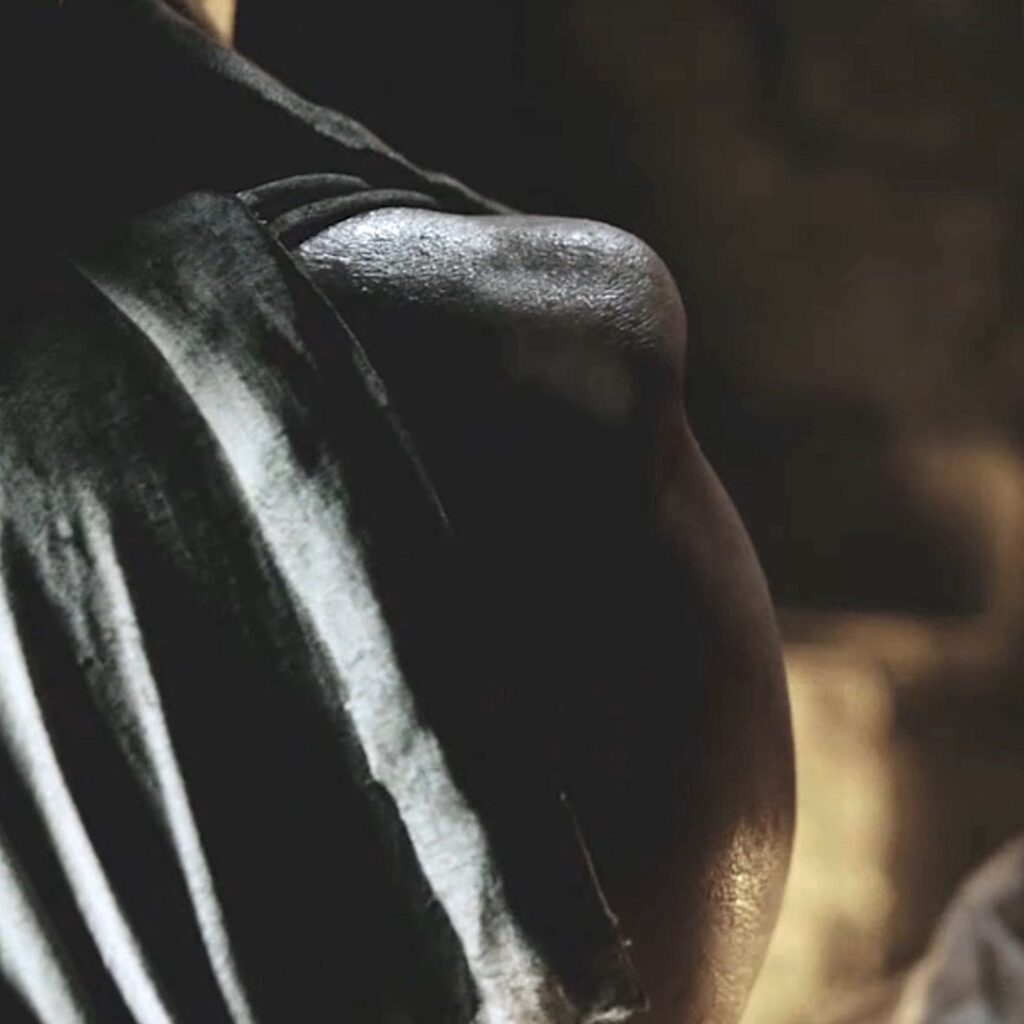
And…. let us nay forget! Jamie also suffered an anterior shoulder dislocation in Outlander episode 101! 

Here, from Chapter 3, “The Man in the Wood.” of Outlander book:

I gasped, as did several of the men. The shoulder had been wounded; there was a deep ragged furrow across the top, and blood was running freely down the young man’s breast. But more shocking was the shoulder joint itself. A dreadful hump rose on that side, and the arm hung at an impossible angle.

In fact, I wrote a lesson about his injury waaay back in 2014 – Anatomy Lesson #2: Jamie and Claire Meet at a Joint”!
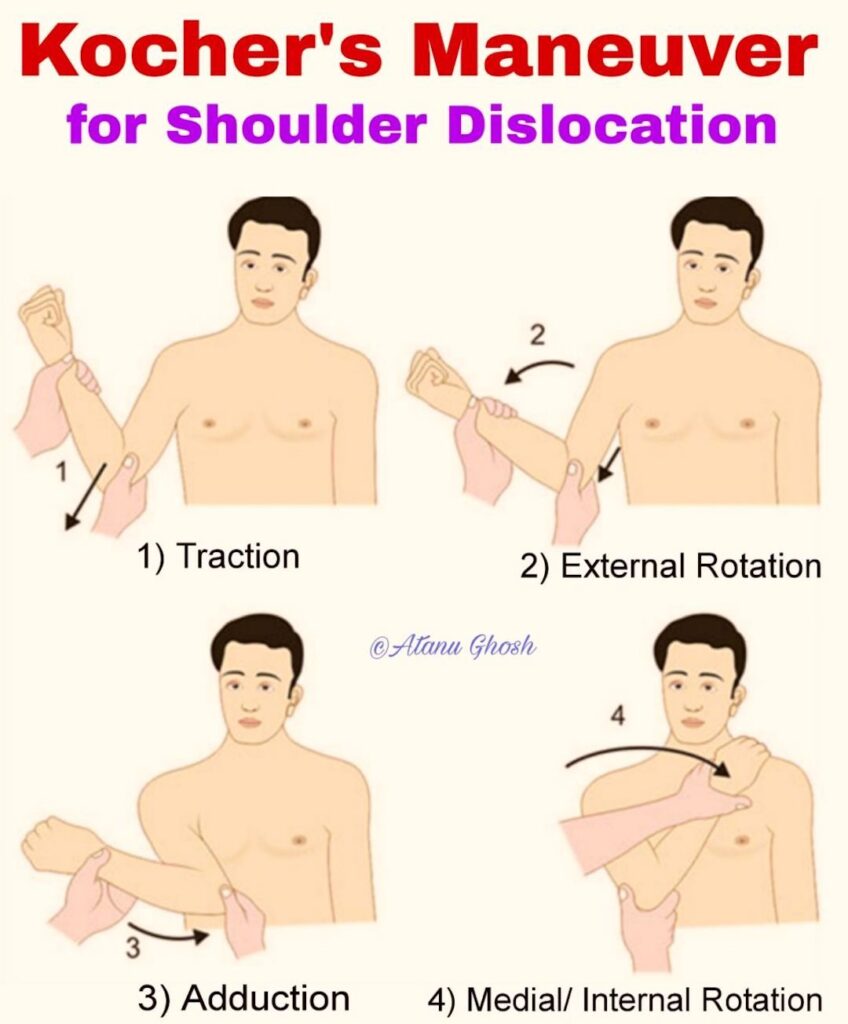
Claire reduces both Elspeth’s and Jamie’s anterior dislocations using  Kocher’s reduction method. (Reduction means to return the dislocated extremity to its normal anatomy. )

Kocher’s method is typically broken down into the following steps (next image). But, first, the practitioner bends the elbow (flexion) gripping it with one hand and holding the wrist with the other hand. Then:

    • Traction: The elbow is gently pulled toward the practitioner
    • External Rotation: Hand and forearm are turned away from the torso (often slowly)
    • Adduction: Elbow is moved against the torso
    • Internal Rotation: Hand and forearm are turned across the chest

Swiss physician and Nobel Prize winner, Dr. Emil Theodor Kocher developed this technique in about 1890 and to this day, it remains the most widely used technique for anterior shoulder joint reduction.

(Pssst….You can see short videos of the Kocher method on a patient by searching You tube) 👀 
The great physician, Hippocrates, also had a method for shoulder reduction which consisted of the practitioner placing his heel in the armpit of the patient and pulling on the affected extremity as shown in the next image! 😵‍💫

Many years ago, my family enjoyed a vacation featuring water slides. My husband took a slide before me. As I slid into the pool at the bottom, he climbed out of the water with his right arm dangling. He limped to an upright pole, lifted up the injured arm with his good hand, grasped the pole and leaned back. This maneuver immediately popped the dislocated humeral head back into place!

What happened? His arm hit the slide on the way down and he suffered an anterior dislocation. The dislocation reduced rather easily because he acted quickly before swelling set in. Once the joint tissues swell, reduction is more difficult and painful. (Psst….This was actually a variation of the Hippocrates method – hubby is a physician) 😷

So, in summary, Elspeth’s dislocation was resolved successfully by our brilliant healer but it did little to curb her sour disposition! 😜
I hope you enjoyed reading about Elspeth extremity.

Moral to the story…. be wary of wayward settles!

Until next time…

The deeply grateful,

Outlander Anatomist

Follow me on:

Photo credits:  Outlander Anatomy; Starz; Sony; www.as2.Ftcdn.net; ww.researchgate.net; www.thumbs.dreamstime.com
2024 SiWC Diana Workshop “Focus”

Greetings Outlander fans!

This is my final post about Surrey International Writers’ Conference (SiWC) held in Surrey, British Columbia on Oct. 25-27, 2024.

I had a fabulous time. Got to hear Diana perform in two workshops, one panel and Michael Slade’s Shock Theater. Great fun!

This last post is a review of Diana’s workshop entitled “Focus.”

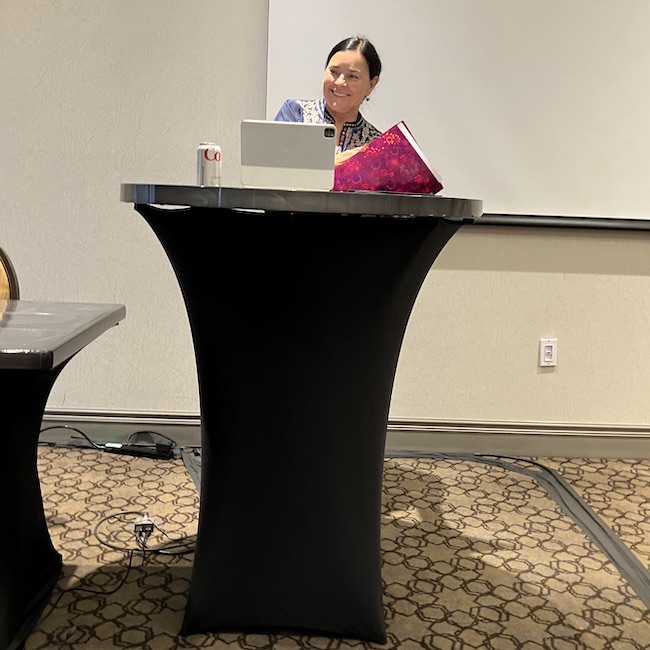
The room was filled to capacity even though it was the last day of the conference and some people had already left.  This is an obvious testament to the respect she commands in the field of writing.

She arrived wearing a beautifully embroidered top and a lovely smile for all!

Diana began her workshop by explaining that she writes slowly because she considers every word she adds to her story.

She thinks book 10 will be her last Outlander book so she is putting a lot of thought into tying up loose ends both for her characters and various unresolved situations.

She also is working on a new Lord John book titled, ‘Black Chambers!”

She also wrote two scripts for the new Starz series, Blood of my Blood (BomB).

Of course, she also does numerous events, has a family and two grandsons which require a bit of her “focus,” too. This all helps account for her “slow” writing. 😉

Moving to the meat of her presentation, Diana learned early on how to get people to pay attention to what she wants them to pay attention to  – this is the very definition of FOCUS! 🤗

Next, she explained how using the five points of journalism helps a writer focus a reader’s attention by using:

    • Who
    • What
    • When
    • Where
    • Why

As an example of focus, she read a new scene she has been working on. Will this excerpt appear in book 10, in the new Lord John book, or in another book? She does not say! 🤐

Minnie, wife of Hal and sister-in-law of Lord John, is the main character in this scene. She stands on the deck of a ship. She has a letter in her pocket from her second son, Adam.

Diana informs the attendees that that Minnie is a character in “Fugitive Green,” originally a short story from “Seven Stones to Rise and Fall.”  (Psst…..”Fugitive Green” is also now a stand alone novella!)🤭

She starts by telling the reader who Minnie is: She is a woman that likes uncertainty! She has a conversation with Irishman, Raph (Raphael) O’Higgens, a character from “A Fugitive Green.”  Then a whale arrives and the conversation focuses on the whale.

By the end of the scene, Diana has addressed all five of the journalistic points she discussed earlier!

She then explains several ways a writer can redirect a reader’s focus:

    • Change the subject
    • Create a loud noise
    • Distraction by something outside the convo
    • Add motion
    • Add alliteration
    • Use shiny objects 😄

She then elaborates on why motion is so effective at changing focus. Humans are highly responsive to movement because we evolved as both predator and prey. Motion attracted our attention because it was a matter of life and death. 😮

She explains that a writer must also write. As an example, various Outlander cast members have asked for advice on how to write a book.  She always recommends that they write for ten minutes every day for a week.  By the end of the week they will know if they want to write a book! 📖

She also noted that Sam Heughan is the only cast member who did write a book – all the rest fell by the wayside when faced with her challenge. 🤗

Someone asked her how much research she did to write about the whale. She modestly answered that, well, she does have a Master’s Degree in marine biology so she knows something about whales. Big laughter! 😄  

She also read the whale chapter from “Moby Dick” which she found highly useful.

She noted that she made a big deal of the whale in this scene because a whale features later in whatever book this scene is destined to appear. 🐳

She was asked about writing historical figures. Her rule is she tries not to make a historical figure do anything worse in her stories than the worst thing she knows about them!  🤩

She pointed out that if you present the reader with a question, they want an answer, so don’t take too long to address it. (I will reiterate what I wrote in an earlier SiWC post….. Diana has made her readers sometimes wait 10 years and two books for answers! 😜)

She reiterated the three types of characters she writes. Most fans know these already:

    • Mushrooms – characters that pop up, like Fergus
    • Onions – complex characters with many layers, like Claire and Jamie
    • Hard nuts – difficult to develop characters, like Bree

She also uses the rule of three…. For example, she always uses at least three senses to help the reader to focus and get into the character and what he/she is experiencing.

She believes she has a beneficial form of ADHD which has a huge impact on her writing and explains why she does not write in a straight line or follow an outline. Later, I asker her at lunch if she had been formally diagnosed and she has not but has read enough about the topic to deduct that it applies to her.

Diana ended her session by rereading a scene between Jamie and William. She has asked me not to share its contents. It is a very tender scene, I will say that.

The following is a recording of all of her workshop except that scene between William and Jamie – it was omitted. I hope you enjoy it.

Oh! There are 2-3 places where the recording is interrupted by extraneous noise. I think this was me shifting in my chair. I apologize. 🙄

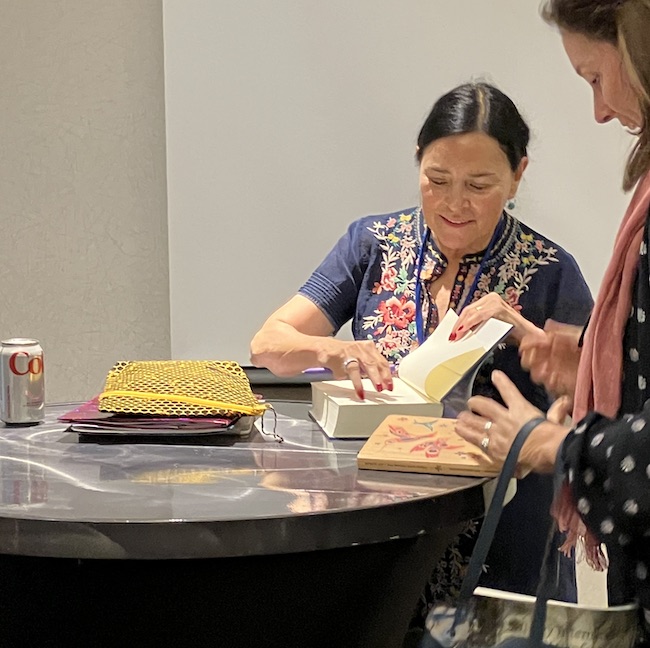
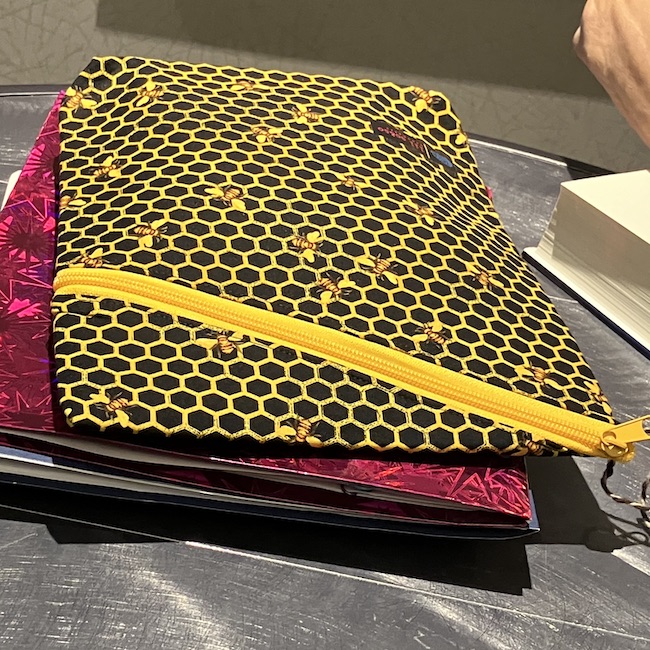
After the presentation, I gifted her with a bee-themed book bag. Inside is a small encaustic painting by my oldest daughter. Book readers will recall that book nine, “Go Tell the Bees that I am Gone,” has an entire chapter about encaustic painting. 

All-in-all, Diana’s presentation was entertaining and enlightening. She always delivers useful information to the attendees and she does it with style and grace! 🤩

The deeply grateful,

Outlander Anatomist

Follow me on:

Video and Photo credits: Outlander Anatomy

A Highland Tea with Diana Gabaldon!

Greetings, dear readers!

Five months have flown by since my last post, Anatomy of an Easter Egg Hunt! 😱

Dealing with summer crops, wildfire evacuation, and COVID have presented been BIG challenges. But, I am back today to share with you a most delightful experience.

On October 3, I was privileged to join author, Diana Gabaldon, and the Northern Arizona Celtic Heritage Society (NACHS) for a virtual highland tea!

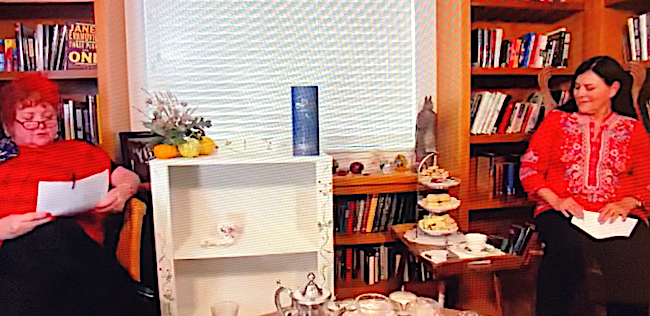
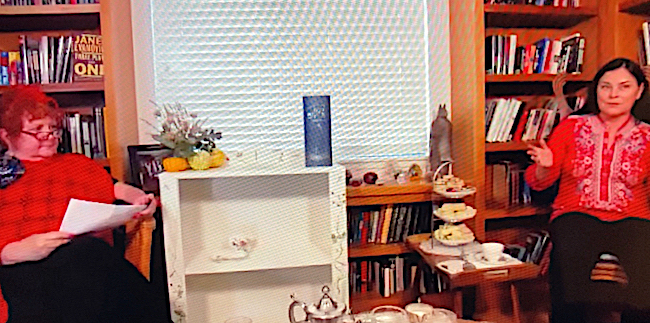
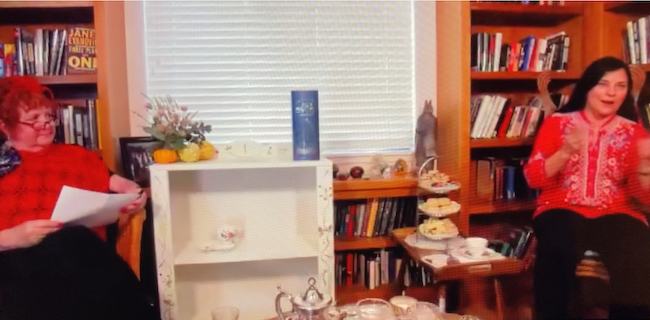
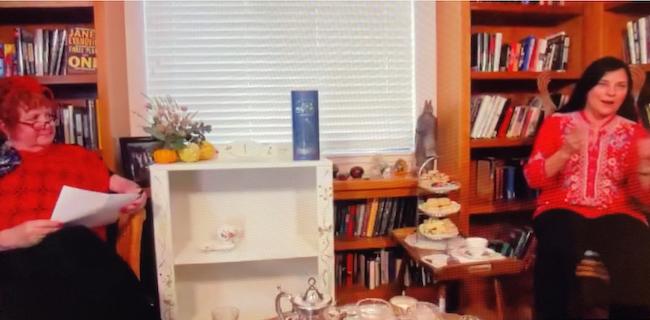
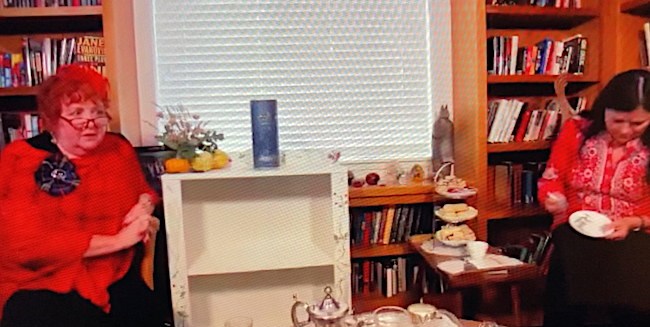
Note: The below photos and video were filmed from my iPad screen. Thus, the quality is not the highest. Bear with me, please, because near the end of this blog, I share a link to NACHS full video of this wonderful event!

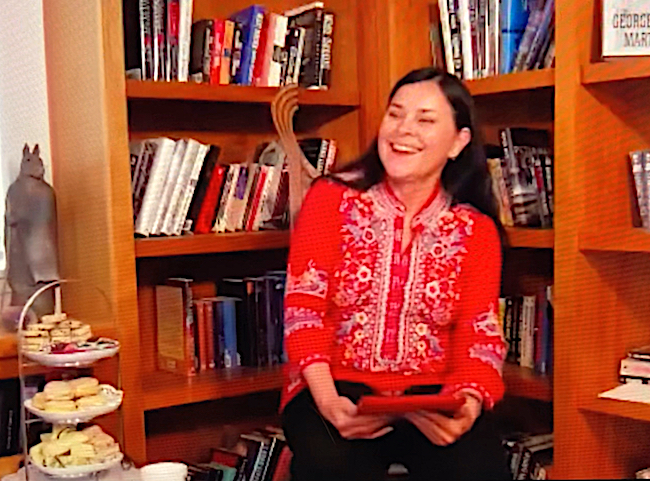
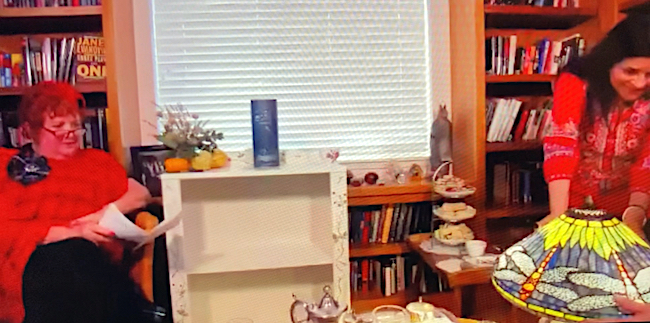
We gathered via Zoom in the library at Diana’s home in Flagstaff, AZ.  The first thing I noticed were book-filled shelves, a must for any library! 😉 Many of these tomes feature her favorite genre – mystery and murder mystery!

Diana was introduced by NACHS’ Mistress-of-Ceremony, Jude McKenzie, who did a splendid job moving things along. Jude explained this is an annual event so every year on this day, they are known as NACHOS: Northern Arizona Celtic Heritage Outlander Society! 😆

Diana has been supporting the NACHOS effort for 20 years! In case you may not know, Diana has supported many good causes over many years.

The Highland Tea is a ticketed event. Jude explained that funds go toward supporting all things Celt-ish! Among its various worthy causes, NACHS supports the Jim Thompson School of Piping and Drumming. To date, they have awarded over $120,000 in scholarships and will consider any proposal promoting Celtic heritage. A record to be proud of!

Diana sipped a blended tea, courtesy of a local Flagstaff specialty shop, Victorian Moon. The tea was served from a beautiful silver tea set which is partly visible in the foreground. Yummy-looking tea treats were made by volunteers.

As you all know, Diana is famous for “talking with her hands,” and this event was no exception. She used them throughout. I enjoy watching her expressive hands “chat” with us. 😜

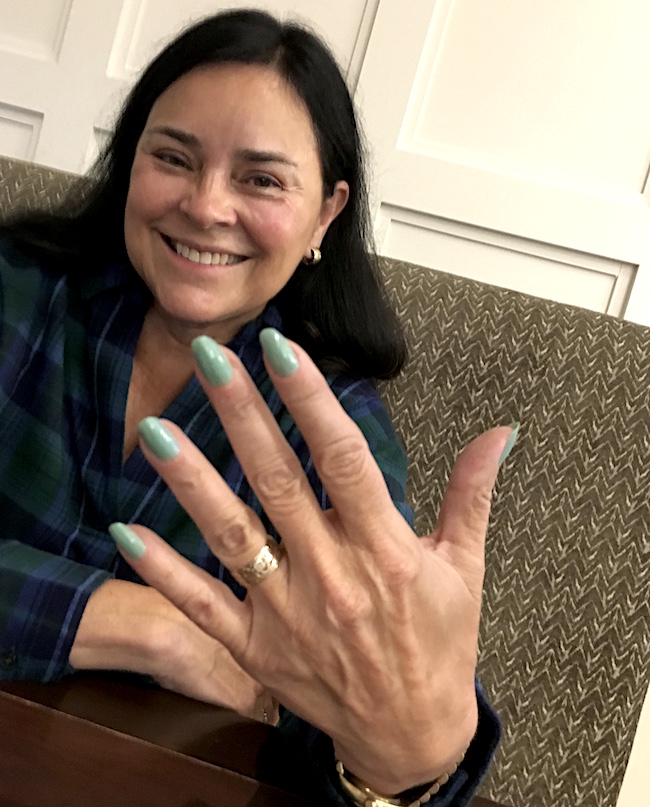
I always check out Diana’s nail color. 👁 I may be wrong, but I believe she is wearing her favorite green polish. 

This is a closeup photo of that luscious green tone taken in October 2018, at the Surry International Writer’s Conference (SiWC) in Surrey, B. C.

Back to teatime!

Diana then consented to read excerpts from her ninth big book, Go Tell the Bees that I am Gone! Because time allowed, she read three!

Psst…..don’t you love her joyful smile! 

SPOILER ALERT!!!  With NACHS’ permission, this video clip is from the first scene she read. It occurs the morning after the end of Written in My Own Heart’s Blood (MOBY), Diana’s eighth book.

If you don’t want to be exposed to spoilers, you might skip the next paragraph and the film clip! 😱

Jamie and Claire had returned to Fraser’s Ridge just six weeks before this scene occurs. Bree is away on a hunting trip with da.  Roger is left to child care at Bobby Higgins’ cabin, which used to belong to Roger and Bree.

It is a wonderful scene starring Roger and Mandy.

Next, Diana read an excerpt about a “lively argument” between Jamie and Claire.  The subject: Lord John Grey and his, erm, history with Claire! 😲

The final excerpt describes  a shopping trip by Jamie where he provides insight as to why a murdered man is or isn’t Jewish. 😉

Listening to Diana read all three excerpts was an honor and a delight. I hope you enjoyed hearing the first one.

Jude then read a series of questions provided by ticket holders.  They were varied, interesting, and from all over the US and beyond. At the outset, Diana took the opportunity to answer an anticipated question: when will the show be filmed and when will book nine be published?

She pointed out that filming the show is postponed not only because of local COVID issues, but until the crew, many of which are Americans, cannot  travel to Scotland!  Let’s hope this ends soon! 🦠

Diana shared that she has read the first four scripts and verifies that they are good. Yay! 🤗

Then, she carefully explained the process involved in publishing her book and why it takes so long:

  • She has pretty much finished all of the pieces and is assembling and grooming them.
  • Once she is finished, the book is sent to three editors: One in US, one in UK, and one in Germany. The editors are encouraged to offer observations and suggestions. She considers input from all three – she may or may not incorporate their suggestions. This can take several weeks.
  • She sends the edited book to her copy editor (2-3 weeks).  She receives feedback about what to keep, what to modify, and what to eliminate. She then decides what to do with these suggestions.
  • Good news! The cover design is completed and is beautiful!
  • She then receives galley proofs, meaning a layout that looks like the finished book. Galley proofs take another few weeks
  • The next step is complicated: “Go Tell the Bees” is a big tome; roughly the same length as Drums of Autumn but slightly shorter than An Echo in the Bone. COVID has affected the printing industry, with several printers either cutting down on the number of books printed or going bankrupt. Currently, there are only TWO  companies that can print such big books! They already have books in a waiting cue to be printed. They must prioritize. She does  assure us: “They want to sell the book as much as you want to read it!” (Given her passionate fan base, this is a bit hard to believe! 😂)
  • The last step requires a decision of how many copies to make in the first printing: to do or not to do a full run?  A print company doesn’t want to over print and be left with unsold run copies.  And, it certainly does not want to under print a likely best seller. The middle of a pandemic make such predictions challenging for these companies. Fingers crossed they make the right decision for all! 🤞🏻

So there you have it!  Lots of moving pieces needed to bring this puzzle together as quickly as we all desire. And, hopefully, this helps us be a wee bit more patient with the wait. 🙏🏻

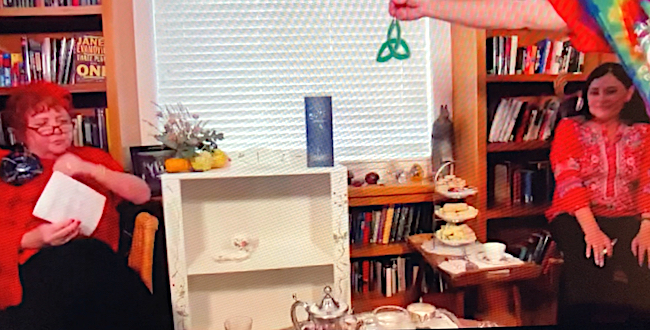
After this Q and A session, Jude moved to an interesting section of the tea – Diana autographed several items for an auction benefitting NACHS. A splendid idea!

The items included:

China tea cup and saucer:

Stained glass sun catcher – Celtic knot design:

Dragonfly stained glass lamp (💓 the green color!):

Then a second round of questions. Diana was asked to repeat her line from Outlander episode 104, The Gathering.

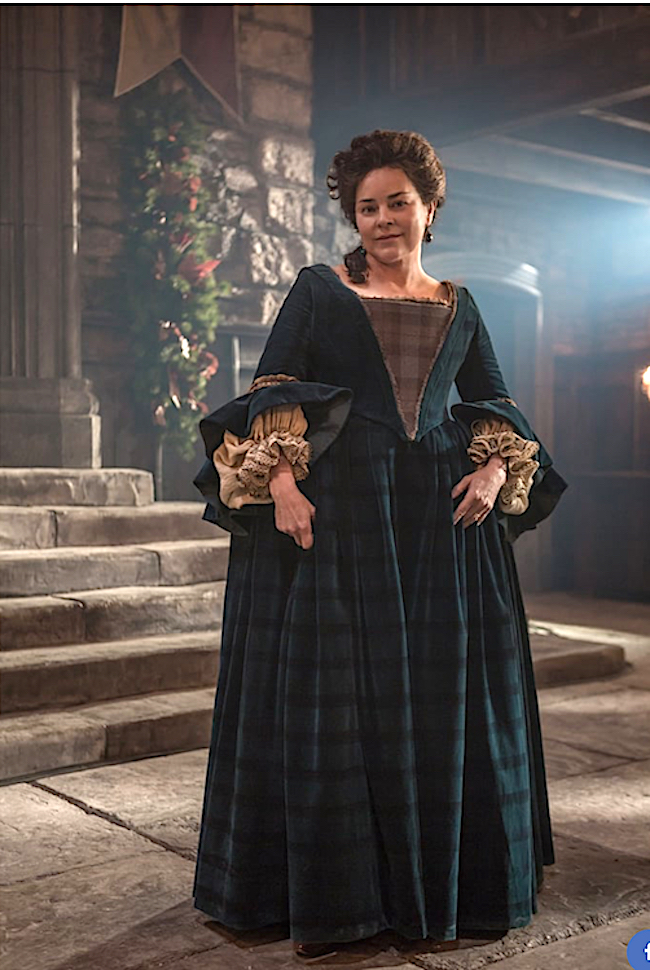
In a brief exchange with Mrs. Fitz (Annette Badland), Diana playing Iona MacTavish, pointedly remarks: “I see you are keeping the place as bright as a penny!” Mrs. F responds with a snide remark about Diana’s gown which, BTW, has a Fraser tartan inset to the bodice.

She recited her line perfectly, complete with Scottish accent. Lovely! 🤗

As always, Diana’s remarks were intelligent, economical, and pithy!  Her mind is keen, no? 🥰

The event concluded after more questions from ticket holders. Overall, it lasted about 1 1/2 hours, $25.00 well spent!

If you missed this lovely event, please dinna despair.  You can view NACHS’s full recording after making a small donation. Just send an email to the following address: nachs.events@gmail.com. I highly recommend the experience and the cause is worthy!

The deeply grateful,

Outlander Anatomist

Follow me on:

Photo and Video Credits: NACHS; Sony/Starz; Outlander Anatomy