Anatomy Lesson: Elspeth’s Extremity!

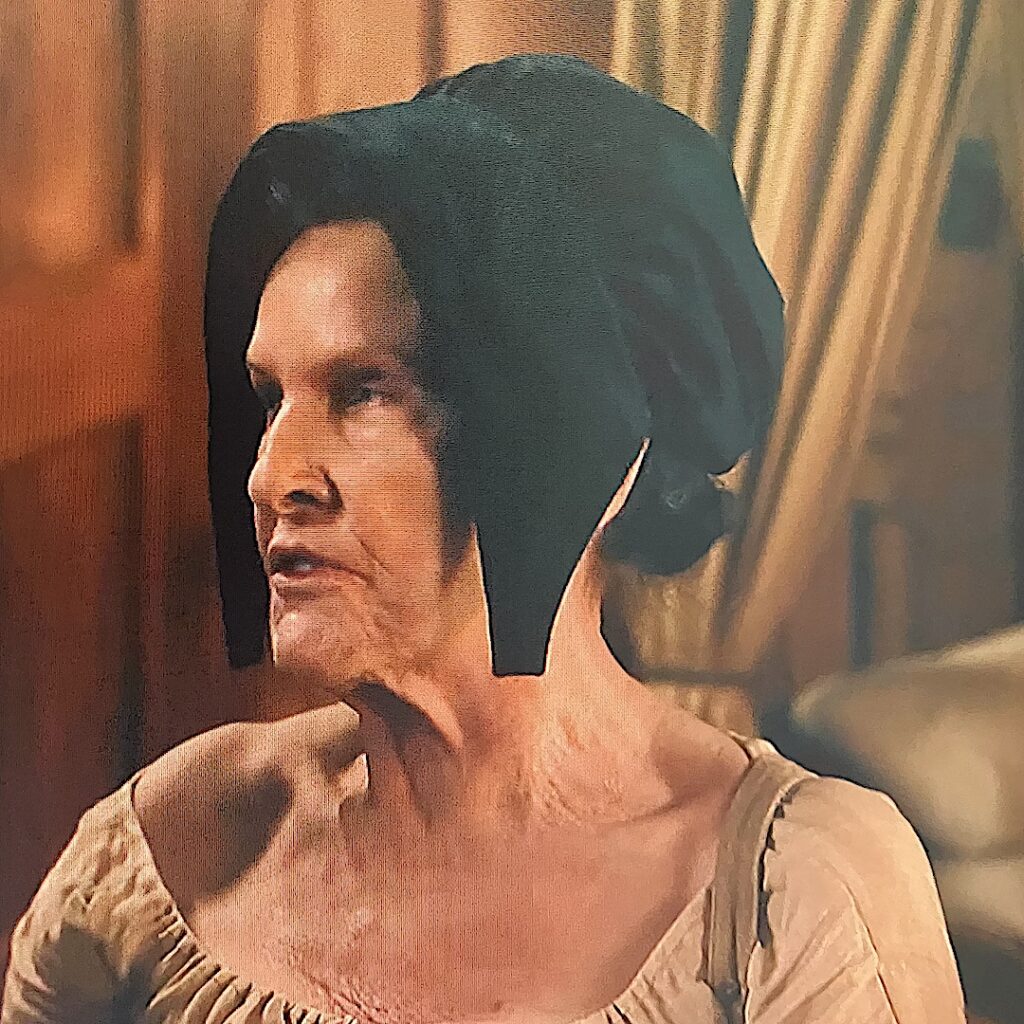
Dear students, before starting today’s lesson, I apologize for the poor quality of a few photos.  During the first several seasons, Starz allow screen shots but this was stopped a while back. If I cannot find a needed image online, I take a photo of my TV screen. The results are often iffy. 🙄

That said, on with the lesson!

In Outlander episode 804, Muskets, Liberty and Sauerkraut, a strong wind announces an impending storm up so Claire closes a window and spies….

Guess who? None other than Elspeth Cunningham, aka, “wicked witch of the west” heading up the lane! 😜

Or, as Herself writes in “Go Tell the Bees that I am Gone” (Chapter 63, “The Third Floor”):

“As I leaned out with the shutter hook in my hand, though, I saw a tall black figure hastening toward the house, skirts and cloak flying in the wind.

“You and your little dog, too,” I murmured, and risked a glance at the forest, in case of flying monkeys.” 🐒
Mrs. Cunningham bursts through the door and lurches into Claire’s arms’ “I need your help.”
Yep! Elspeth does need Claire’s help! She fell against a settle and hurt her arm. (Pssst… A settle, if you don’t know, is a hardwood bench with arms and a high back) 😉

Wow! Claire knows what is wrong and claims she can fix it even before she examines the shoulder! 😳

This is pretty darn amazing, btw,  because most physicians examine the injury first before stating they can fix whatever ails the patient. But, as Jamie says, “Claire, ye are a brilliant healer!”
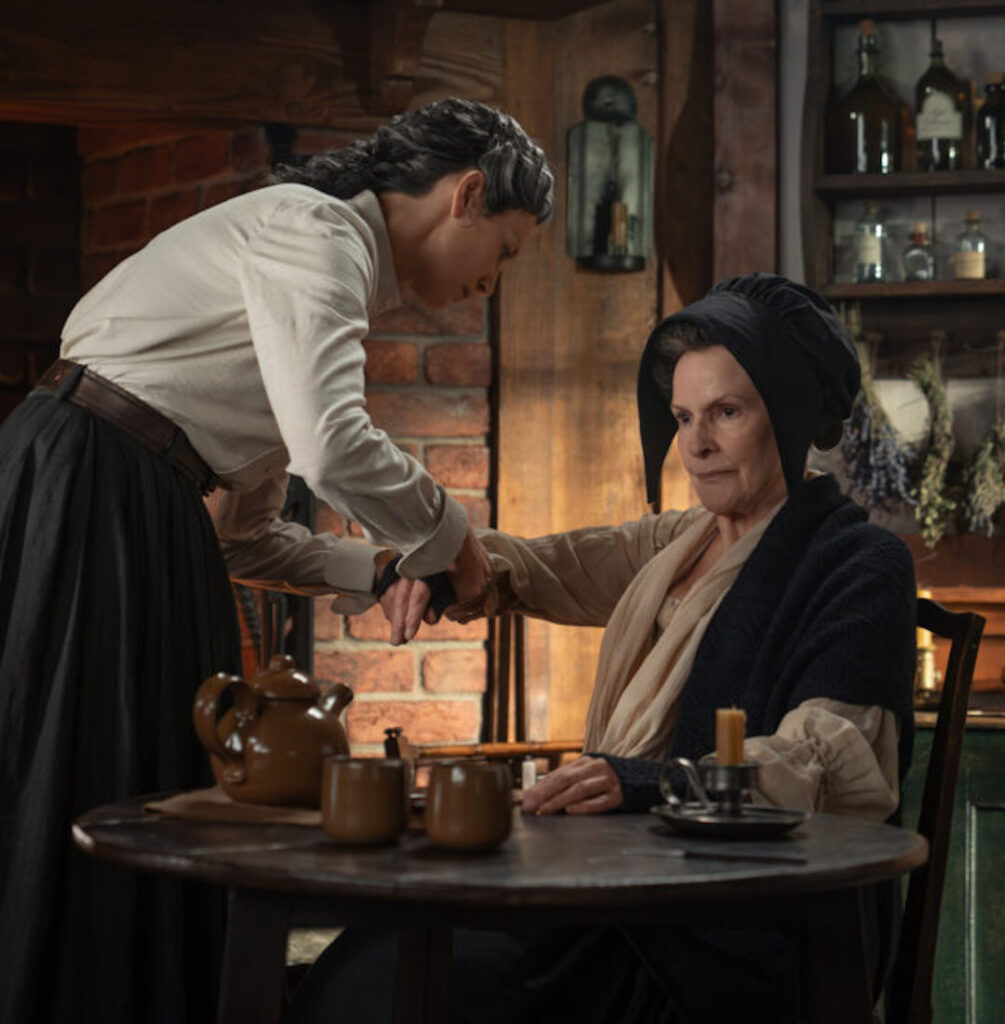
Claire expose Elspeth’s injured right shoulder.

The nicely rounded contour of a normal shoulder is not what we see. Instead, Elspeth’s entire shoulder is angular and bony.

Claire tells Frances to give her some whisky and  to “hold her,”
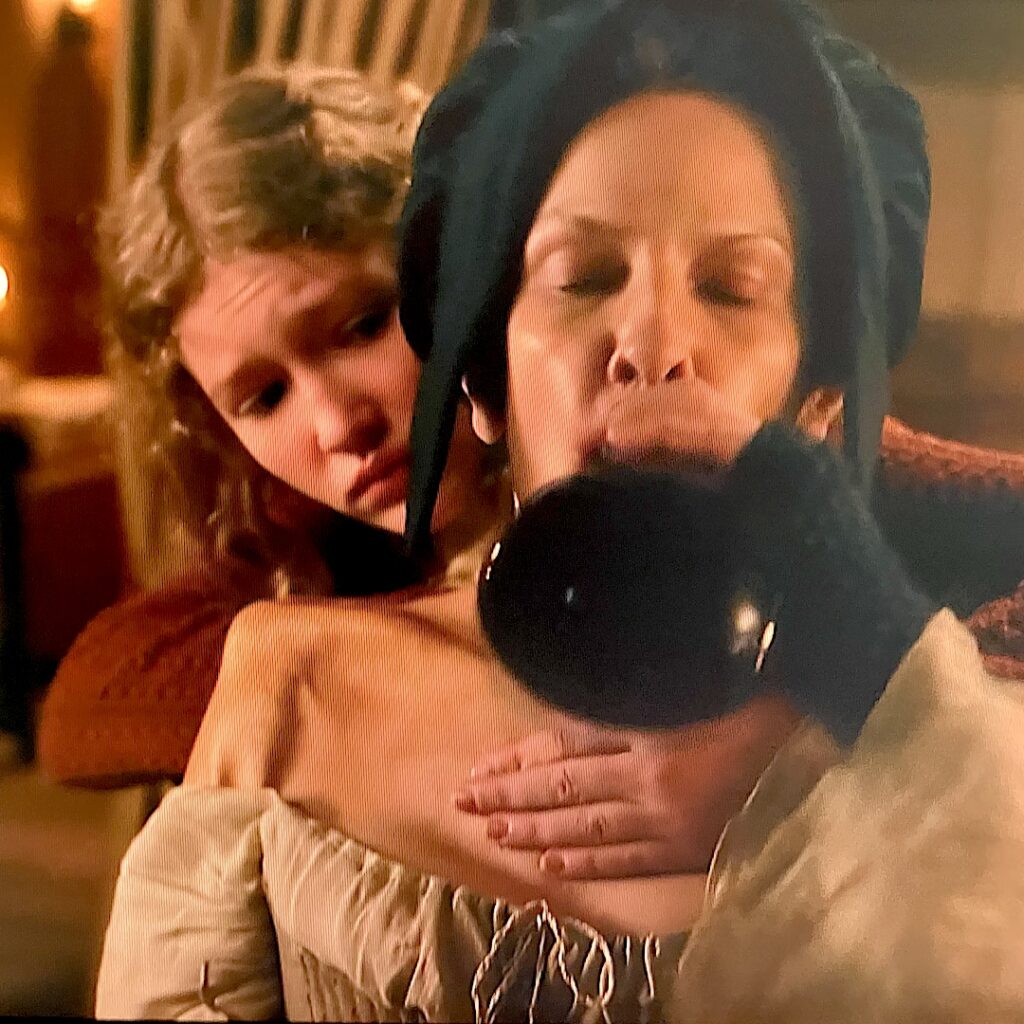
Claire warns Elspeth, it is gonna hurt. She grips the elbow and wrist and  performs a quick maneuver. (Psst… more about this below)
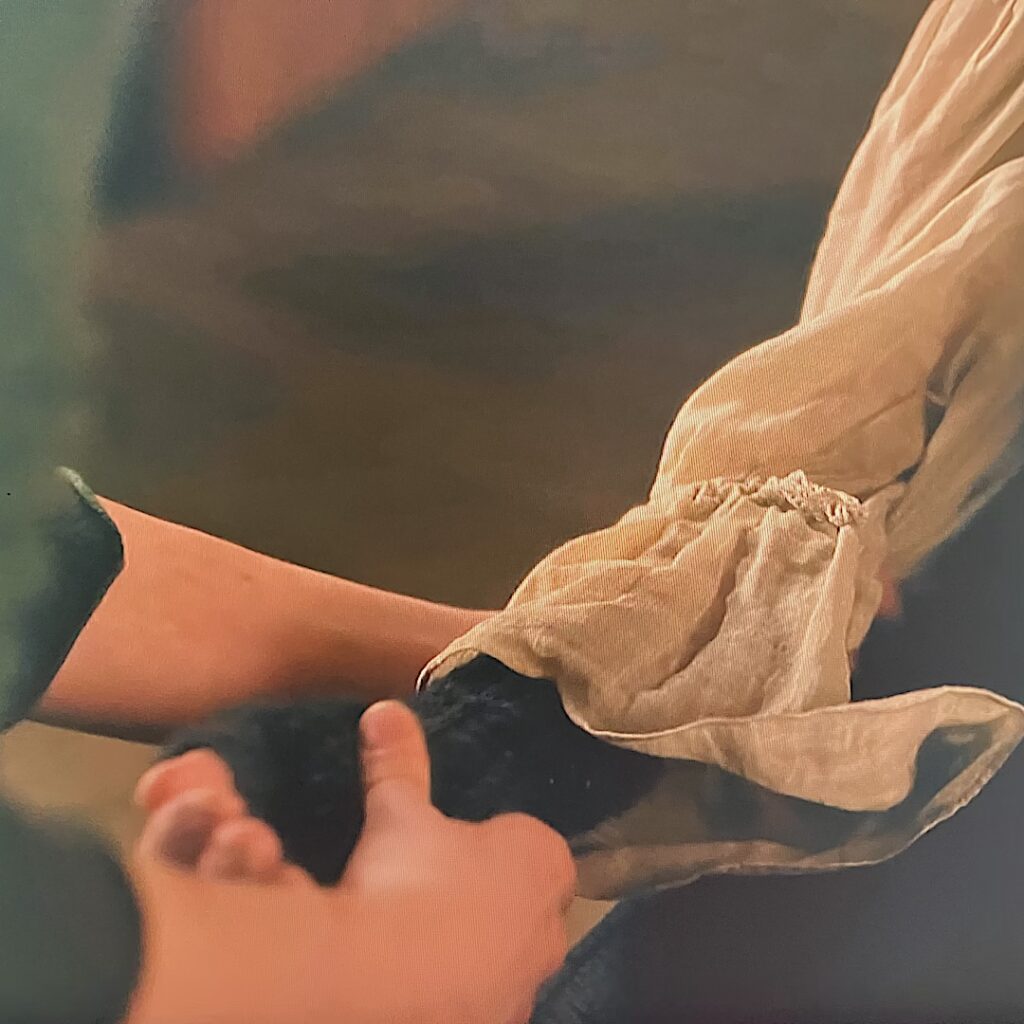
… and , voila! The shoulder pops back into joint.
“Grass-combing son of a buggering sod!” Elspeth exclaims!
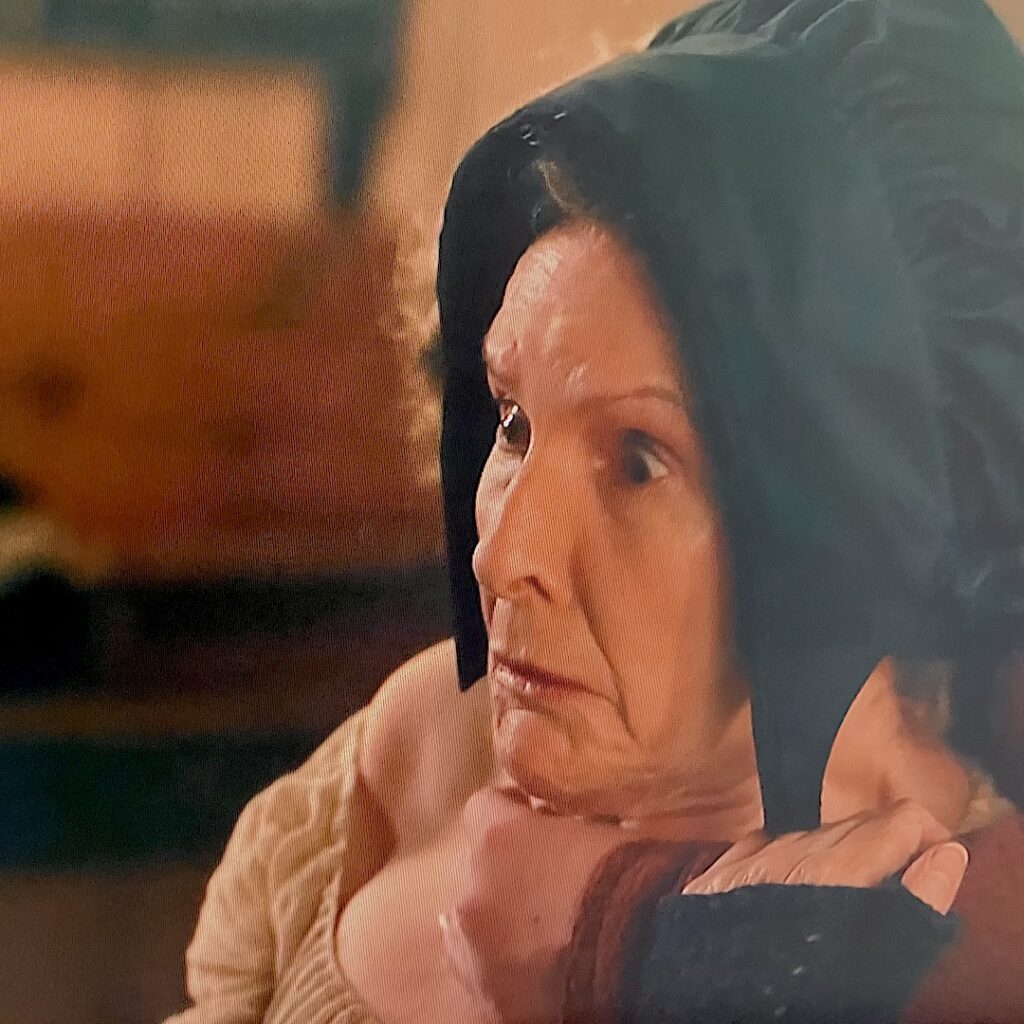
Here, an excerpt from “Bees,” Chap. 63, “The Third Floor:”

“It’s been a long time since I heard language like that,” Fanny said, her lips twitching.

If you have to do with sailors, young woman, you acquire both their virtues and their vices.” Elspeth’s face was still white and shone like polished bone under a layer of sweat, but her voice was steady and her breath was coming back. “And where, might I ask, did you her language like that?”

Fanny glanced at me, but I nodded and she said simply, I loved in a brothel for some time, ma’am.”

“Indeed.” Mrs. Cunningham drew her wrist out of my grasp and sat up, rather shaky, but bracing herself with her good hand on the table. “I suppose whores must also have both virtues and vices, then.”

“I don’t know about the virtues,” Fanny said dubiously. “Unless you count being able to milk a man in two minutes by the clock.”

I had taken a nip of the whisky myself, and choked on it.

“I think that would be classed as a skill rather than a virtue.” Mrs. Cunningham told Fanny. “Though a valuable one, I daresay.”

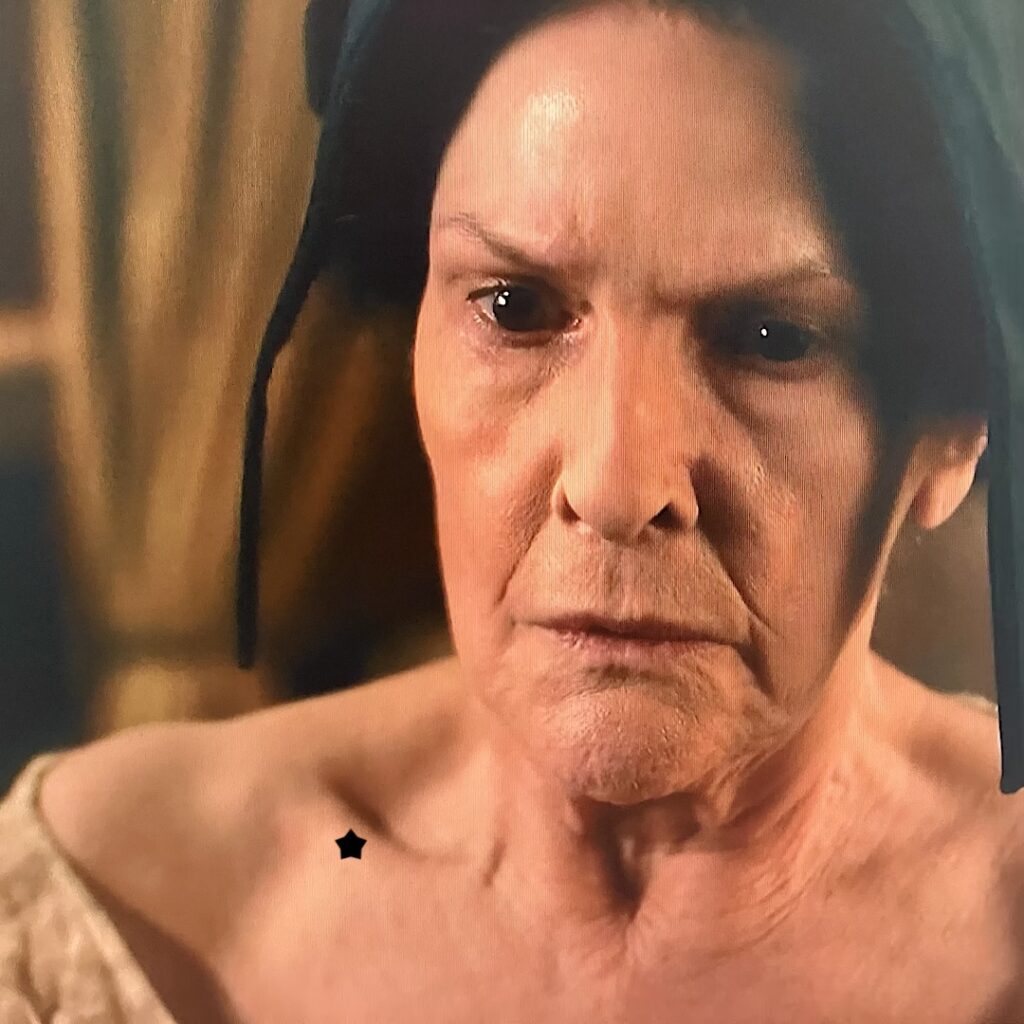
Mrs. Cunningham’s has a rather handsome shoulder, now. The rounded contour of the shoulder and function of her extremity is fully restored. Of course, it is going to be sore for a wee bit.

Note: I must say, the FX or prosthesis of the dislocation wasn’t too bad. My major criticism is the clavicle is too straight and long. It is a curved bone that stops short of the shoulder point as is evident in the next image (black star) post reduction. 
Now for the anatomy lesson. Yay! 🤓

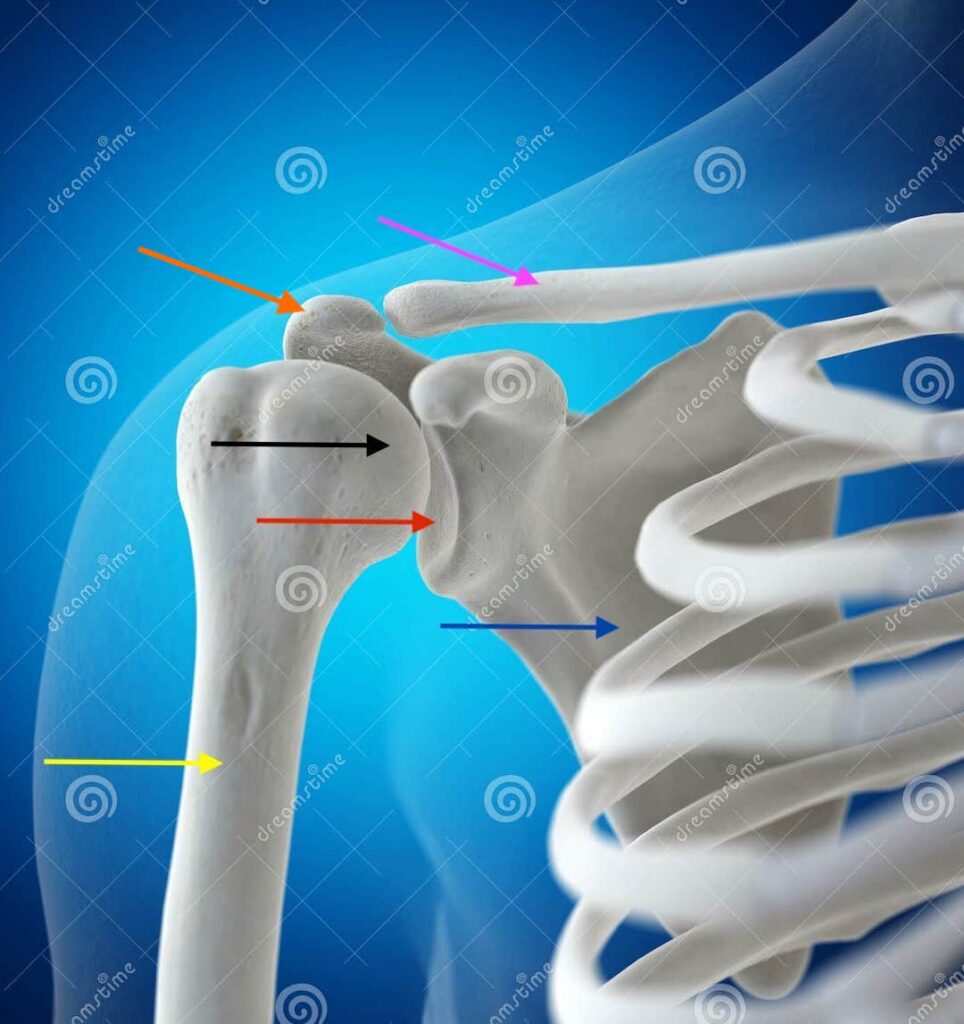
To understand what happened to Elspeth’s extremity and what Claire did to restore its normal anatomy and function, let us first examine the bones of the shoulder joint (next image).

Using arrows:

    • Pink: right clavicle (collar bone)
    • Blue: right scapula (shoulder blade)
    • Yellow: right humerus (upper arm bone)
    • Black: head of humerus
    • Red: glenoid cavity (socket for head of humerus)
    • Orange: acromion (bony tip of scapula = point of shoulder)

Normally, strong ligaments, a joint capsule, and muscle tendons snug the humeral head into the glenoid cavity. The proper anatomical name for this is the glenohumeral joint

Note: The glenoid cavity is shallow which allows greater mobility of the humeral head. Think of swinging your arm in a circle as in slow pitch. Unfortunately, this splendid anatomy sacrifices stability in favor of mobility.

An accident can force the humeral head out of the glenoid cavity resulting in a dislocated shoulder joint. Once this happens, it can happen again more easily because ligaments are stretched. 
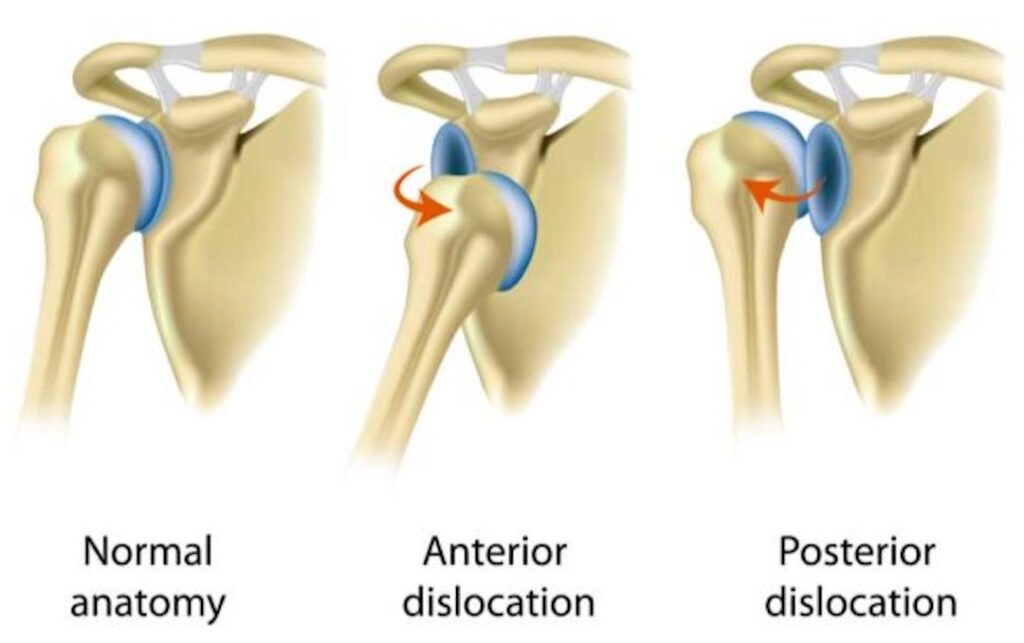
There are three types of shoulder dislocation. The next image shows two of the types plus a normal joint:

    • Left: normal shoulder joint
    • Middle: anterior dislocation (humeral head moves forward out of glenoid cavity)
    • Right: posterior dislocation (humeral head moves backward out of glenoid cavity)

A third type is an inferior dislocation wherein the humeral head moves downward out of the glenoid cavity. This type is uncommon and is not shown in the diagram.

An anterior dislocation is most common and is the type suffered by Elspeth.
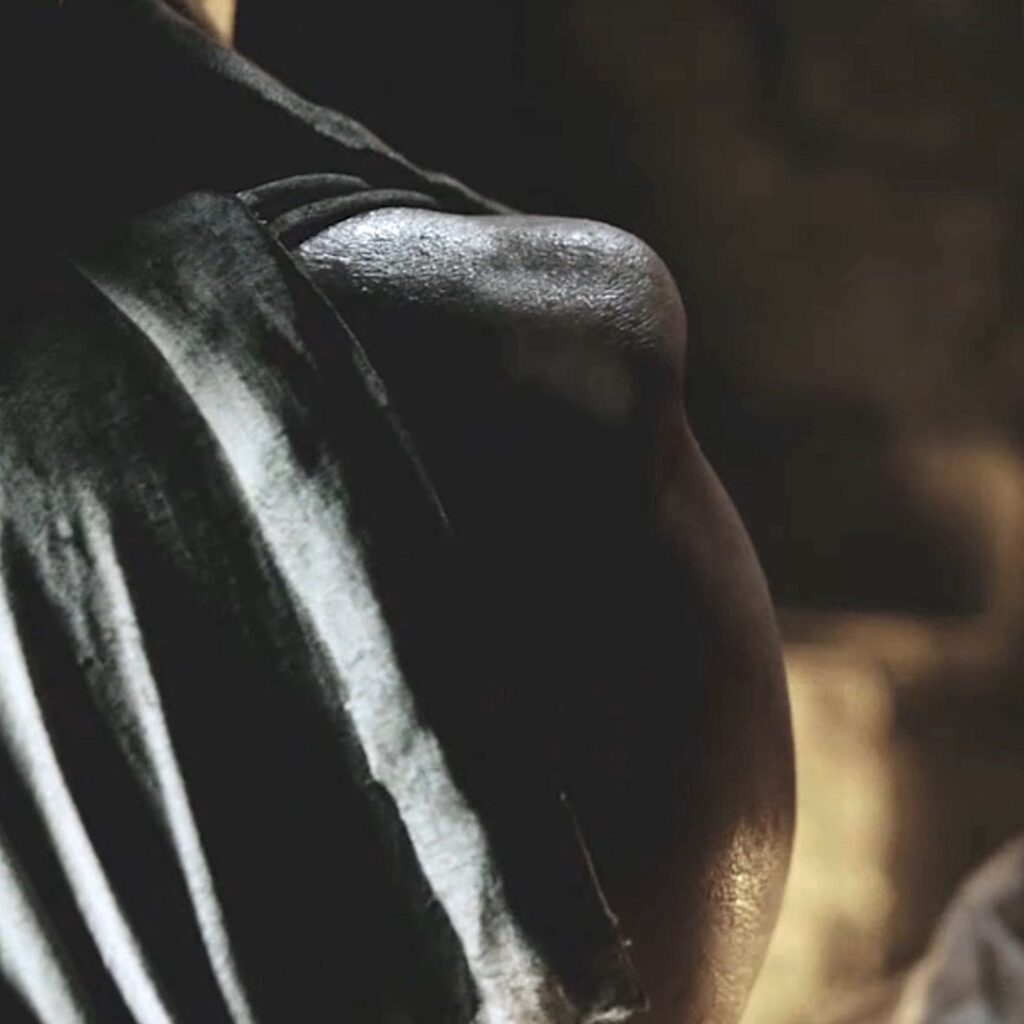
And…. let us nay forget! Jamie also suffered an anterior shoulder dislocation in Outlander episode 101! 

Here, from Chapter 3, “The Man in the Wood.” of Outlander book:

I gasped, as did several of the men. The shoulder had been wounded; there was a deep ragged furrow across the top, and blood was running freely down the young man’s breast. But more shocking was the shoulder joint itself. A dreadful hump rose on that side, and the arm hung at an impossible angle.

In fact, I wrote a lesson about his injury waaay back in 2014 – Anatomy Lesson #2: Jamie and Claire Meet at a Joint”!
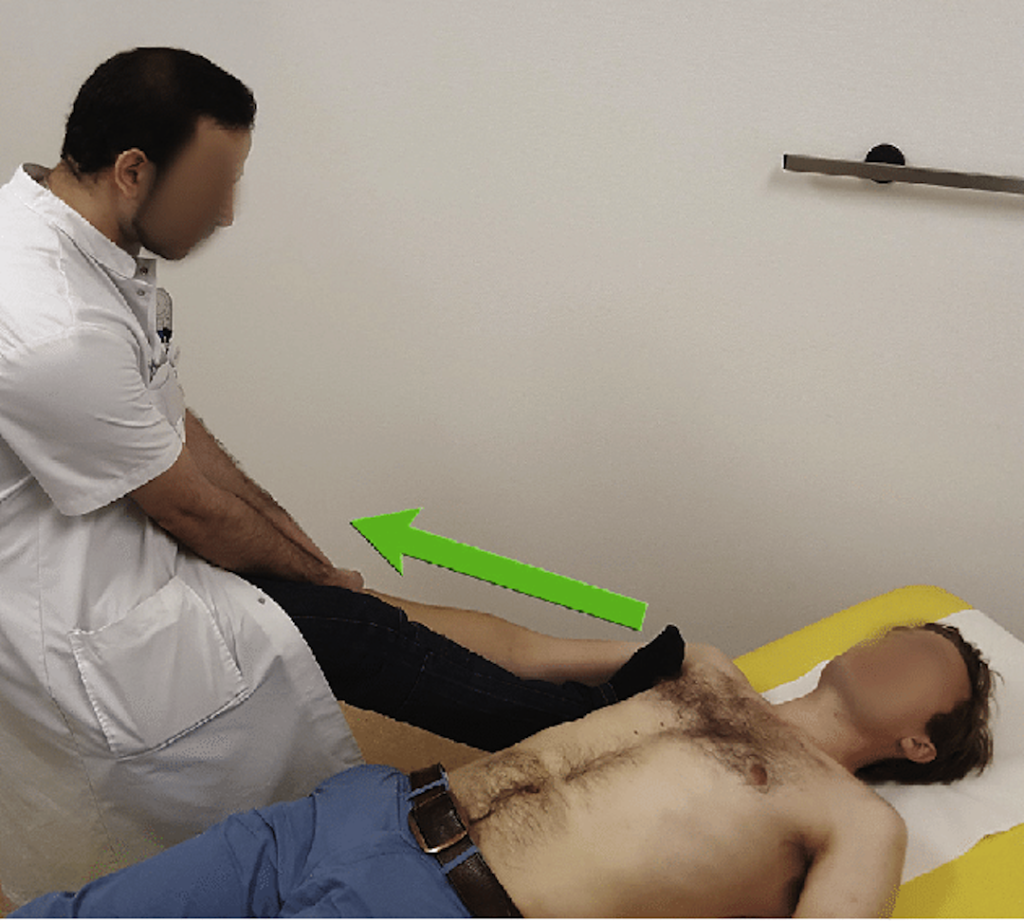
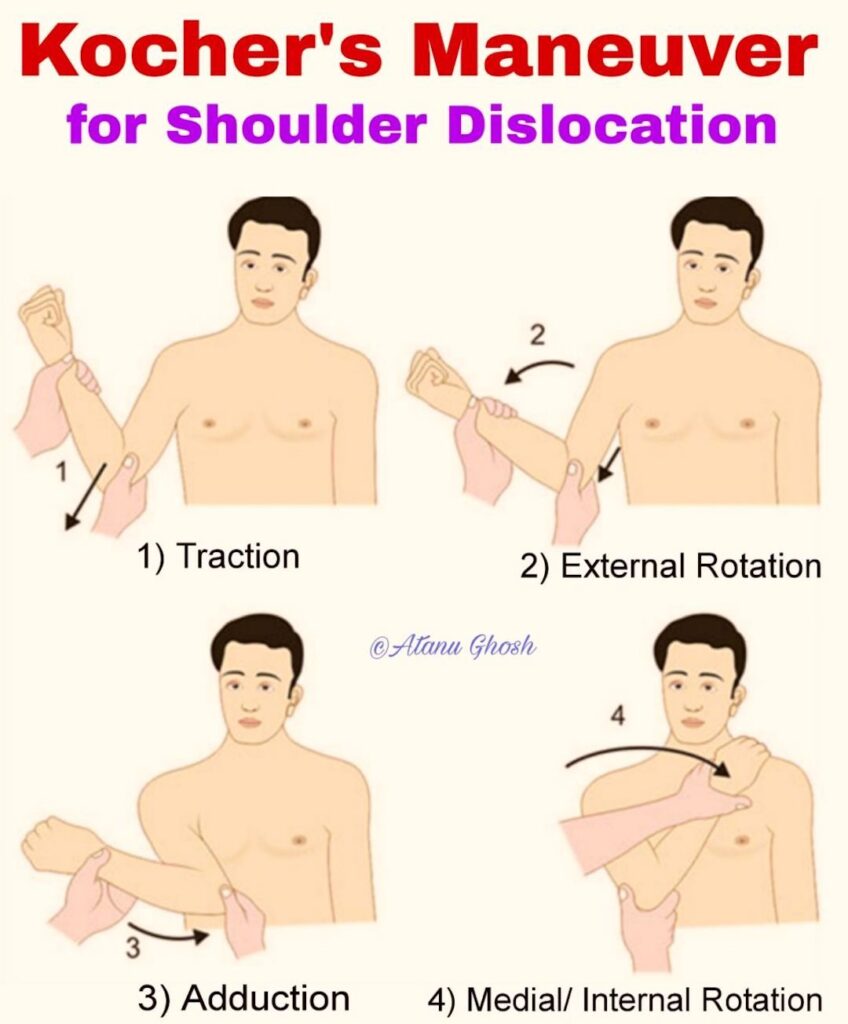
Claire reduces both Elspeth’s and Jamie’s anterior dislocations using  Kocher’s reduction method. (Reduction means to return the dislocated extremity to its normal anatomy. )

Kocher’s method is typically broken down into the following steps (next image). But, first, the practitioner bends the elbow (flexion) gripping it with one hand and holding the wrist with the other hand. Then:

    • Traction: The elbow is gently pulled toward the practitioner
    • External Rotation: Hand and forearm are turned away from the torso (often slowly)
    • Adduction: Elbow is moved against the torso
    • Internal Rotation: Hand and forearm are turned across the chest

Swiss physician and Nobel Prize winner, Dr. Emil Theodor Kocher developed this technique in about 1890 and to this day, it remains the most widely used technique for anterior shoulder joint reduction.

(Pssst….You can see short videos of the Kocher method on a patient by searching You tube) 👀 
The great physician, Hippocrates, also had a method for shoulder reduction which consisted of the practitioner placing his heel in the armpit of the patient and pulling on the affected extremity as shown in the next image! 😵‍💫

Many years ago, my family enjoyed a vacation featuring water slides. My husband took a slide before me. As I slid into the pool at the bottom, he climbed out of the water with his right arm dangling. He limped to an upright pole, lifted up the injured arm with his good hand, grasped the pole and leaned back. This maneuver immediately popped the dislocated humeral head back into place!

What happened? His arm hit the slide on the way down and he suffered an anterior dislocation. The dislocation reduced rather easily because he acted quickly before swelling set in. Once the joint tissues swell, reduction is more difficult and painful. (Psst….This was actually a variation of the Hippocrates method – hubby is a physician) 😷

So, in summary, Elspeth’s dislocation was resolved successfully by our brilliant healer but it did little to curb her sour disposition! 😜
I hope you enjoyed reading about Elspeth extremity.

Moral to the story…. be wary of wayward settles!

Until next time…

The deeply grateful,

Outlander Anatomist

Follow me on:

Photo credits:  Outlander Anatomy; Starz; Sony; www.as2.Ftcdn.net; ww.researchgate.net; www.thumbs.dreamstime.com
Anatomy Lesson: Sam’s Surface

Greetings all Anatomy Students!

What do I mean by Sam’s surface? I refer to his surface anatomy, also know as topographical anatomy. This branch of anatomy identifies structures from features expressed at the body surface. It does require anatomical knowledge by the user and is non-invasive. 

Over the years, I have received many images of Sam and Jamie from followers asking me to apply arrows and identify structures. This lesson is a compilation of some of these images. I hope you enjoy as much as I do. 😉

So, let’s get started!

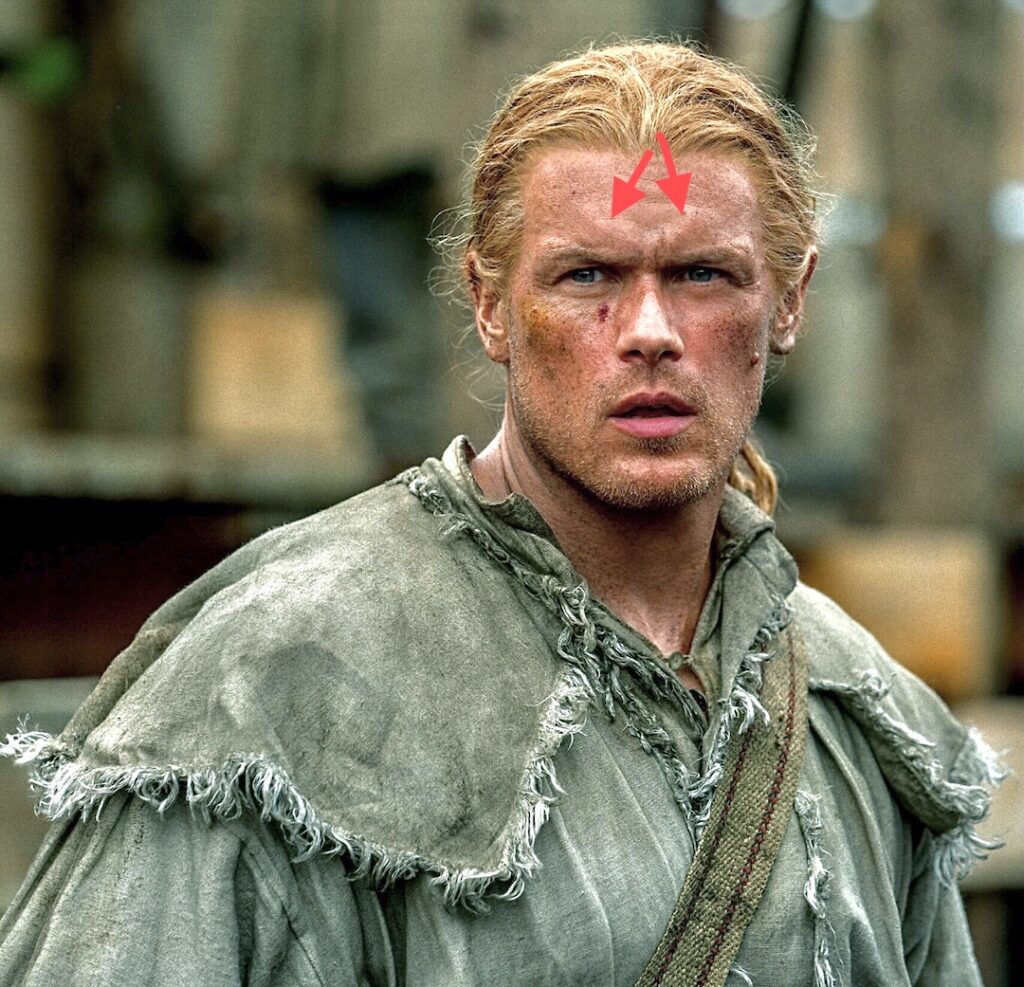
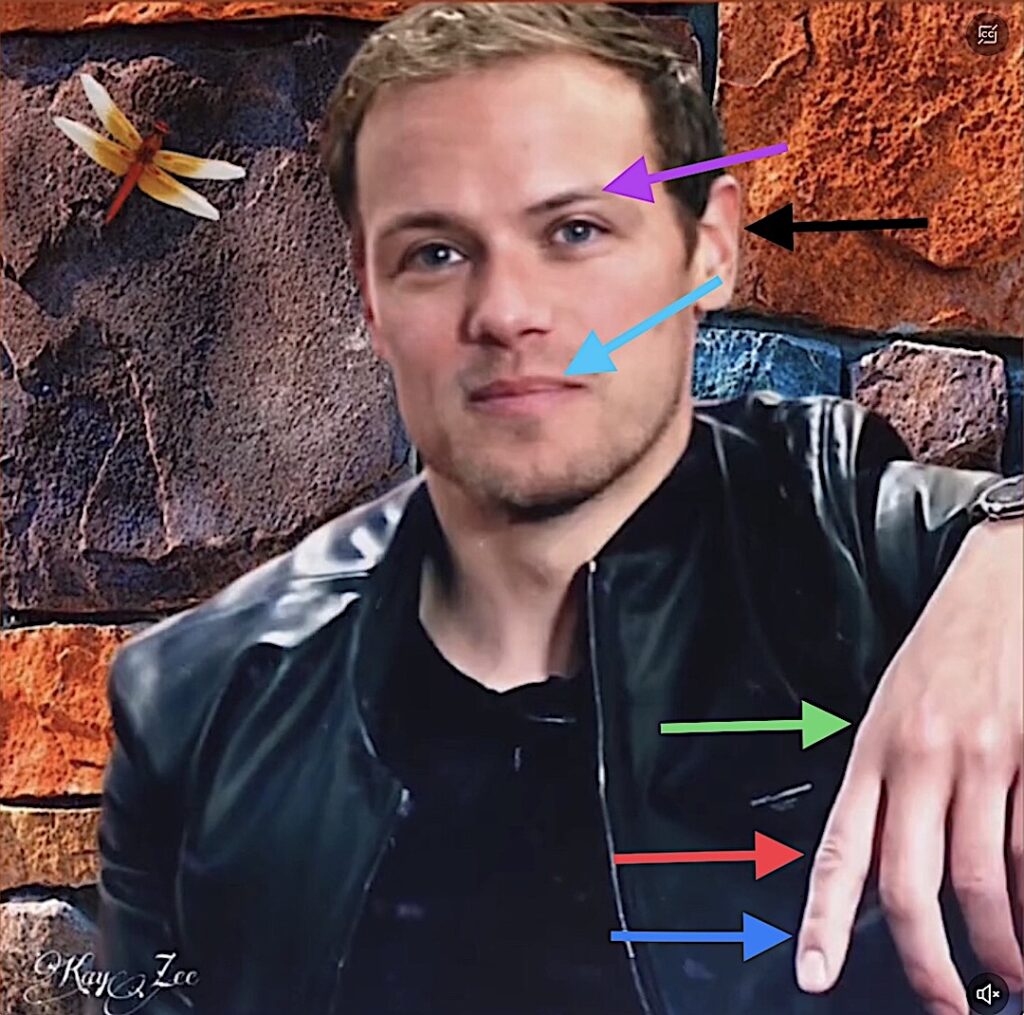
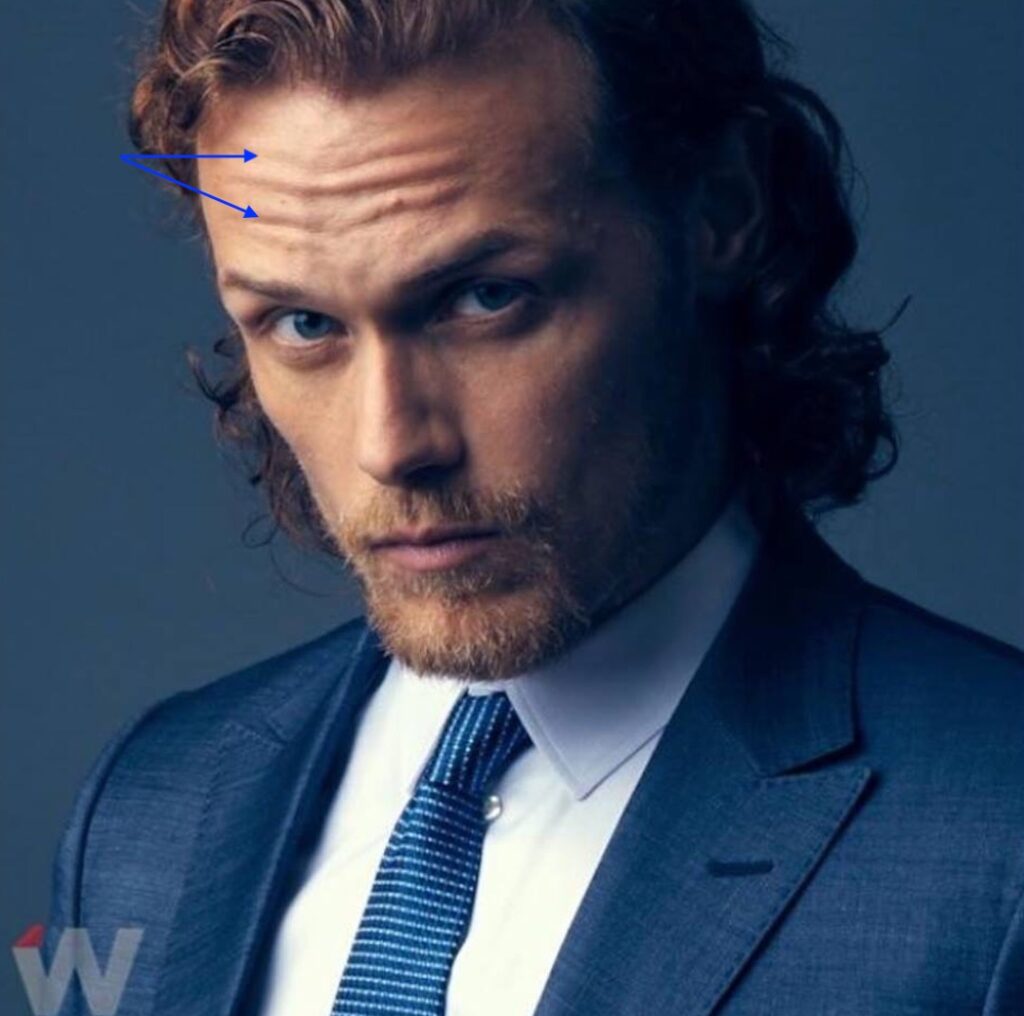
Frontalis: Paired muscles of facial expression, frontalis fibers run vertically in the forehead. When they contract, they lift the brows and produce horizontal wrinkles of forehead skin, conveying concentration and concern. Perfect example from model Sam (blue arrows).

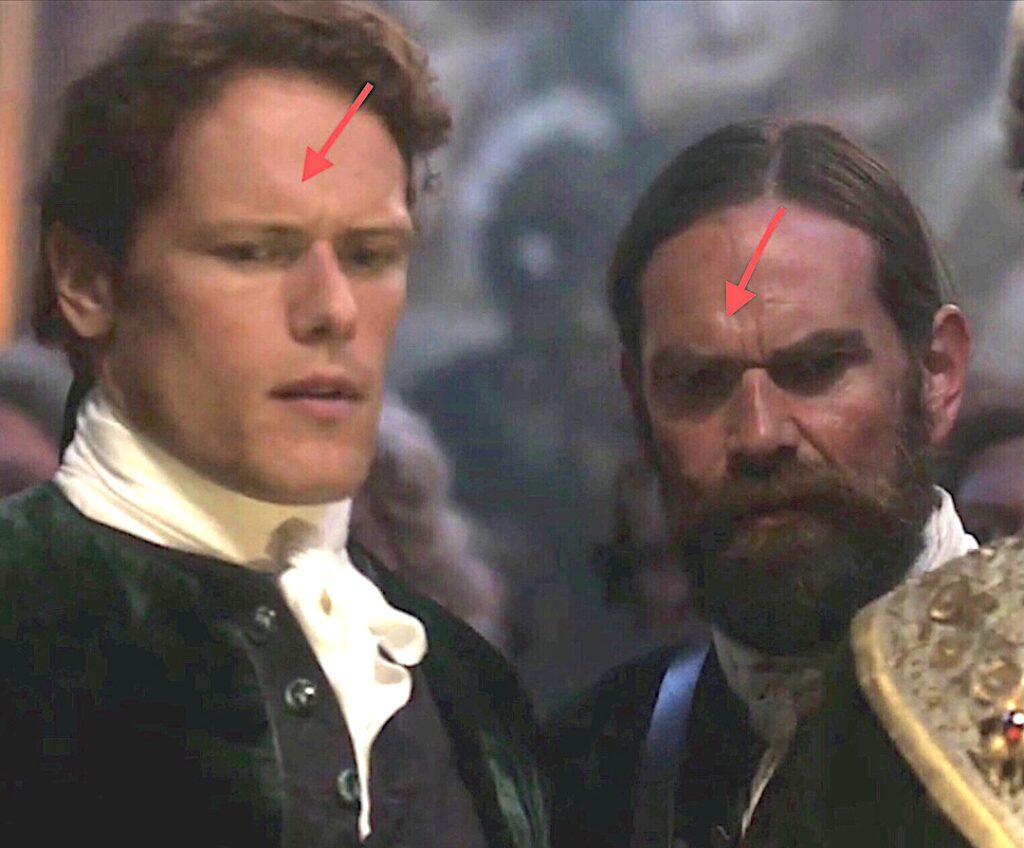
Corrugator Supercilii: Paired muscles of  facial expression from the nose side to the middle of each eyebrow. Upon contraction, corrugators draw the brows together and down producing small vertical wrinkles between the brows and a small bulge of skin above the brows. Jamie and Murtagh show  corrugator prowess (red arrows) as they watch the King of France during his a “private” moment (Outlander, episode 202 “Not in Scotland Anymore!” 😱

And, this image from outlander episode 708 “Turning Points,” shows an outstanding example of corrugator supercilii (red arrows) as Jamie realizes he almost shot his son during the second Battle of Saratoga! 🥺

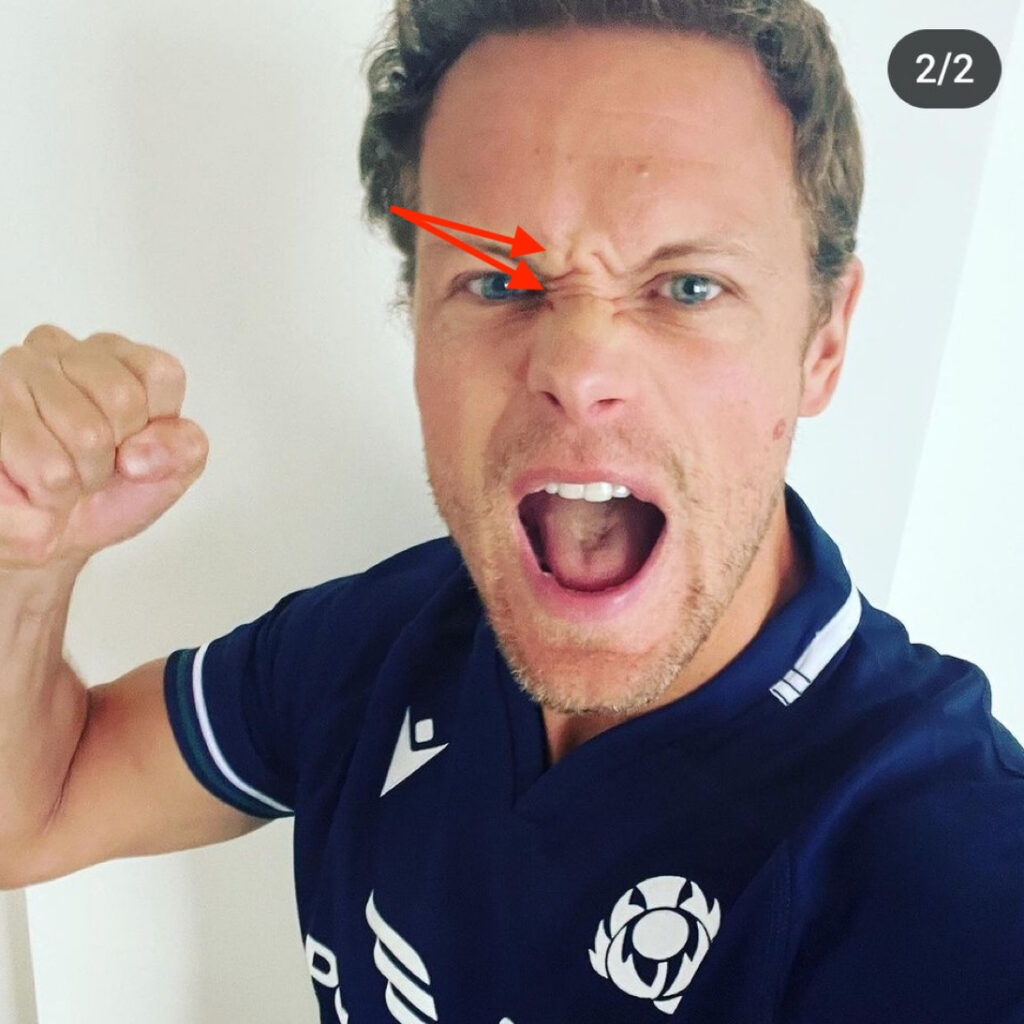
Procerus: Procerus are muscles of facial expression wrinkling the skin over the bridge of the nose and flaring the nostrils. Results? They help create an expression of anger. “Who are you calling a procerus?” threatens Sam (red arrows). 😆

Supercilium: As everyone kens, eyebrows add to facial expression. Anatomically, the eyebrow is the supercilium (super silly, huh?). Sam has naturally thin, beautiful brows (purple arrow). I recall him being asked at during an interview if he plucked them, to which he responded, “Never.”

Vermilion Border: The vermillion border is intersection between facial skin and the rim of lips (turquoise arrow). Sam’s border forms a lovely Cupid’s Bow in the midline.

Moving on to the hands….

Metacarpophalangeal Joint: This joint (green arrow) is formed where the metacarpals of the palm meet the proximal phalange, the first and largest finger bone.

Proximal Interphalangeal Joint: This is the intersection between proximal phalange and middle phalange (red arrow).

Distal Interphalangeal Joint: This joint occurs between middle phalange and distal phalange (blue arrow).

Attention: The wonderful image below is the property of @KayZee. ❤️

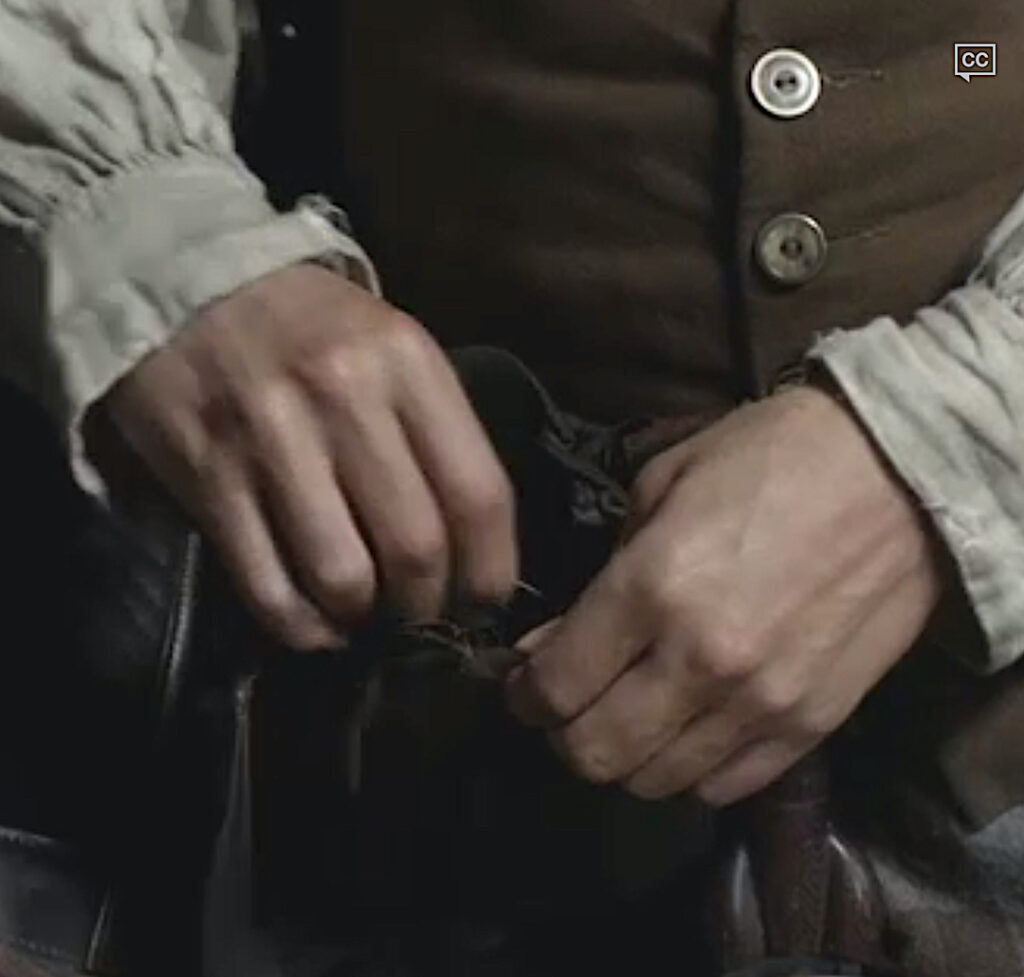
Didn’t everyone notice Sam’s beautiful hands as he discusses Claire with Murtagh before the wedding in Outlander Episode 107, “The Wedding.” 😍

Moving on to the torso…

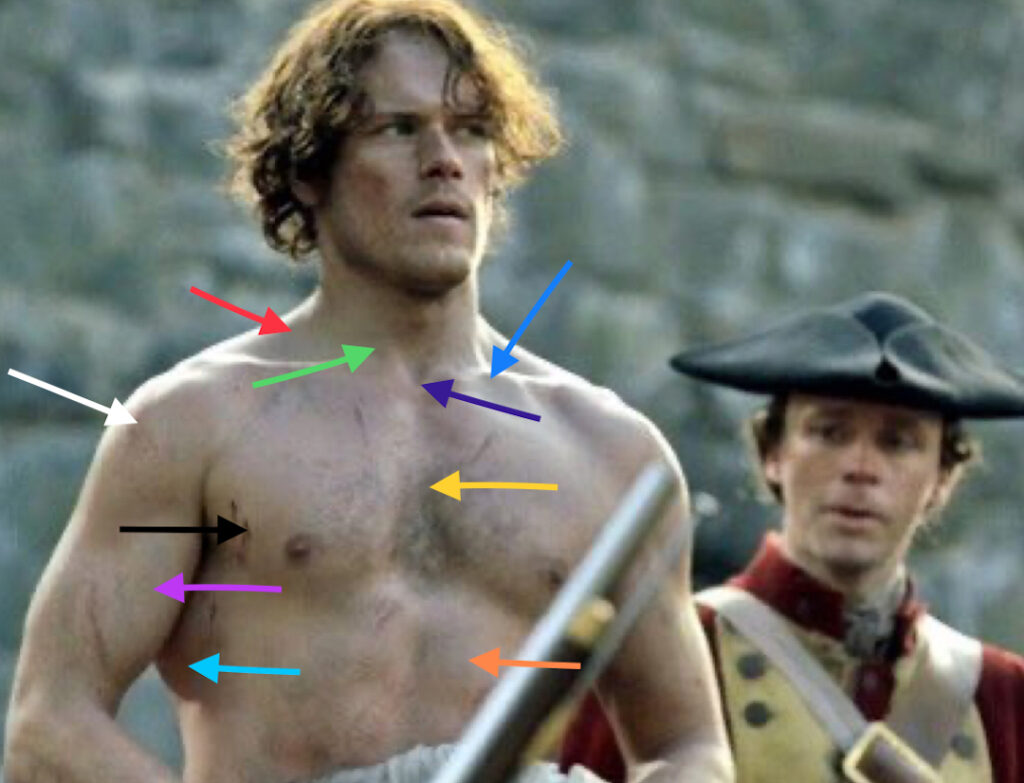
The next image is JAMMF between floggings – Outlander episode 106, “The Garrison Commander!” 😱 Lots of arrows on this one and the list is loooong but so worth it! 

Trapezius: Trapezius (red arrow) is  a massive flat triangular-shaped muscle that is paired. Together, they lift the shoulder joint and pull the shoulder joint back and down.

Clavicle: Commonly known as the collar bone (turquoise arrow), the paired clavicles are 6″ S-shaped bones between sternum and each shoulder joint. Clavicle is also the most commonly fractured bone of the body (one of my grandsons fractured his last year). It holds the shoulder joint away from the sternum allowing for greater mobility of the arm.

Fun Fact: Dogs and cats don’t have clavicles so their shoulder blades shift to lie at sides of the torso; ours lie over our backs. Thus, their front limbs move forward and back whereas, ours can rotate almost 360°. The human shoulder joint is the most movable joint of the human body, all because of the clavicle! 🤩

Sternocleidomastoid: Paired strap-like muscles (green arrow) joining sternum (breast bone) and clavicle to skull behind ear. Acting alone, each muscle flexes the neck toward the shoulder and rotates the chin toward the shoulder. Together, the muscles draw the chin toward the sternum.

Fun Fact: Sternocleidomastoid muscles are one of over  20 pair of muscles acting on the neck! 🤓

Suprasternal Notch: This bony landmark (purple arrow) indicates the top of the sternum. Intrathoracic pressure can be measured via the soft tissues above this landmark.

Sternum: The sternum (yellow arrow) is an unpaired bone which forms the front of the chest. It provides attachments for clavicles and first seven pair of ribs. It also supports and protects vital organs such as heart and lungs.

Rectus abdominis: This paired muscle (orange arrow) forms the belly on either side of the midline. Each muscle is long and flat, extending from sternum and ribs to pubic bone. Acting together, they bend head toward pelvis. 

Deltoid: The deltoid (white arrow) is shaped like an inverted triangle and overlies the shoulder joint, giving the shoulder its rounded contour. It helps raise the arm forward, to the side and backward. It is subdivided into anterior (front), middle, and posterior (back) sections.

Pectoralis Major: The term pectoralis is derived from the Latin meaning “breast.” Gyms refer to them as ‘pecs.” Pec major is paired and the largest muscle (black arrow) of the chest They draw the clavicle downward. They also raise the arm forward, pull arm against torso, or rotate arm toward sternum.

Biceps Brachii: The biceps (pink arrow) are the large muscles at the front of the arm. They create the fabulous bulge that Popeye made famous. In Latin, biceps means “two heads,” so named because the muscle originates from two different parts of the scapula. Biceps flexes the elbow joint and rotates the palm forward/upward. It also flexes the shoulder joint and draws the humerus (arm bone) against the torso.

Fun Fact: Contrary to popular opinion, biceps is not the prime mover of the elbow joint! A deeper lying muscle, brachialis, is the prime mover. 💪🏻

Latissimus Dorsi: Latissimus dorsi (aqua arrow) is a large flat muscle of the back. It inserts on the humerus pulling it backwards, against the body, and towards the sternum. Sam’s latissimus is massive! 🥳

and

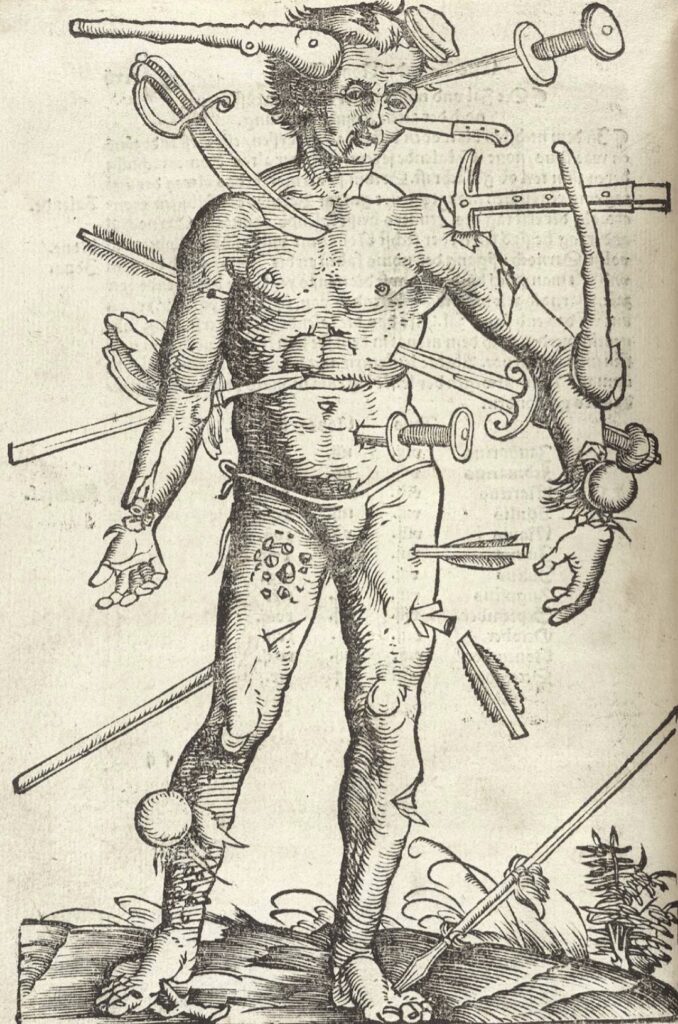
The previous image of Sam as Jamie reminds me of “The Wound Man,” a surgical diagram that appeared in European medical texts of the fourteenth and fifteenth centuries, up until the 1700s. It showed various battle injuries and diseases that a medical practitioner might encounter. Cures were listed on nearby pages. A horrifying image, for sure! 😳

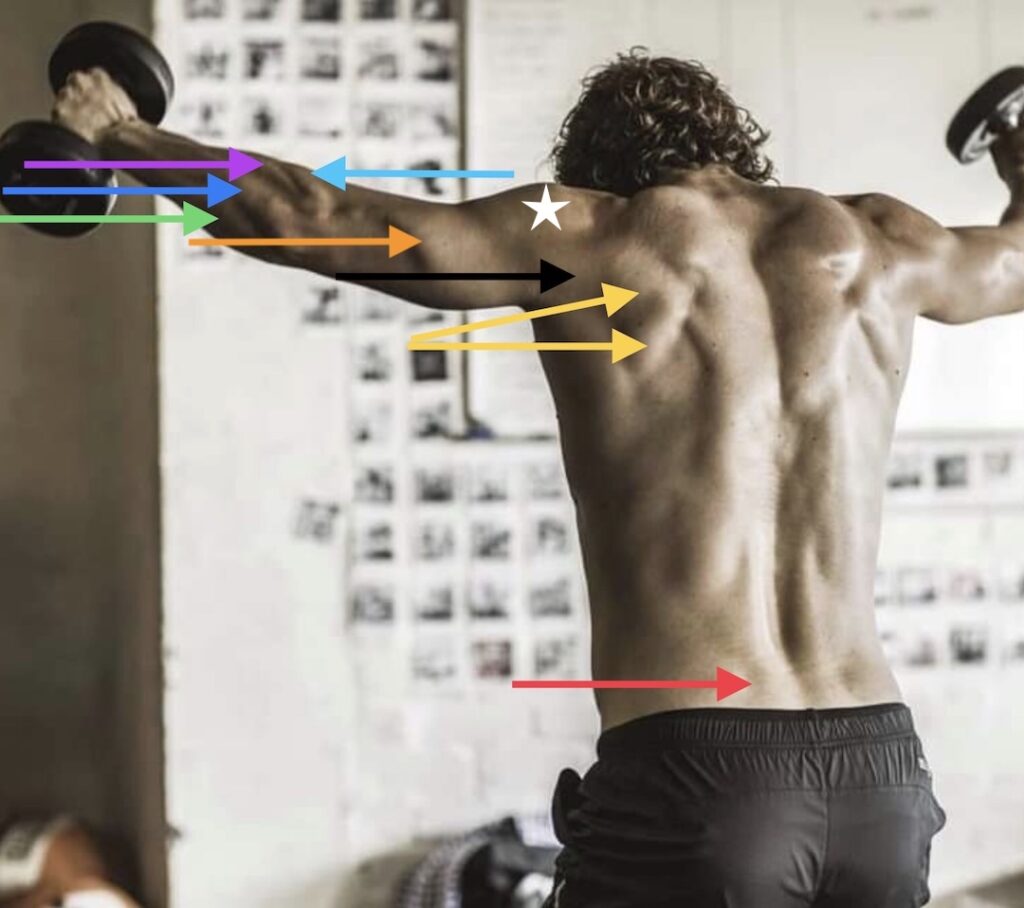
Next, Sam’s back is a marvelous roadmap of topographical anatomy.

Infraspinatus: This muscle (yellow arrows) extends from scapula (shoulder blade) to humerus (arm bone). It externally rotates and stabilizes the shoulder joint. Along with three other muscles, it helps form the rotator cuff of the shoulder joint.

Triceps Brachii: The triceps (orange arrow) derives its name from Latin meaning three heads because it takes origin from the scapula and two different areas of the humerus. It ends on a forearm bone, the ulna. It extends (straightens) the elbow joint.

Brachioradialis: This muscle (aqua arrow) attaches humerus to radius, a forearm bone. It helps flex the elbow joint.

Extensor Carpi Radialis Longus: This forearm muscle (violet arrow) reaches from humerus to second metacarpal bone. It extends (straightens) wrist and abducts hand (moves hand toward thumb).

Extensor Digitorum: Extensor digitorum lies next to extensor carpi radialis longus (blue arrow). It extends all four fingers (not thumb). Straighten your bent fingers. Extensor digitorum did that!

Extensor Carpi Ulnaris: This forearm muscle (green arrow) reaches from humerus to fifth metacarpal bone.  It extends the wrist and adducts the hand (moves hand away from thumb).

Posterior Deltoid: The deltoid  was explained above but now we add a caveat. Sam’s posterior deltoid (black arrow) is unusual because a distinct groove separates it from  middle deltoid (white star). Most people do not exhibit this distinct separation.

Erector Spinae: This massive muscle  (red arrow) is paired; it has several parts based on origin and insertion of the muscle fibers. Working together, erector spinae straightens the back; working alone, it rotates the back.

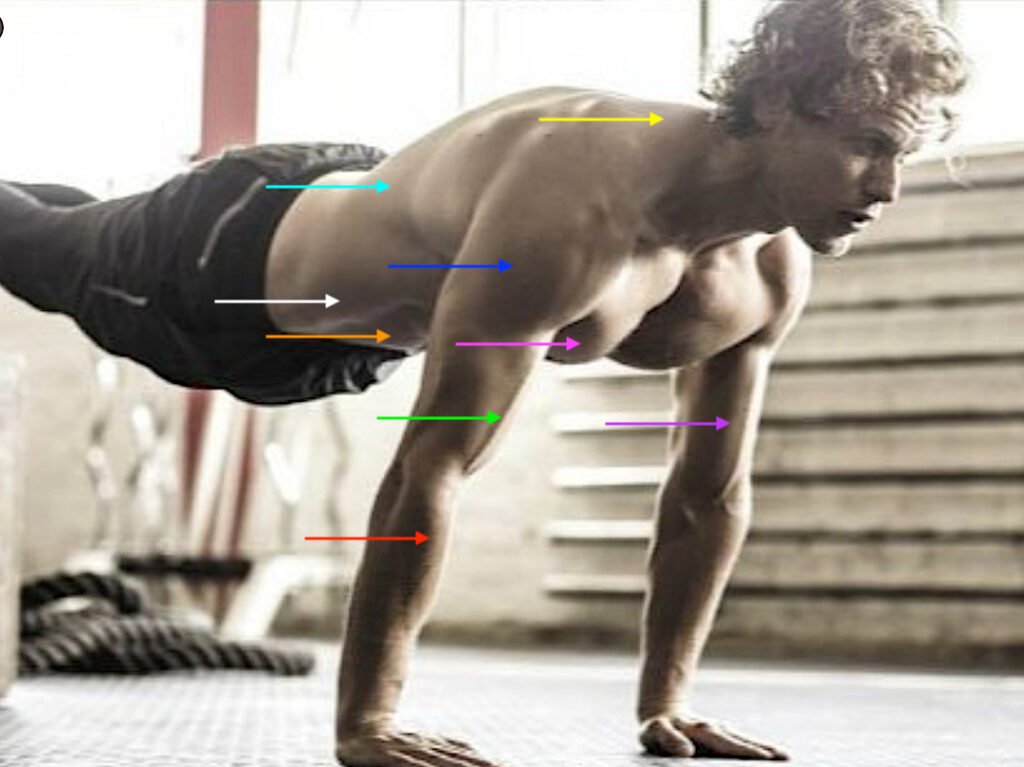
Next is Sam in a full plank position with elevated feet. This one has a number of repeated structures, but is still delightful to view. 🤩

Trapezius: Yellow arrow – see above

Deltoid: Blue arrow – see above

Pectoralis Major: Pink arrow – see above

Biceps Brachii: Violet arrow – see above

Latissimus Dorsi: Aqua arrow – see above

Rectus Abdominis: Orange arrow – see above

External Abdominal Oblique: The EAO is the largest flat abdominal muscle found at front and side of abdomen. It is also paired. It attaches to ribs above and pelvic bones below. Its fibers run from the sides downwards like your hands tucked into jean pockets. Acting alone, the EAO rotates the torso; acting together EAO pulls chest toward pelvis (as in curl ups). It also compresses the abdominal cavity. This muscle is important for posture and torso movements.

Brachioradialis:  red arrow- see above

Cephalic Vein: A vein of the arm – see below

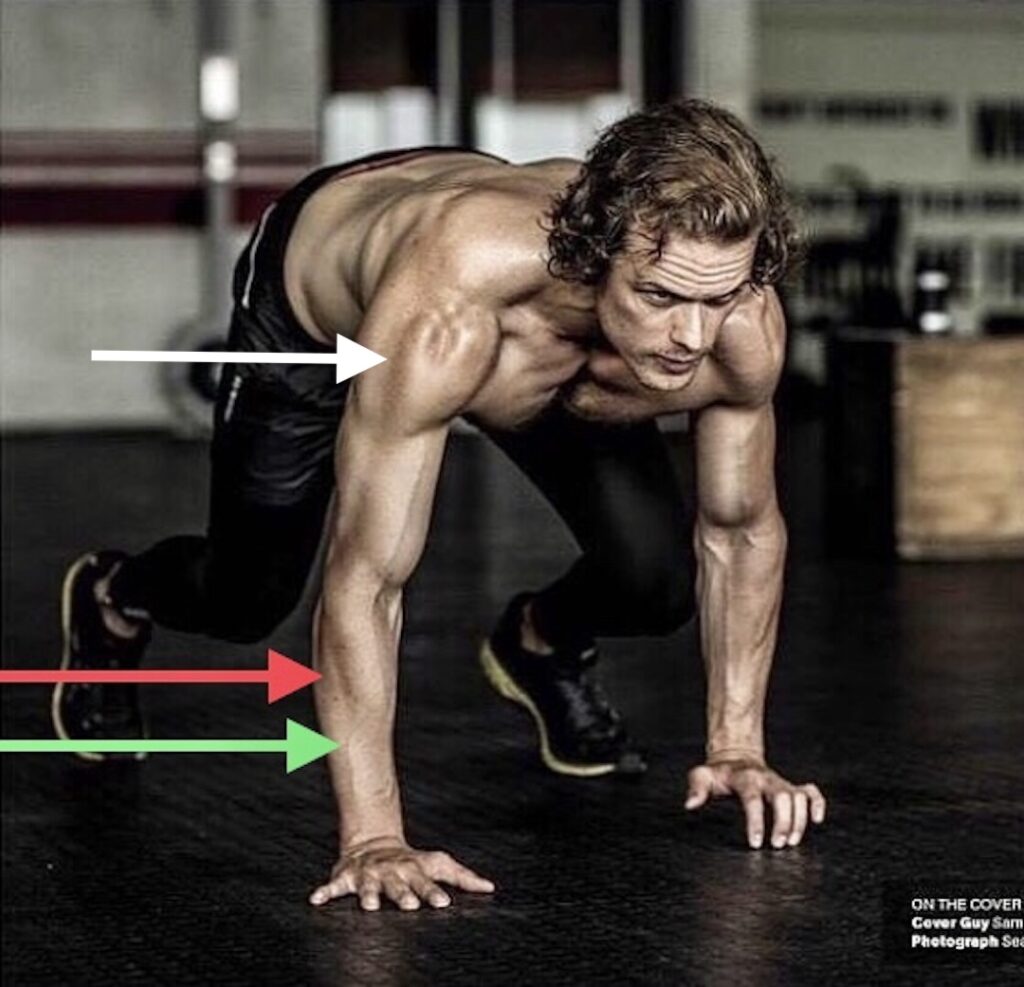
This image of Sam in a sprint position is awesome because it shows:

Posterior Deltoid: Already described above, the white arrow indicates the unusual and distinct groove between middle deltoid and posterior deltoid.

Extensor Digitorum: Green arrow – see above

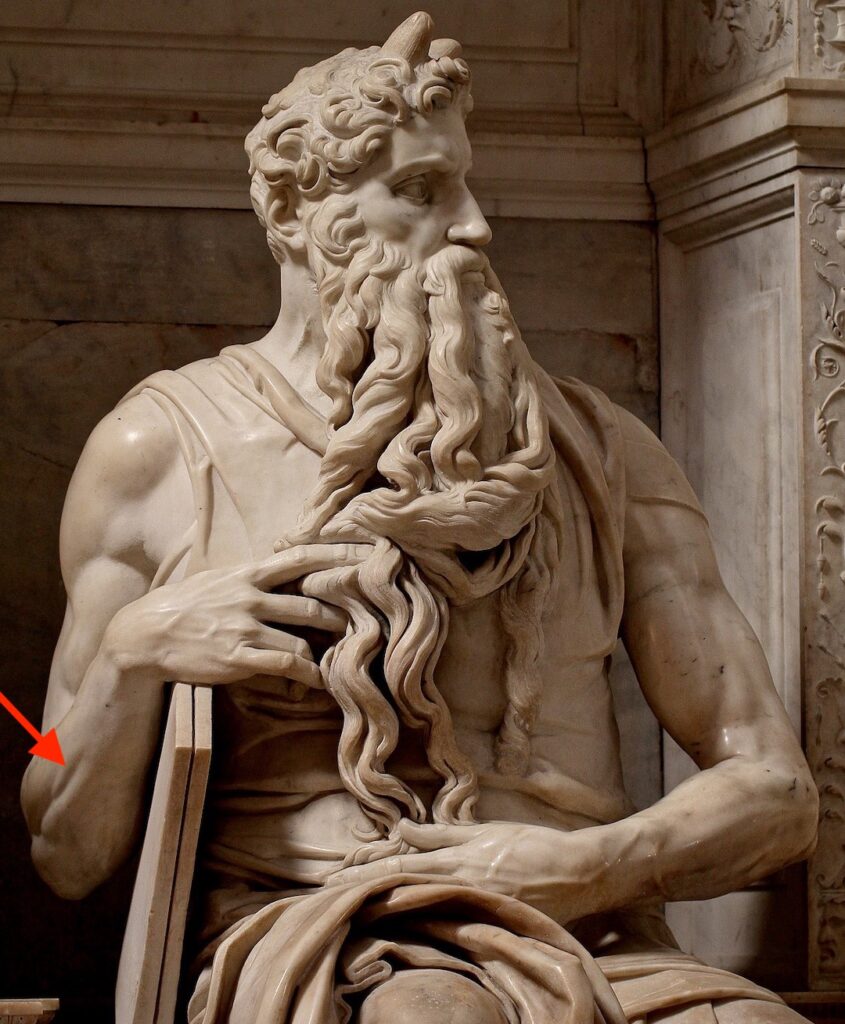
Extensor Digiti Minimi: This wee muscle (red arrow) isn’t prominent unless the forearm is highly muscular and subcutaneous fat is low. EDM reaches from humerus to wee finger and extends (lifts) it.

Some X followers already have seen my tweet of this image of Michelangelo’s “Moses” sculpture. But, for those who haven’t, it shows the master’s  attention to wee extensor digiti minimi! 🥰

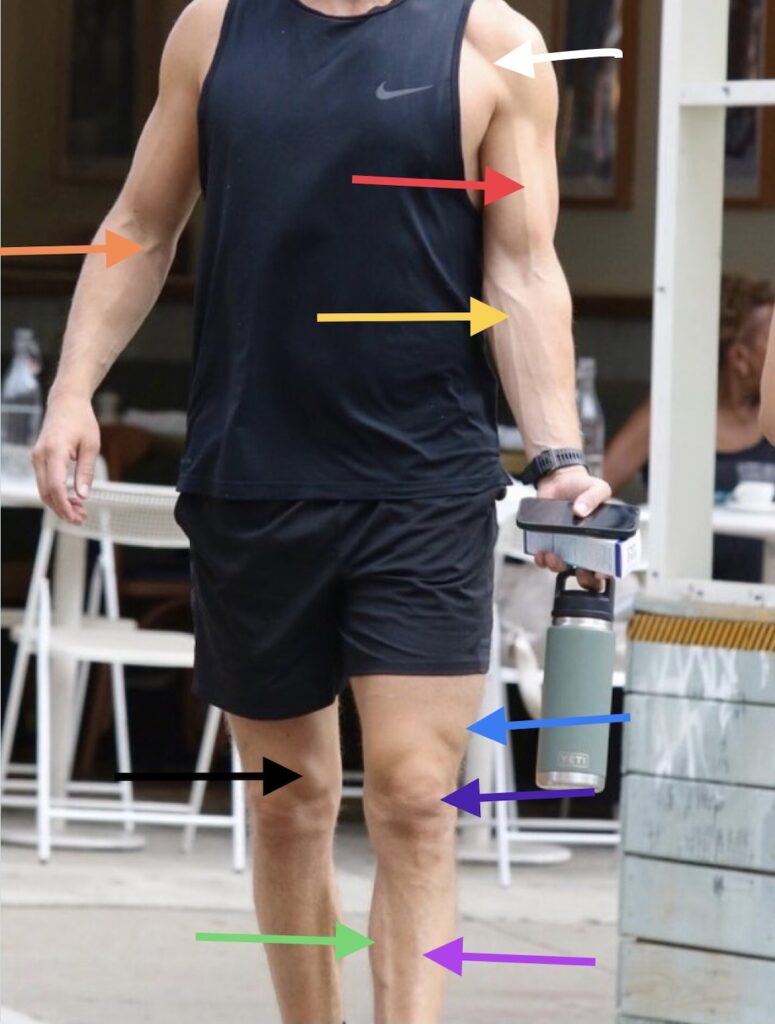
Next is a full body view of Sam’s surface anatomy. This one shows a few arms veins that is a phlebotomist’s dream!

Just a note that venous pattern throughout the body is extremely varied so much so that hand vein patterns can be used to identify a person.

Median Antebrachial Vein: The median antebrachial vein (gold arrow) and its tributaries gather blood from hand and forearm and return it to the basilic vein (not shown).

Cephalic Vein: This large vein (red arrow) gathers blood from hand and forearm and returns it to a large vein (axillary vein) deep to the collar bone. Its name means “head” in Latin because its path through the arm points toward the head.

Deltopectoral Groove: Cephalic vein is traced through the deltopectoral groove (white arrow), a groove between anterior deltoid and pectoralis major muscles. 

Median Cubital Vein: This vein (orange arrow) located in the cubital fossa (elbow hollow) forms a bridge connecting cephalic and basilic veins.

Fun Fact: Median cubital vein is the preferred site for blood draws because it is large and doesn’t tend to roll or move when a needle is inserted. The area also has fewer pain endings.

Moving to the lower limb! 🤗

Just So You Know: Anatomists define the thigh as that part of the lower limb between hip and knee and the part between knee and foot is the leg.

Vastus Lateralis: Aptly named, vastus lateralis (blue arrow) is vast on Sam-our-Man! Vastus lateralis is part of the quadraceps group of four (some say five) thigh muscles. It arises from the femur and inserts on the patella. It then joins the other quad tendons to form a common tendon that inserts on the tibia (largest leg bone). It is the largest and most powerful muscle of the quadraceps group. Together with the other quadraceps muscles, it extends (straightens) the knee joint and keeps patella in proper alignment.

Fun Fact: The vastus lateralis is the recommended site for intramuscular injection of infants under 7 months old and those unable to walk or with loss of muscle tone and mass.

Vastus Medialis: Also a member of quadraceps, this muscle (black arrow) arises from the femur and inserts on the patella and then, tibia. It has the same function as vastus medialis (see above).

PatellaAlso known as the knee cap, patella (purple arrow) is the largest sesamoid bone in the body, meaning it is enclosed in ligament or tendon.

GastrocnemiusGastrocnemius has two heads arising from different parts of the femur. These join together to help form Achilles tendon which inserts into the calcaneus (heel bone). Sam’s medial head (green arrow) is very apparent in this image. It is a powerful muscle that plantar flexes (points) the foot and flexes the knee joint.

Tibia: Tibia (violet arrow) is also known as the shin bone. It is the larger of the two leg bones. Together with the femur, tibia forms the knee joint and with the fibula (smaller leg bone), it forms the ankle joint.

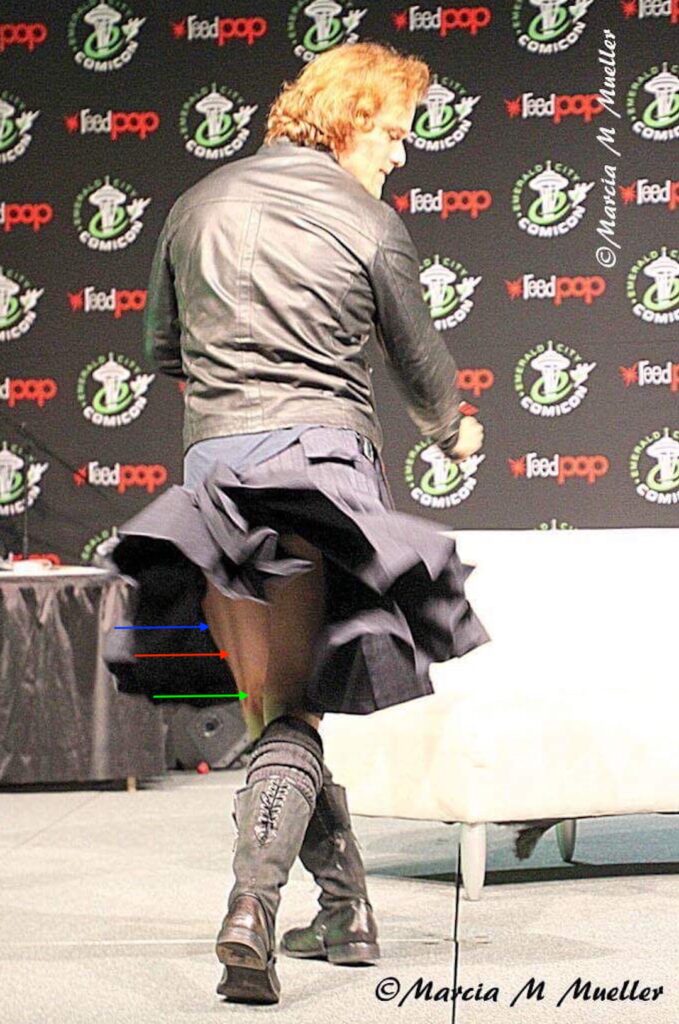
Next is a famous image of Sam flipping kilt for the “girls” at Emerald City ComicCon, March 6, 2017.  Plenty of thigh muscle on display here! 😜

This amazing image is property of Marcia M Mueller. 👏🏻

Biceps Femoris: Biceps femoris (so named because it has two heads). The long head (red arrow) arises from the ischium (part of pelvic bone) and the short head (green arrow) arises from the femur (thigh bone). Both heads join into a single tendon that inserts on the fibula. Biceps femoris is a powerful flexor of the knee joint.

Not so Fun Fact: Avulsion (tearing away) of the biceps femoris tendon is common in sports that require explosive bending of the knee as seen with sprinting! 😱

Vastus Lateralis:  Blue arrow – See above

Quiz time!

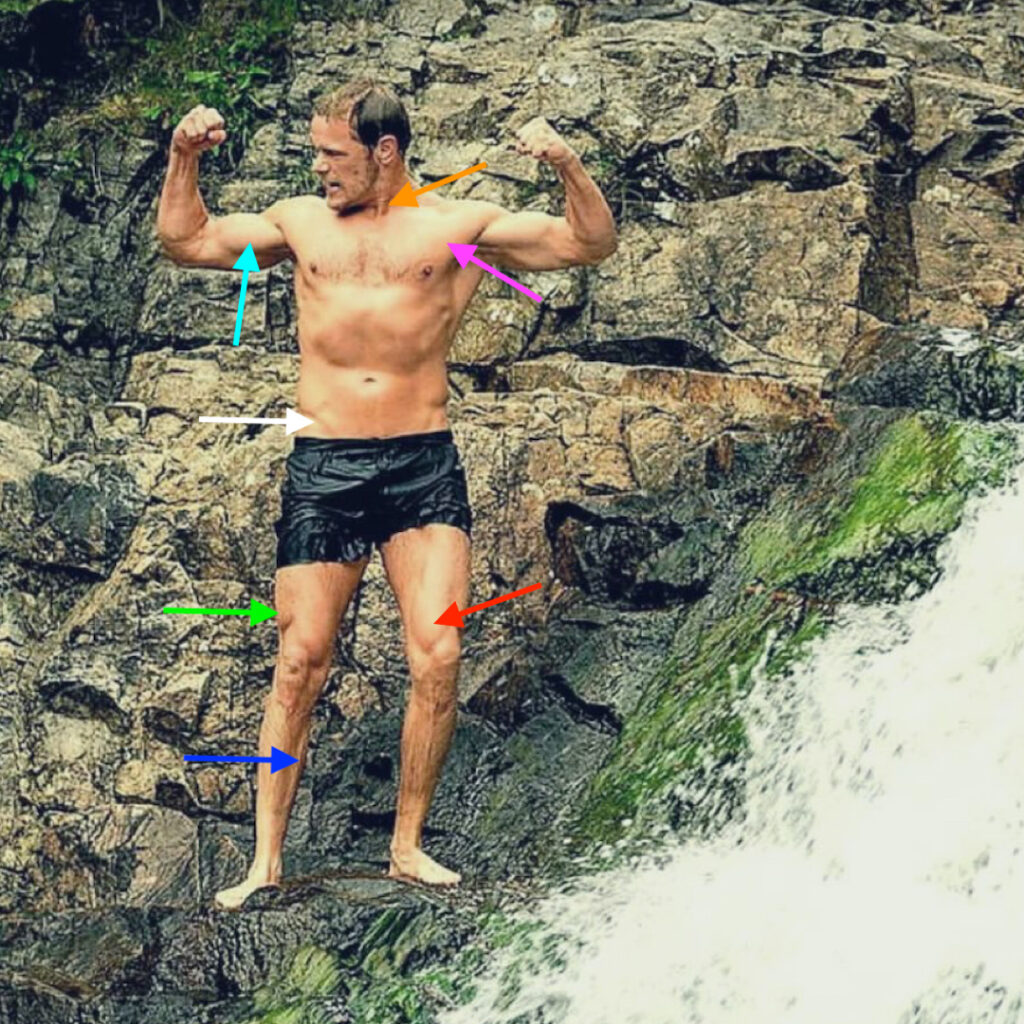
Try to identify the structures in this last image of Sam. Do your best. Answers appear after the image. Good luck!

    • Orange arrow – sternocleidomastoid muscle
    • Violet arrow – pectoralis major muscle
    • Aqua arrow – Biceps brachii muscle
    • Green arrow – Vastus lateralis muscle
    • Red arrow –  Vastus medialis muscle
    • Blue arrow – medial head of gastrocnemius muscle
    • White arrow – Inguinal groove, (aka Adonis belt)  *** Extra credit for this one because we didn’t discuss! 😃

Well done, students! 🏆

The deeply grateful,

Outlander Anatomist

Follow me on:

Photo Creds: Sony/Starz; www.menshealth.com, www.thewrap.com, www.Wikimedia, @marciammueller, @samheughan, @kayzee

Anatomy Lesson: Mandy’s Malady

Welcome all anatomy students! It has been a while since I posted a lesson because, frankly, I have been dealing with my own malady – a shattered left ankle! Six months out and beginning to feel and function better. 🥳

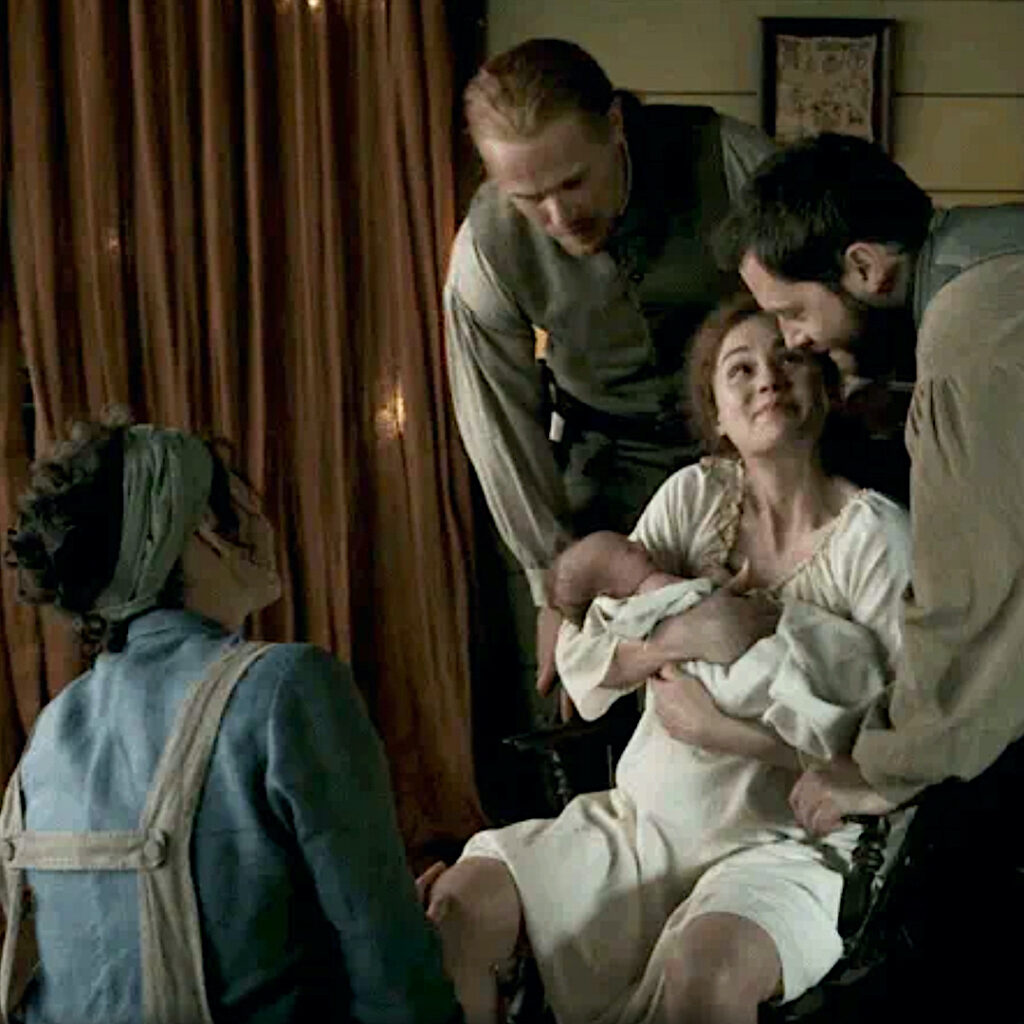
Outlander fans recall that in episode Episode 702, “The Happiest Place on Earth,” Brianna gives birth to her second child, Amanda Hope Claire MacKenzie-Fraser. Dr. Claire is there to reassure Brianna and ease the process. The wee one is adored by all and affectionately nicknamed, Mandy.  Fraser’s Ridge is the happiest place on earth and all is well! 🥰

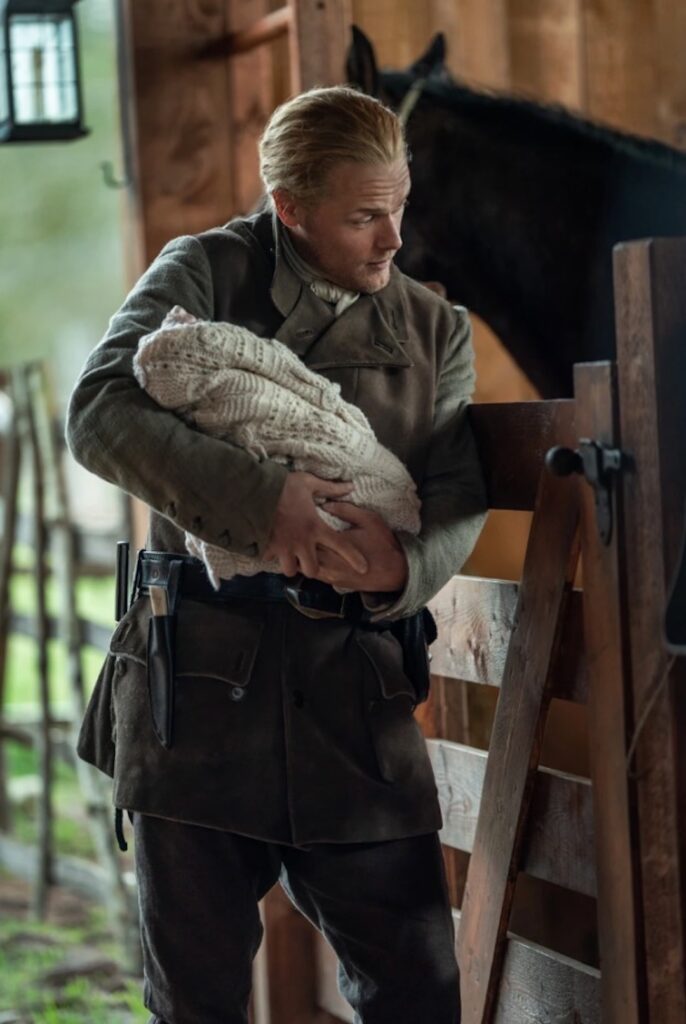
Young Mandy is quickly introduced to the Ridge’s denizens as Granda’ Jamie takes her on a wee stroll to meet a new foal at the stable. Do you see it, Mandy? It is a cutie-beauty like you! 😍 

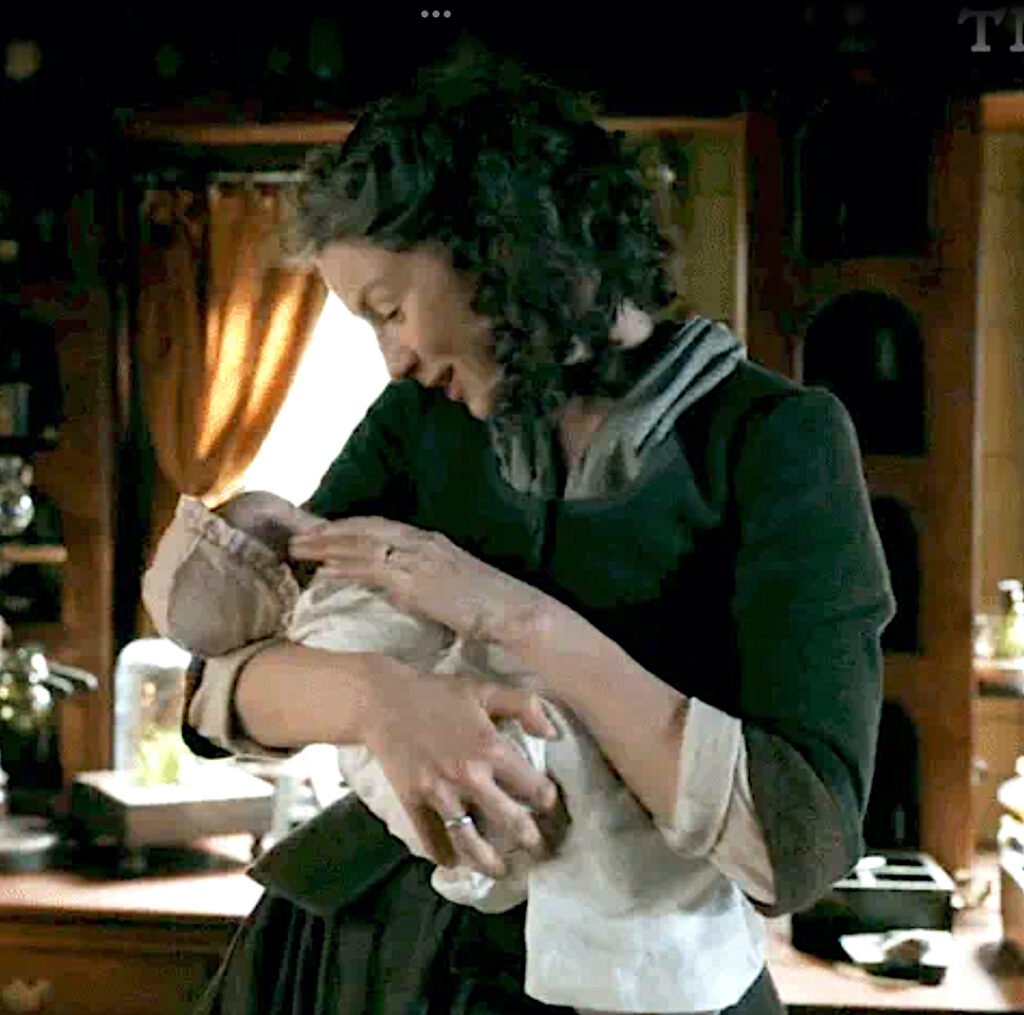
Mandy’s doting Granny takes her on a guided tour of Claire’s fav room – the surgery! Mayhap she will follow in Granny’s footsteps? 👩🏻‍⚕️

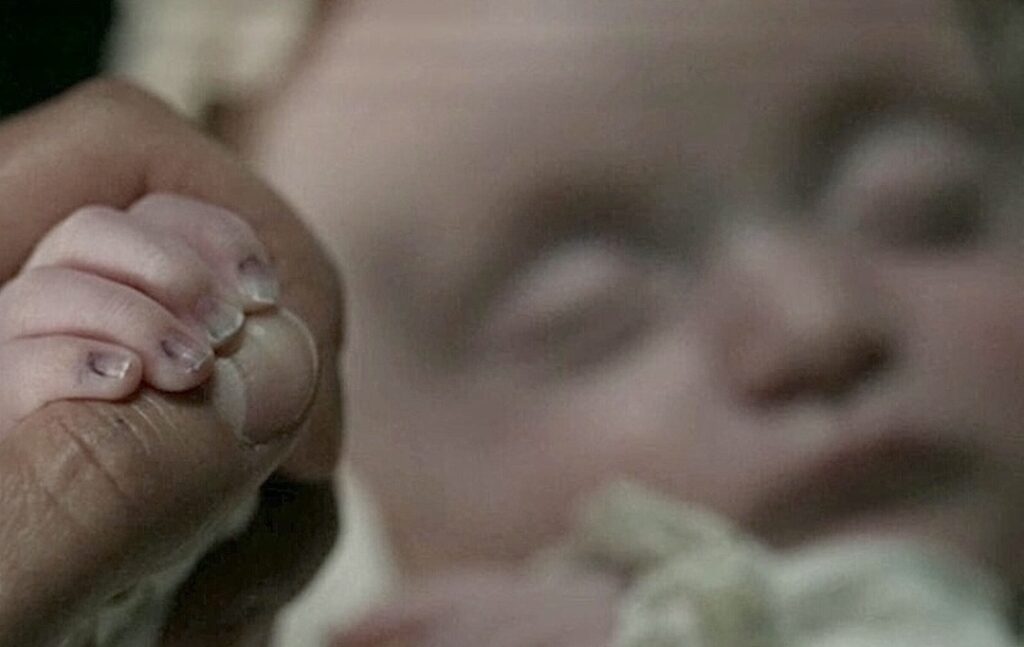
Claire coos to Mandy, admiring the beautiful, wee lass. Then…. she sees Mandy’s fingernails. A closer look and a startled Claire exclaims: “Bloody hell!”  (Couldn’t have said it better myself)  

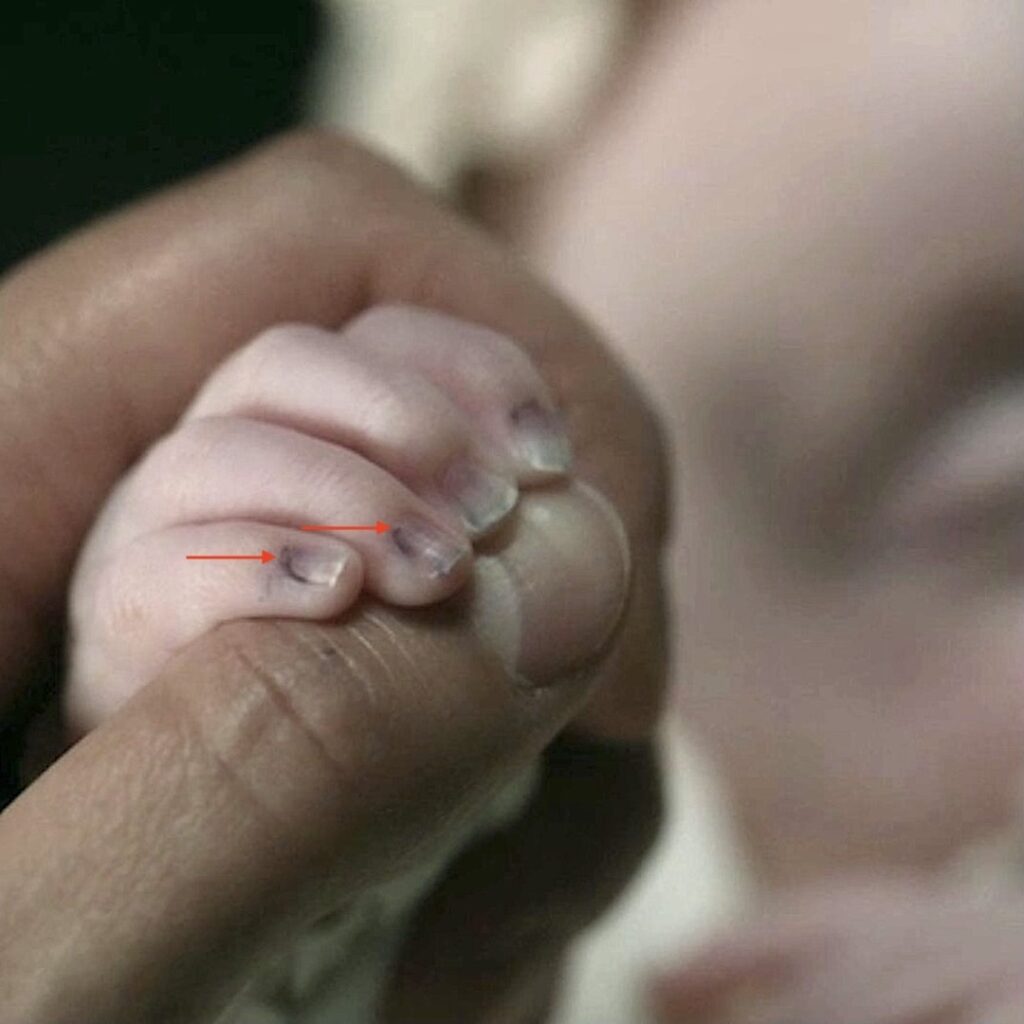
Ever observant Claire spies a bluish tinge at the base of Mandy’s wee fingernails (below, red arrows)!

Fun Fact: This is not hyperbole.  Fingernails and toenails give clues to at least a dozen possible medical conditions that require evaluation and followup. And, Mandy is no exception.

A quote from Diana’s 6th big book, “A Breath of Snow and Ashes,” documents the moment Claire observes Mandy’s nail beds: ”

“The minute nails were faintly tinged with blue.” 

Bree senses Claire’s concern and asks what is wrong.  She kens that look on her mother’s face. After Claire explains, Bree reports her own maternal observations: Mandy does not nurse well nor is she gaining weight like Jem. What is wrong? 😯

Claire determines that the wee lass has a heart defect requiring more advanced care than Claire is able to provide in the 1700s. She is clear that Mandy’s Malady is life-threatening and she likely will not survive for long without corrective cardiac surgery. Brianna and Roger decide to return with their children to the 20th century to obtain the necessary care to save Mandy’s life.

Arrangements are made for the MacKenzie family to travel through time at the standing stones on Ocracoke Island. Everyone agrees this is the best course of action, but this time and place is no longer the “happiest place on earth!” Will they ever see Fraser’s Ridge and one another again? 🤷🏻‍♀️

Time to start our lesson….What leads Claire to her startling diagnosis? The following are symptoms and clues that Doctor Claire considered:

    • Lethargy and weakness
    • Fast or labored breathing
    • Tachycardia (a heart rate exceeding the normal resting rate)
    • Cyanosis (blue-ish skin color due to a lack of oxygen), primarily seen in lower extremities
    • Dyspnea (shortness of breath)
    • Poor feeding
    • Failure to thrive
    • Distinctive murmur

Another pithy quote from “A Breath of Snow and Ashes:” 

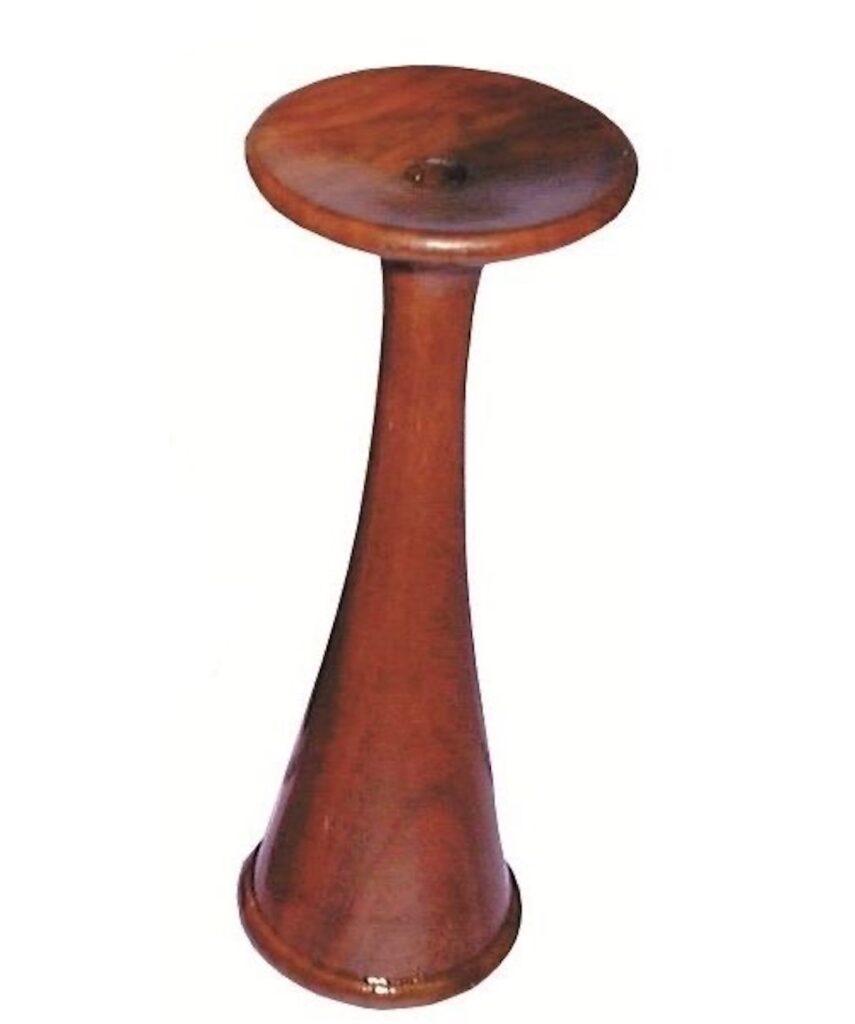
I moved my stethoscope over the tiny chest, ear pressed to it, listening intently. It was my best stethoscope, a model from the nineteenth century called a Pinard—a bell with a flattened disc at one end, to which I pressed my ear. I had one carved of wood; this one was made of pewter; Brianna had sand-cast it for me.

The following image is a wooden Pinard stethoscope, currently for sale on the Internet for about $180 (there are much less expensive versions)! 💰

Claire placed her ear against the cup shaped disc at the top; the bottom of the tube was placed on Mandy’s chest. The stethoscope amplifies the sounds of blood rushing through the heart and striking its valves.  

What did Claire listen for? she was listening for a distinctive murmur: a soft, continuous shushing sound, particularly audible near the base of the neck. It is usually the first diagnostic sign of a problem with a fetal heart vessel.  

Although Mandy exhibits only some of the above symptoms, Claire diagnoses Mandy’s condition as a Patent Ductus Arteriosus (PDA).  

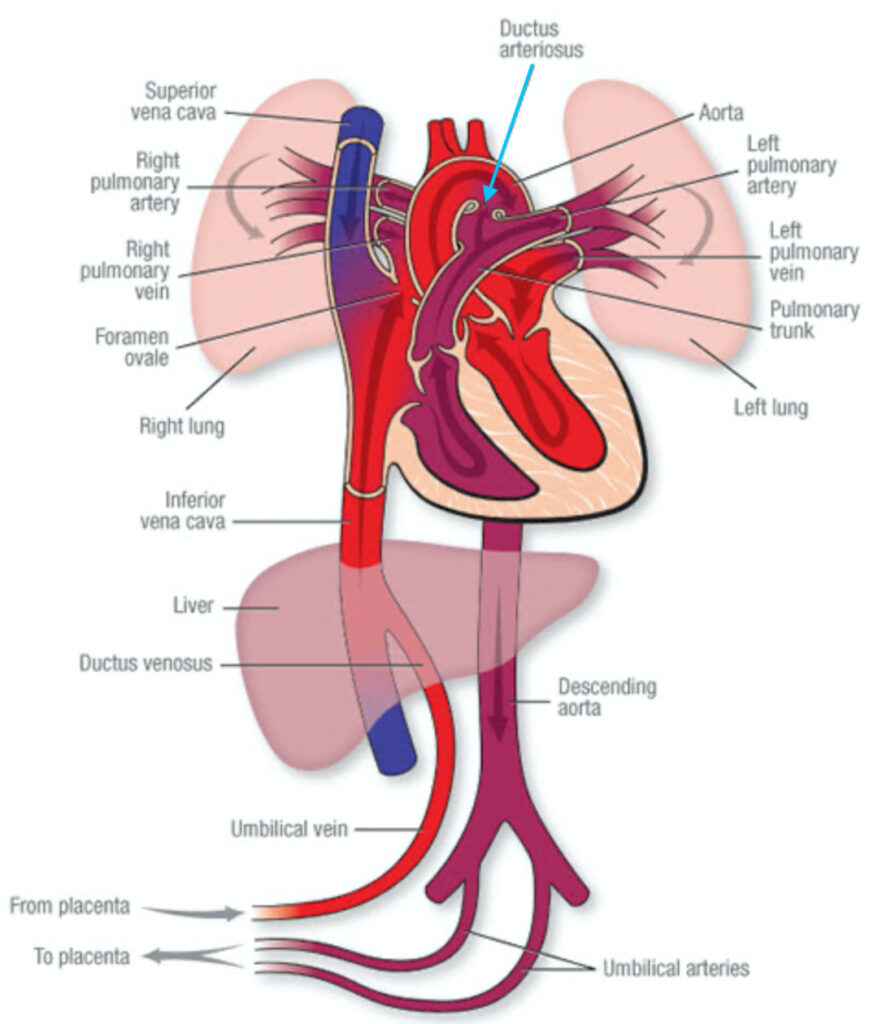
But, before we can understand PDA, let’s look at normal heart anatomy.

Heart Anatomy: To better understand Mandy’s Malady, let’s consider the normal anatomy of the heart and its great vessels. Now, I kid you not, the heart is a very complex organ, both anatomically (structure) and physiologically (function). We will only cover the basics. Understand that there are many more anatomical details that are beyond the scope of this lesson. But, we fearless folk press onward!

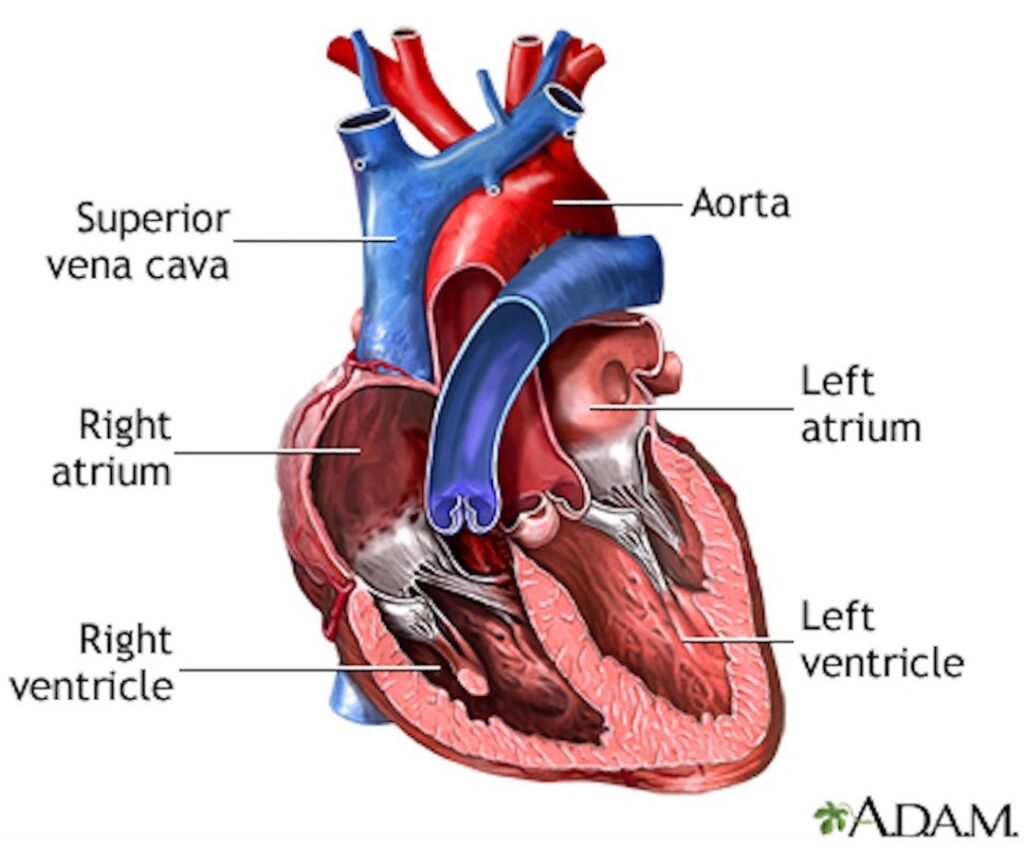
Chambers: The human heart has four chambers (next image). Right atrium and left atrium are thin-walled filling chambers. Right ventricle and left ventricle are thick-walled pumping chambers . The walls are composed of cardiac muscle, a specialized tissue found in the heart. (psst….don’t forget, the patient’s left is your right, and vice versa) 🤓 

Vessels: The heart has eight (!!!) vessels carrying blood to and from its chambers. These are (next image):

    • Superior vena cava – delivers blood from upper body into right atrium
    • Inferior vena cava – delivers blood from lower body into right atrium
    • Pulmonary artery – deliver blood from right ventricle to lungs
    • Four pulmonary veins – deliver blood from lungs to left atrium
    • Aorta – delivers blood from left ventricle to body 

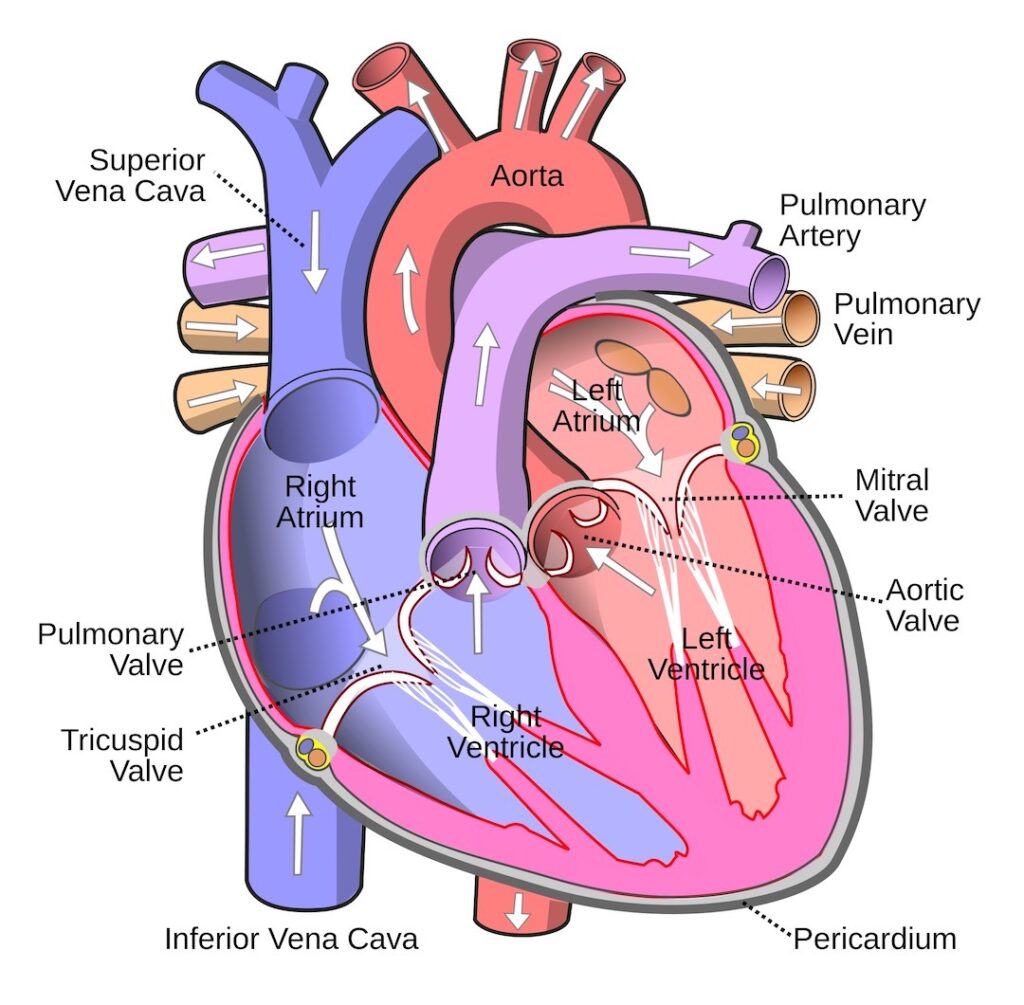
Blood Flow: Next, let’s review the pattern of blood flow through the heart. As you read the details, check with the image below to verify the flow.

    • Deoxygenated blood (low oxygen – O2; high carbon dioxide -CO2) from  superior vena cava and inferior vena cava pours into right atrium and then into right ventricle.
    • Right ventricle contracts and ejects blood into the pulmonary artery which branches to supply left and right lungs. 
    • Blood releases carbon dioxide (CO2) in the lungs which is exhaled and picks up O2 from inhaled air.
    • Oxygenated blood (O2-rich) is carried to left atrium via four pulmonary veins. 
    • Blood pours into the left ventricle which contracts and ejects O2-rich blood into the aorta.
    • Branches of aorta carry blood to all other regions of the body (except lungs).  

OK, students, hang in there! With normal anatomy under our belt, let’s look at the fetal circulation. 

Fetal Circulation: Blood circulation in the fetus is different because the placenta provides the functions of lungs, gastrointestinal tract, and kidneys. Thus, a normal blood supply to these maturing organs is not required.

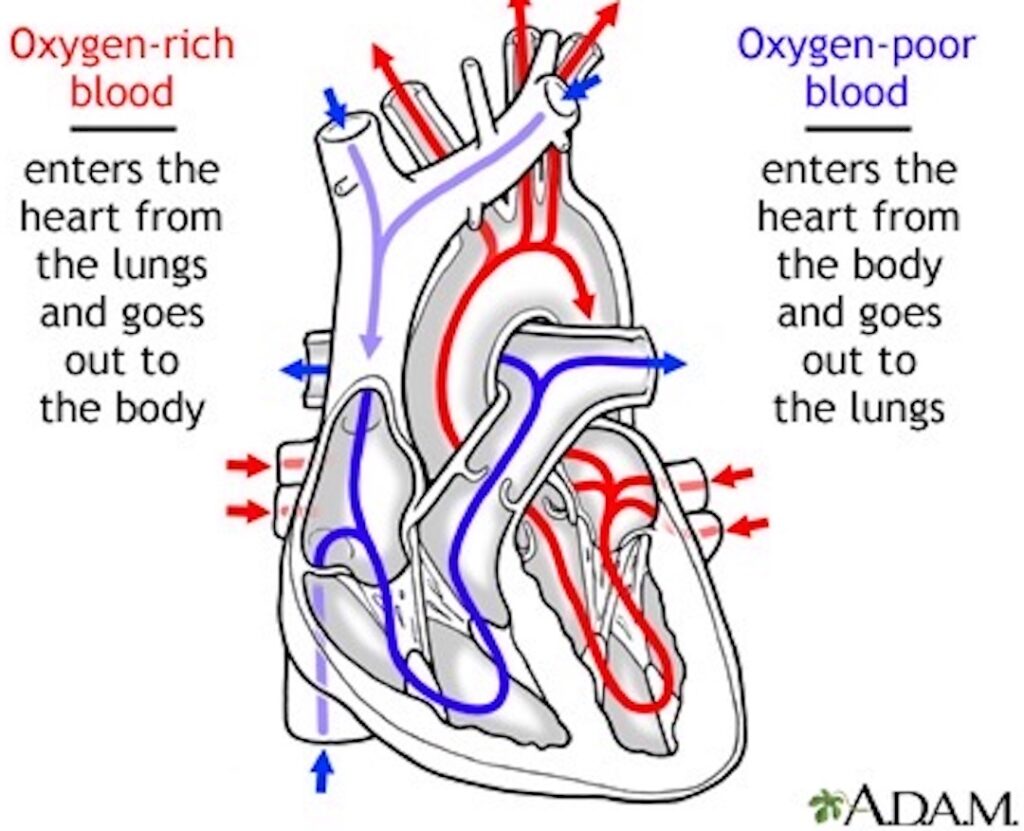
Ductus Arteriosus: The fetal heart has a vascular bridge between pulmonary artery and aorta that shunts blood exiting the right ventricle into the aorta and bypasses the lungs. This vascular bridge is the muscular ductus arteriosus (aqua arrow – below image). Again, because lungs do not process gasses during intrauterine life, most blood is shunted away from them. 

The ductus arteriorsus is patent (open) throughout fetal life and normally closes within 24 hours after birth as blood flow to the lungs is established. Within 2-3 weeks, it turns into a fibrous band, the ligamentum arteriosum. 

All of this is highly regulated by various chemical and physiological substances including oxygen levels. 

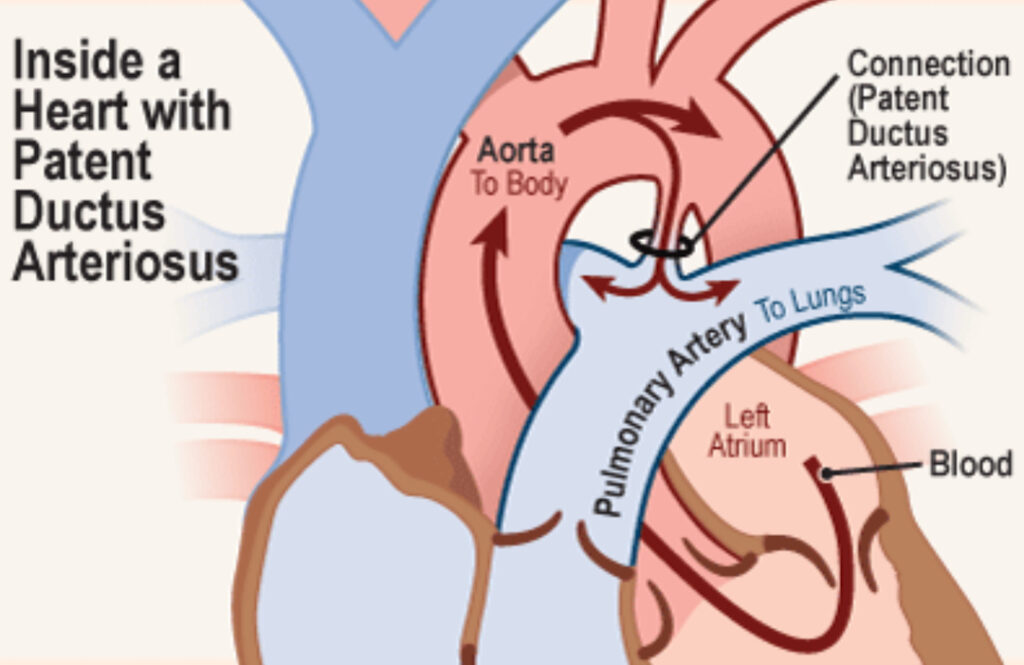
Patent Ductus Arteriosus: If the ductus arteriosus does not close soon after birth but remains patent (open), it is diagnosed as PDA, a congenital heart lesion. PDAs are most common in premature babies but can also occur with full term infants. 

Nowdays, if a ductus arteriosus does not spontaneously close after 8 weeks post-birth, it usually is treated with medications, plugged, or surgically closed. Small PDAs may not be a cause for concern and are often not treated.

Adding a bit of perspective – PDA is not new. It was known as early as 129 A.D. to Galen, a Greek anatomist and physician, although he didn’t understand its significance. It wasn’t until 1938, almost two millennia later, that Dr. Robert E. Gross of Harvard Medical School and Children’s Hospital in Boston, Massachusetts, perform the first successful ligation (closure) of a PDA. This was also the first congenital heart lesion to be successful corrected, surgically.

Now, let’s return to Mandy’s Malady. This was her problem. Mandy’s ductus arteriosus did not close after birth and she exhibited some of the concerning symptoms outlined above.  Blood from her aorta flooded her lungs subjecting fragile lung tissues to excessive blood pressure (hypertension). Allowed to go unchecked, the fragile lungs will be permanently damaged and she  eventually will experience right-sided heart failure.

Diana explains all of this with her usual magical writing skills in this excerpt from “A Breath of Snow and Ashes:” 

The ductus arteriosus is a small blood vessel that in the fetus joins the aorta to the pulmonary artery. Babies have lungs, of course, but prior to birth don’t use them; all their oxygen comes from the placenta, via the umbilical cord. Ergo, no need for blood to be circulated to the lungs, save to nourish the developing tissue—and so the ductus arteriosus bypasses the pulmonary circulation. 

At birth, though, the baby takes its first breath, and oxygen sensors in this small vessel cause it to contract—and close permanently. With the ductus arteriosus closed, blood heads out from the heart to the lungs, picks up oxygen, and comes back to be pumped out to the rest of the body. A neat and elegant system—save that it doesn’t always work properly.

The ductus arteriosus doesn’t always close. If it doesn’t, blood still does go to the lungs, of course—but the bypass is still there. Too much blood goes to the lungs, in some cases, and floods them. The lungs swell, become congested, and with diverted blood flow to the body, there are problems with oxygenation—which can become acute.

Lastly, this is a brief video about PDA which you might find useful. It is easy to understand and accurate: https://youtu.be/7DKaCqubuSg. 🤓

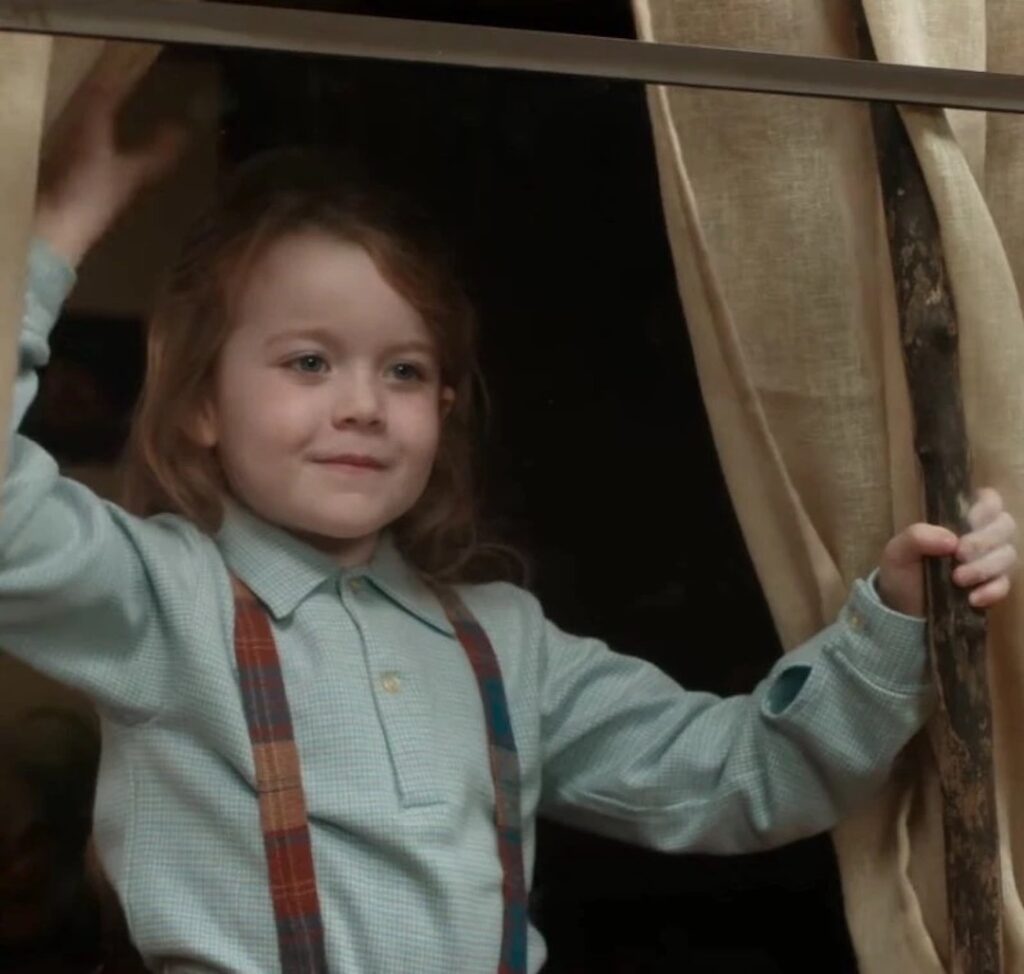
Fast forward! It is clear that the MacKenzies arrived safely in the 20th Century and Mandy received the medical intervention needed for her PDA repair. When we meet her next at Lallybroch, she is a healthy, happy, and feisty wee lass, played by Rosa Morris. 🤗

As William Shakespeare once wrote, “All’s Well That Ends Well!”

(Well, it would end better if they were all together, but we shall see) 🤞🏻

The deeply grateful,

Outlander Anatomist

Follow me on:

Photo creds: Sony/Starz; www.commons.wikimedia.org; www.heart.org; www.kidshealth.com; www.medicalsuppliesgh.com; www.medlineplus.gov; www.outlander.fandom.com; www.theoutlandermuse.com; www.twitter.com (now X)