Anatomy Lesson #58: Needles, Nerves and Penicillin!

Welcome, all students to Anatomy Lesson #58, Needles, Nerves and Penicillin. What do these words share in common? Why, Jamie, of course!  In Anatomy Lesson #56, Achy Brachial Artery, we learned that birdshot from Laoghaire’s fowling piece almost ruptured one of Jamie’s major arteries. We also learned how Claire analyzed and repaired those wounds – based on human anatomy, of course!

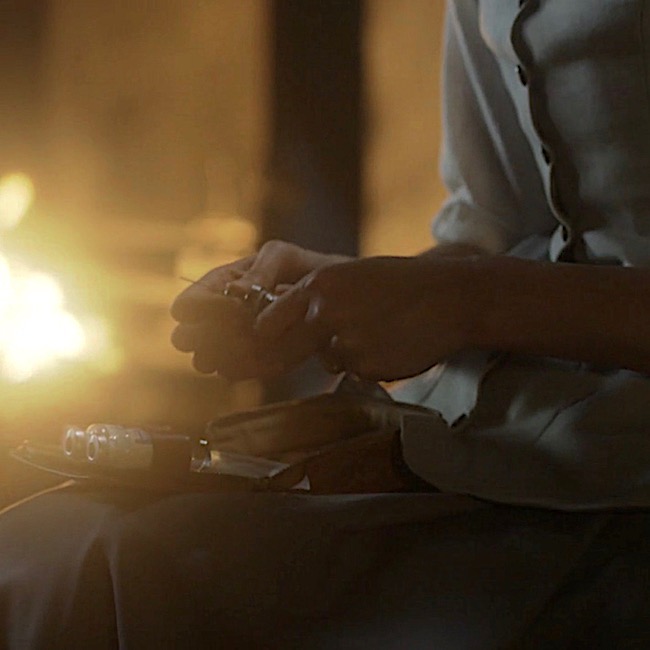
Today’s lesson will examine Claire’s final cure for what ails her man. In Outlander episode 308, First Wife, we see her open a small medical bag equipped with needle, plunger and bottles of white fluid. What is she doing? Diana explains in Voyager book:

I laid the small, flat case on the table and flipped the latch. “I’m not going to let you die this time either,” I informed him, “greatly as I may be tempted.” I carefully extracted the roll of gray flannel and laid it on the table with a soft clinking noise. I unrolled the flannel, displaying the gleaming row of syringes, and rummaged in the box for the small bottle of penicillin tablets.

Translation: Dr. Claire busily prepares a hefty dose of penicillin for our fever-ravaged, red-heided hero!  So, let’s begin the lesson with penicillin.
What is Penicillin? Penicillin is an antibiotic, from the English word, anti- meaning “against,” and the Greek word, bios meaning “life.”  In a nut shell, antibiotics are substances which retard the growth of and/or destroy bacteria (germs).

How does Penicillin Work? First, understand that human cells are surrounded by a fragile cell membrane, but bacterial cells are surrounded by a sturdy cell wall. Penicillins destroy bacteria by preventing synthesis of said cell walls or by promoting processes to break them down. They do not harm human cells because our cells lack cell walls. Make sense? Grand!

From Whence Cometh, Penicillin: Before penicillin, there were no effective treatments for common infections such as pneumonia or rheumatic fever; hospitals were filled with folks suffering blood poisoning contracted from nothing more than a mere cut or scratch!

In 1928, Alexander Fleming (Image A), a British bacteriologist, returned from summer vacation in Scotland (yay!). Checking his lab specimens, he found that a mold (Penicillium notatum = P. notatum), probably from an open window, had contaminated his colonies of a common bacteria (Staphlococcus aureus or S. aureus).
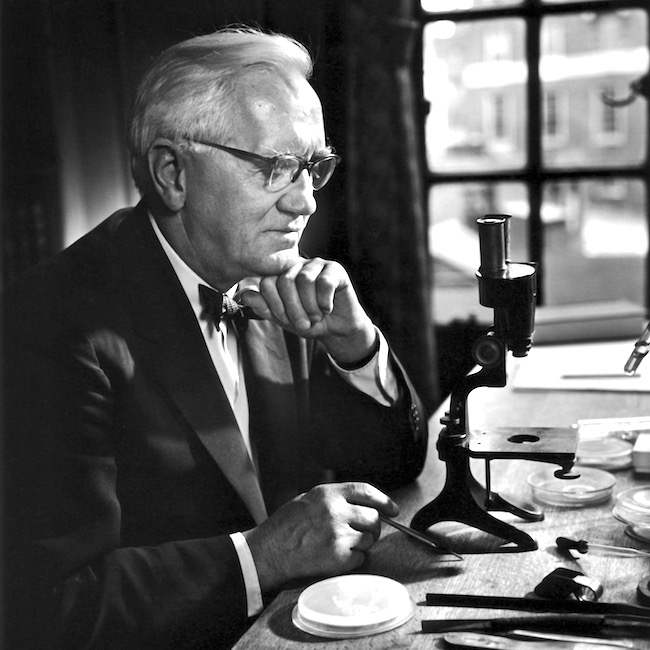
Image A

Examining the specimens via a truly primitive microscope (see Image A), he found the mold inhibited growth of S. aureus! Image B shows a modern version of what he observed: zigzagging ribbons of bacterial growth and a “halo” of no growth around the Penicillium colony. He correctly deduced his “mold juice,” which he later dubbed penicillin, inhibited bacterial growth!
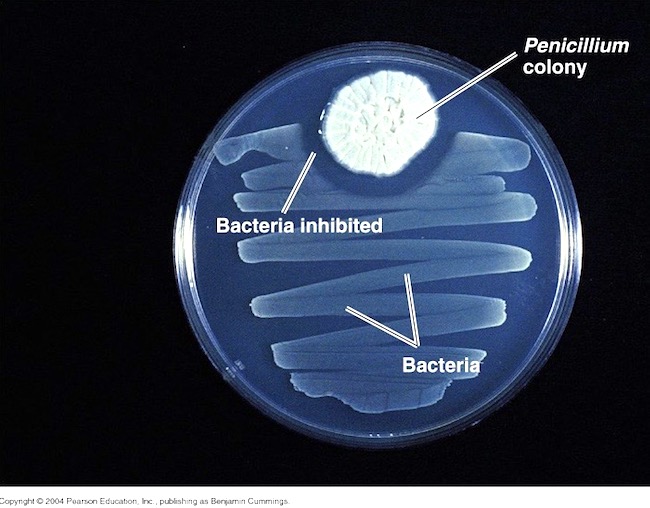
Image B

Stop! Now, we might imagine this was an entirely modern discovery, but others in the early 1900s had made similar observations although not much came of these. Even more amazing? Ancient Egyptians applied a poultice of moldy bread to promote healing of infected wounds. Very doubtful that ancient Egyptian bread looked anything like this loaf of sliced, white bread (Image C), but you get the idea. Icky!
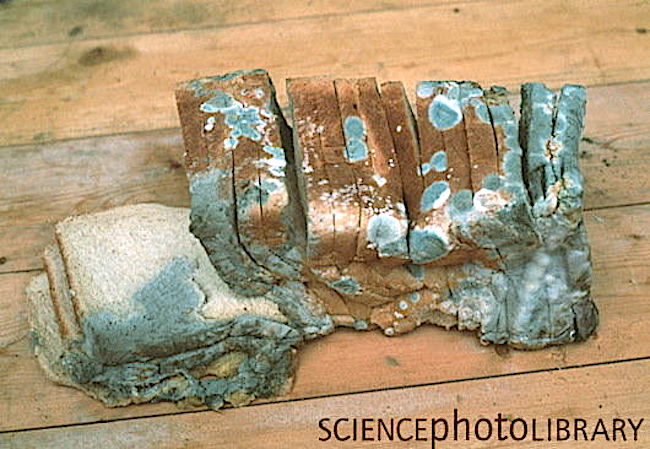
Image C

Penicillin to the Rescue! Fleming published his experiments in 1929, but his paper focused mostly on uses for penicillin in the lab with only a brief remark about possible therapeutic benefits.

Ten years later, an Australian scientist and Oxford pathologists proved penicillin was an effective antibiotic. But, the mold was cranky and fastidious to grown and the yield so low, only small quantities could be produced.

Enter WWII with its urgent need for battlefield antibiotics! Various pharmaceutical companies teamed with US Department of Agriculture to mass produce penicillin (the chemical engineer who designed 10,000 gal. production vats was a woman!).

Simultaneously, a global search was launched to find a new mold that could be grown easier and yield larger quantities of penicillin. One hot summer day, a laboratory assistant arrived with a cantaloupe covered in  ”pretty, golden mold” which she (yes, another woman!) had found at a Peoria (IL) market. This mold was Penicillium chrysogeum, yielding 200 times the volume of penicillin as P. notatum!!! In 1954, using P. chrysogeum, US production of the drug jumped from 21 billion units to more than 6.8 trillion! And, penicillin was made available to allied forces (Image D).

A final note: Australia was the first country to make penicillin available for civilian use. Go, Aussies!

Penicillin does have drawbacks; it is ineffective against viruses and some types of bacteria (gram-negative), some people (0.03%) are allergic, and some bacteria have developed resistance due to over prescription or patients not following dosage instructions. Despite these drawbacks, penicillin can effectively treat the following short list of diseases (there is a long list, too):

  • Strep infections such as strep throat, scarlet fever
  • Staph infections such as post traumatic infections
  • Syphillus
  • Gonorrhea
  • Diphtheria
  • Lyme Disease
  • Typhoid Fever
  • Necrotizing Fasciitis (Flesh-eating disease)

If you remain curious about the fascinating history of penicillin, your thirst might be quenched by reading this article: https://www.acs.org/content/acs/en/education/whatischemistry/…/flemingpenicillin.html

Although I rarely move ahead of TV Outlander, this apropos quote from Diana’s book, The Fiery Cross, describes Claire’s work with penicillin. Herself wrote about molds from varied sources including the melon. Way to “break the mold,” Diana!

I twiddled the quill, rolling it between thumb and forefinger. I had kept a faithful account of my experiments with penicillin—the growing of cultures on media ranging from bread to chewed pawpaw and rotted melon rind, painstaking descriptions of the microscopic and gross identification of the Penicillium molds…
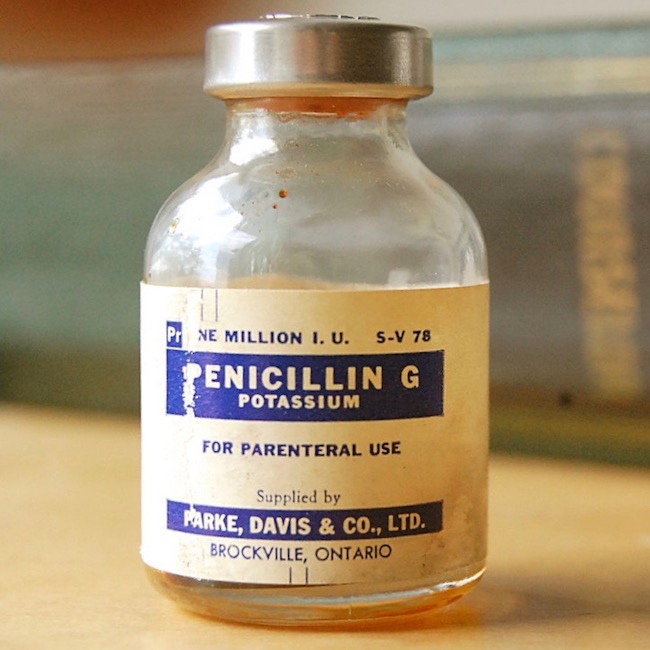
Image D

OK, now, back to Outlander episode 308, First Wife!

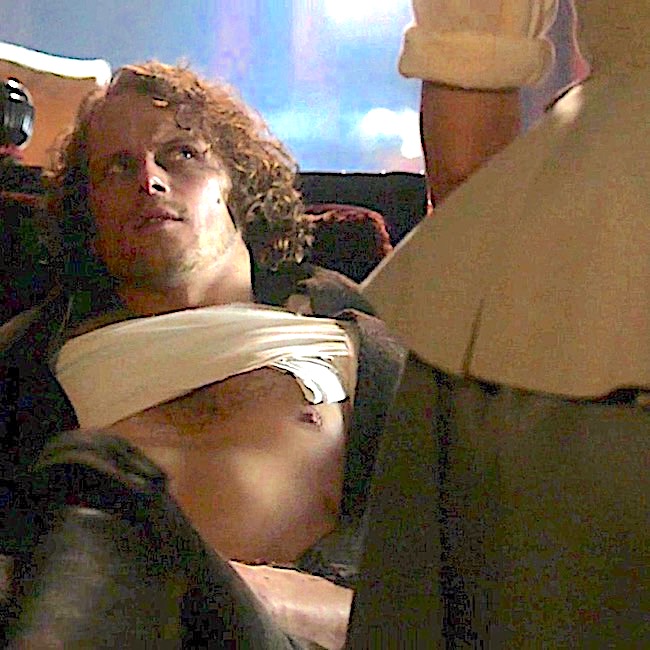
Nefarious Needles: With penicillin behind us (har, har) we broach the topic of needles. Ahhhh, yes, needles – a cruel device, with which most folks share a love-hate relationship! Claire prepares the penicillin and draws it into a syringe. Here, from Voyager book:

“What in God’s name are those?” Jamie asked, eyeing the syringes with interest. “They look wicked sharp.”

Psst … To me, he looks more wary than interested. Hah!
And more about needles:

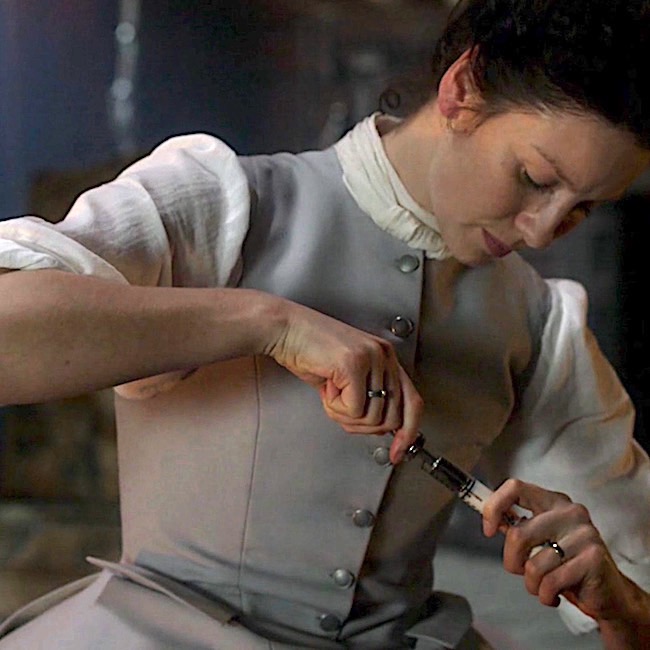
I didn’t answer, occupied in dissolving the penicillin tablets in the vial of sterile water. I selected a glass barrel, fitted a needle, and pressed the tip through the rubber covering the mouth of the bottle.

Holding it up to the light, I pulled back slowly on the plunger, watching the thick white liquid fill the barrel, checking for bubbles.
And more!

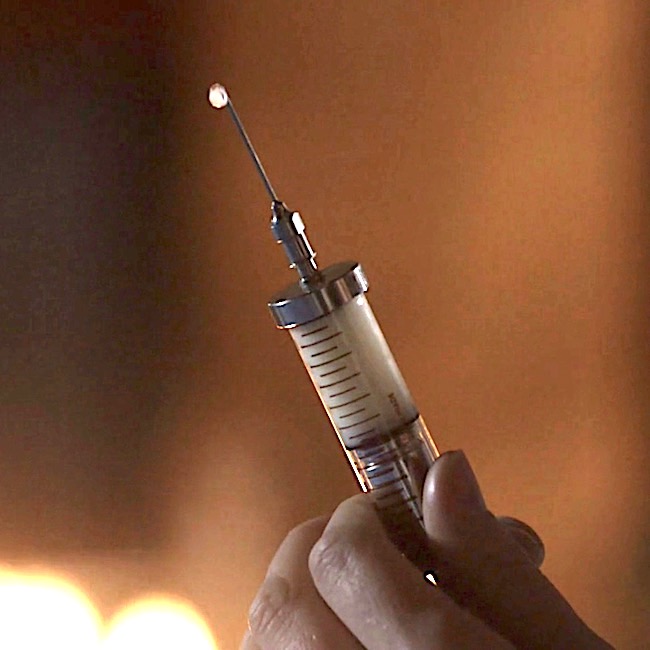
Then pulling the needle free, I depressed the plunger slightly until a drop of liquid pearled from the point and rolled slowly down the length of the spike.

Claire’s penicillin is a thick, white liquid, poorly received by Jamie’s remarkably regal rump. We might ask, why Claire didn’t carry oral penicillin for her return trip to 1700s Scotland? It was available in her time. I really don’t ken the answer, but the injectable type promises readers and viewers a much more rousing and carousing tale! <G>
Understand, the first penicillins were injected, not ingested (Image E – puir wee laddie). Why? Because, when swallowed, stomach acid breaks down penicillin rendering it impotent. But, in the 1950s, types of oral penicillin which resisted stomach acid were developed. Today, many forms of penicillin include: capsule, chewable tablet, tablet for suspension, extended-release tablet, powder for suspension, powder for solution, capsule and syrup.
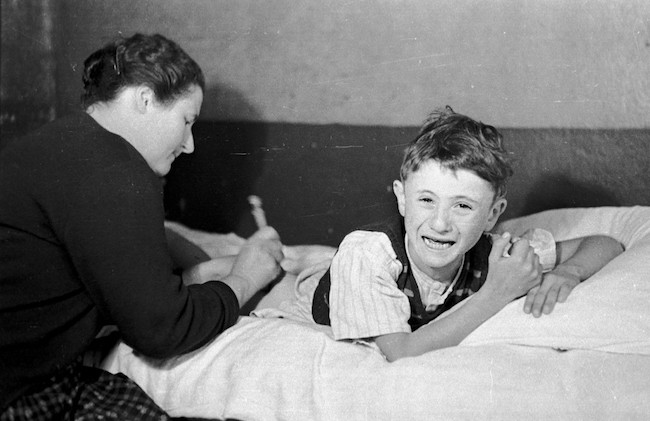
Image E 

Claire also brought her own 20th century syringes because they had not been invented in Jamie’s time. Almost a century later (1840s), Irish physician Francis Rynd invented the hollow needle to deliver the first modern-era subcutaneous (under-the-skin) injections! …”I’ve Got You Under My Skinnn!” ? Och!

Before we move on, let us honor resourceful Pre-columbian Native Americans who created early hypodermic needles and syringes using “hollow bird bones and small animal bladders!” Incredibly inventive and creative – using only nature’s gifts to presumably administer healing substances! No Spoilers: This relatively unknown fact should please book readers who will recognize something similar which Claire employs in The Fiery Cross.

I’ve said it before and I’ll say it again: if you haven’t read/listened to the books, you are missing one long joyous, glorious voyage!

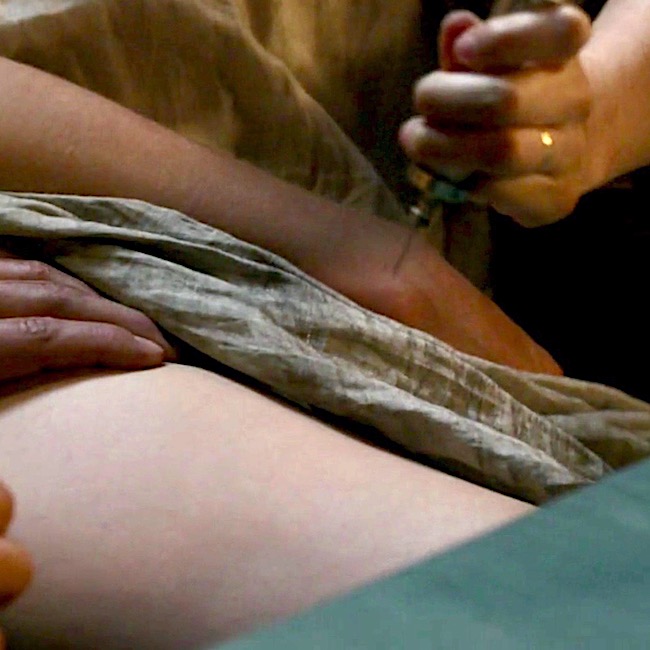
More penicillin adventures from Voyager book. Claire stabs Jamie in the backside with her wee needle spike. Hah!

“Roll onto your good side,” I said, turning to Jamie, “and pull up your shirt.” He eyed the needle in my hand with keen suspicion, but reluctantly obeyed. I surveyed the terrain with approval. “Your bottom hasn’t changed a bit in twenty years,” I remarked, admiring the muscular curves.
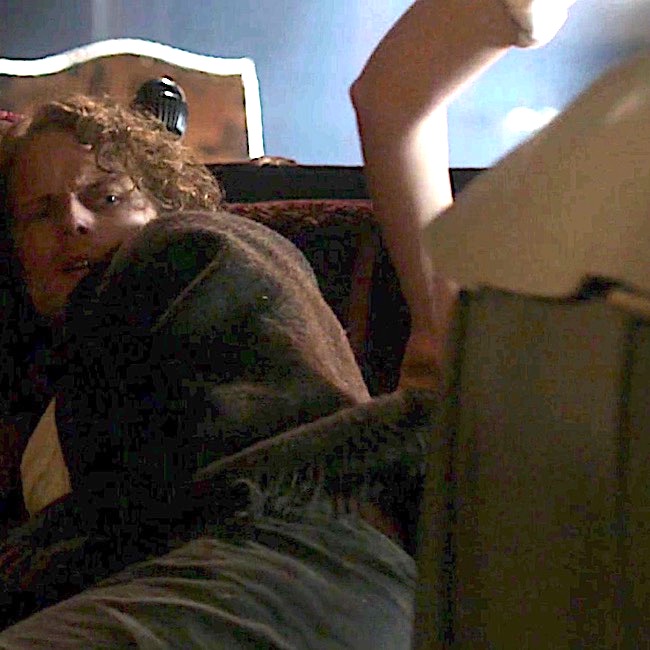
… I jabbed deftly and pressed the plunger slowly in.

“Ouch!” Jamie rubbed his posterior resentfully.

“It’ll stop stinging in a minute.” … Finally he said, “I thought ye stuck pins in ill-wish dolls when ye meant to witch someone; not in the people themselves.”

“It’s not a pin, it’s a hypodermic syringe.”

“I dinna care what ye call it; it felt like a bloody horseshoe nail. Would ye care to tell me why jabbing pins in my arse is going to help my arm?”

Splendid, splendid passage!

Here’s a few pearls from the above quote to consider: Why did Claire push the plunger slowly? Because, penicillin is a thick liquid which flows slowly and because it is viscous, it requires a large bore needle (18 gauge). The bigger the needle, the more it hurts while traversing the skin (yikes)! Because it is injected into muscle, the fibers are pushed apart by the fluid and that hurts, too!  I well remember penicillin shots from my youth. Not fun!
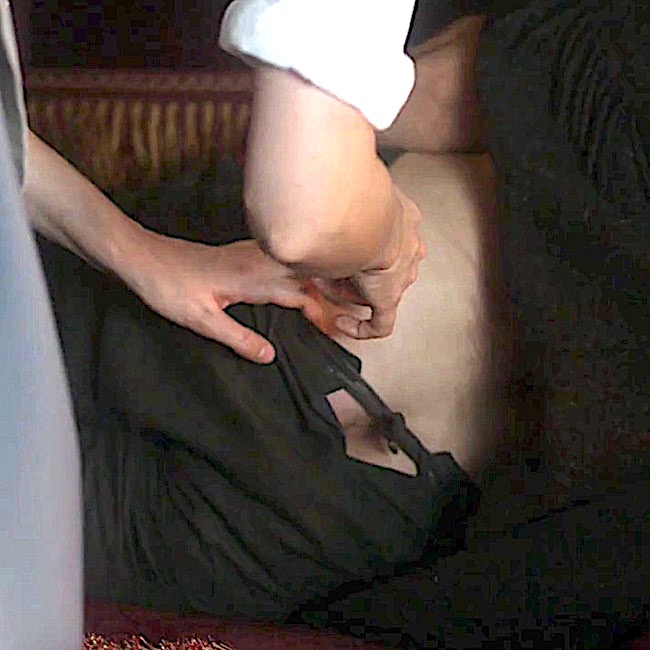
Crucial Question: Let’s get to the bottom of things (snicker)…..is Claire free to poke that needle anywhere in Jamie’s bottom? Absolutely not!!! Clarie carefully selects the area where she deftly jabs her needle spike.

Anatomy to the Rescue: Now, wait just a sec! Why does it matter where Claire sticks the needle? After all, it hurts regardless, right? Let’s find the answer by studying anatomy of the backside.

Remove skin and subcutaneous tissue and the buttock region looks like the left side of Image F: Each massive gluteus maximus muscle (Anatomy Lesson #1,  Jamie’s Tush) covers the back of one hip. Because the muscle is thick and meaty, injection into its fibers is a perfect destination!

Try this: Stand erect and place your palms on each buttock with fingers facing downward. Now, clench your bottom and feel it lift and tighten (hopefully)? Gluteus maximus muscles at work!

Sciatic Nerve: Butt, wait (he, he)! Remove the gluteus maximus and what lies underneath (Image F – right side)? One sees a host of smaller hip muscles and a very large yellow structure emerging from under cover of the right piriformis muscle . This is the sciatic nerve, largest and longest nerve of the human body – many adult sciatic nerves are as big around as an adult thumb! And, just to keep us crazy, although most sciatic nerves emerge from below the piriformis, there are five other variations that occur with less frequency.

Each sciatic is formed by contributions from five levels of the spinal cord (L4, L5, S1, S2, S3 – Anatomy Lesson #10, Jamie’s Back or Aye, Jamie’s Back!) as it traverses one buttock and descends through the back of thigh. In case you don’t know, L = lumbar and S = sacral.
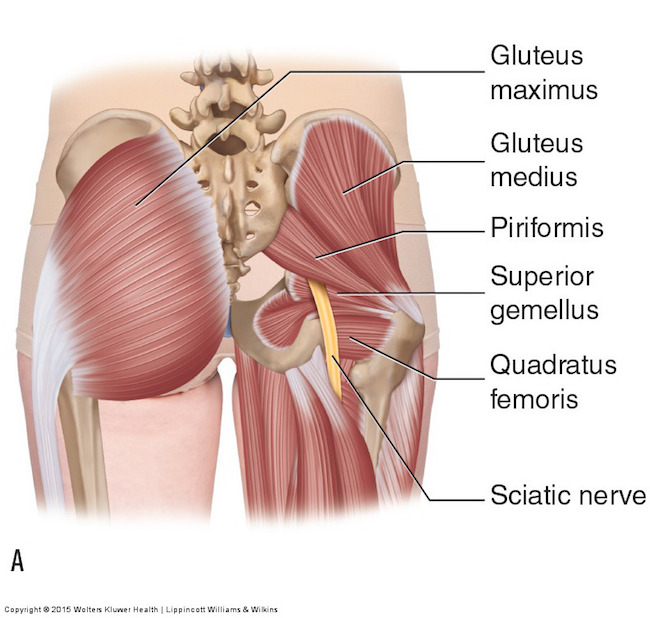
Image F 

Protect the Sciatic Nerve! Heath practitioners who inject the buttock know this cardinal rule: Never inject penicillin (or other drug) into or near a nerve as this may result in permanent neurological damage! Such damage can include permanent paralysis, muscle inflammation, gangrene or necrosis (tissue death). Major arteries must also be avoided.

True Story: Years ago, I knew a woman with foot drop, meaning she could not lift her foot at the ankle joint (called dorsiflexion). Why? Because a careless health care provider injected penicillin into the wrong area of her gluteus maximus and it destroyed that part of the sciatic nerve responsible for innervating leg muscles which are required to lift the foot. And, yes, the injury was permanent!

Safe Zone: So, is there a safe zone for injections? Well, of course there is, otherwise, Claire would not have put her beloved Jamie at risk.  

Let’s pretend this is Jamie’s bum. Hey, this is Jamie’s bum! <G> Black dots show regions corresponding to right and left buttocks. The blue rectangles are considered safe zones for intramuscular injections, including penicillin.
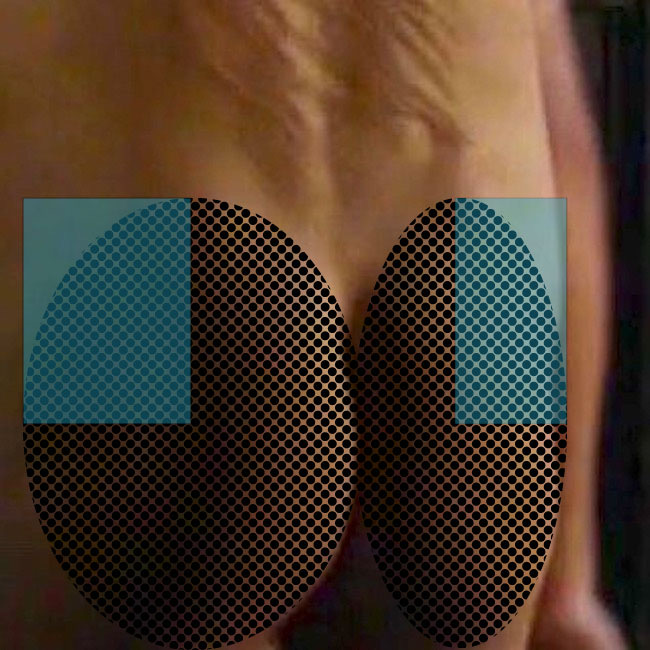
 

Using a graphic image might not be as much fun, but surely is informative. The buttock to be injected is divided into halves by a vertical line then divided into halves again by a horizontal line (Image G – left side). Injecting near the center of the upper outer quadrant, shown in blue, is considered the safe zone and avoids injuring sciatic nerve or nearby artery and vein (superior gluteal).

A newer technique uses a diagonal line as shown on the right side of Image G. Injecting above this line is also considered a safe zone. This line is harder to visualize because it requires a more thorough understanding of surface (topographical) anatomy.

Either technique is typically done in the mind’s eye of the practitioner, although, drawing actual lines on the buttock can also be done to verify safe zones.
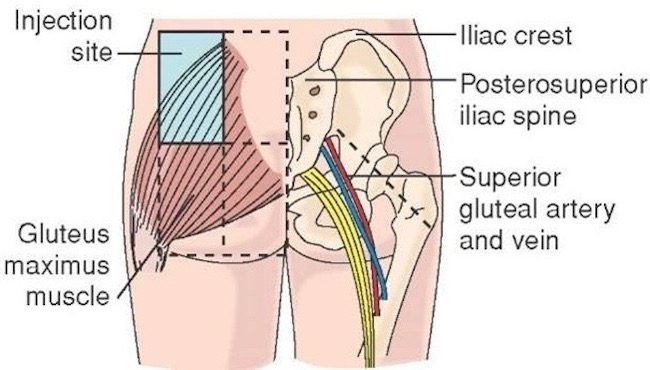
Image G 

This excellent You Tube video, created by Dr. Nabil Ebraheim, explains both approaches.

The meaty quadraceps femoris muscles (Anatomy Lesson #7,  Jamie’s Thighs or Ode to Joy!) of the thigh present another acceptable site for penicillin injection. This explains why, much later on the Artemis, Claire injects herself in the thigh with penicillin after Jamie canna do the deed (Outlander episode 311, Uncharted).  Our braw hero is afeared of wicked needles!
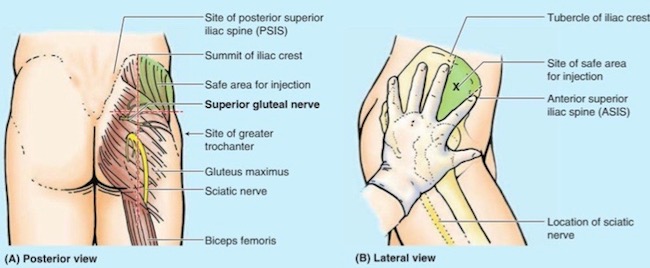
But, arguably the safest approach involves injecting into the gluteus medius muscle which peeks above the gluteus maximus. The safe region is indicated as the green area in Image H. This technique avoids the huge and very important sciatic nerve!
Ubiquitous Germs! One final issue and then our lesson ends. How might Jamie get an infection from second-wife wounds? Both birdshot and his skin would be likely sources for the bacteria causing his raging fever! Claire explains it quite well in this passage from Voyager book:

I took a deep breath. “Well, do you remember my once telling you about germs?”

He looked quite blank. “Little beasts too small to see,” I elaborated. “They can get into your body through bad food or water, or through open wounds, and if they do, they can make you ill.” He stared at his arm with interest. “I’ve germs in my arm, have I?” “You very definitely have.” I tapped a finger on the small flat box. “The medicine I just shot into your backside kills germs, though. You get another shot every four hours ’til this time tomorrow, and then we’ll see how you’re doing.”

I paused. Jamie was staring at me, shaking his head. “Do you understand?” I asked. He nodded slowly. “Aye, I do. I should ha’ let them burn ye, twenty years ago.”

Nay, Jamie doesn’t mean this wee salvo aimed at first wife. Snort!

Thank you Diana, Jamie and Claire for helping us to understand needles, nerves and penicillin!

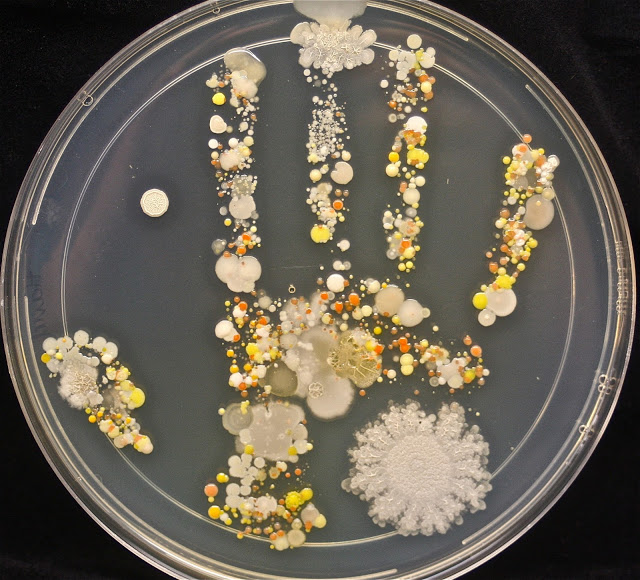
Everywhere: Bacteria, molds and yeast are ubiquitous, covering virtually every non-sterile surface on earth. Recent tests have shown, seven of the 10 germiest (is this even a word?) spots in our homes are found in kitchens – with the dirtiest being kitchen sponges or dish cloths! Imagine, these are more germy than bathrooms!

Our lesson closes today with this visual of bacteria and molds found on one person’s hands (Image H). The hand was pressed into growth medium filling a petri dish. After some time, colonies of mold, yeast and bacteria grew from the hand print. Beautiful in an weird way, but definitely GROSS! The bottom line? Our mums were right. Let’s wash our hands

Image H by Tasha L Sturm, microbiologist and photographer

The deeply grateful,

Outlander Anatomist

Follow me on:

Photo Creds: Starz, www.pbs.org/newshour Image E; www.Karsh.com  Image A;  www.learnmuscles.com Image F; www.free-stock-illustration.com Image C; www.medium.com Image B; www.prezi.com Image D; https://everythingmicro.blogspot.com Image H; www.teachmeanatmy.info Image G

Anatomy Lesson #57: Fergus and the Phantom Limb!

Good day, anatomy students! Welcome to Anatomy Lesson #57, Fergus and the Phantom Limb.

Several readers have requested today’s topic… an exploration of the consequences of the fateful encounter twixt Fergus and Corporal MacGregor – Starz ep 302, Surrender

Warning! Readers may find a few images in this lesson a bit unsettling. But, rest assured, if you watched ep 302, you have seen the iffy images before. Also, this lesson must contain some neuroscience which, because of its complexity, is a challenge. Thus, explanations are distilled to bare essentials so all may understand. Hope this works for every reader!

Now, for the record, who is Corporal MacGregor (Ryan Fletcher)? Not a Voyager book character, this man is an invention by TV writer Anne Kenney and team: a Lowland Scot who identifies more with the English than fellow Highlanders. He takes an instant dislike to Lallybroch and its denizens – threatening little Jamie with a back-hand slap and disparaging Fergus as a –

filthy frog eater… Mind your tongue or I’ll cut it out!

After repeat visits and more Redcoat insults, including crass threats to new mum, Jenny, Fergus leads Corporal MacGregor and pal on a taunt-jaunt. Soon, Fergus is trapped and the Low-lifer, erm, Lowlander, advances with a grimace and drawn blade!

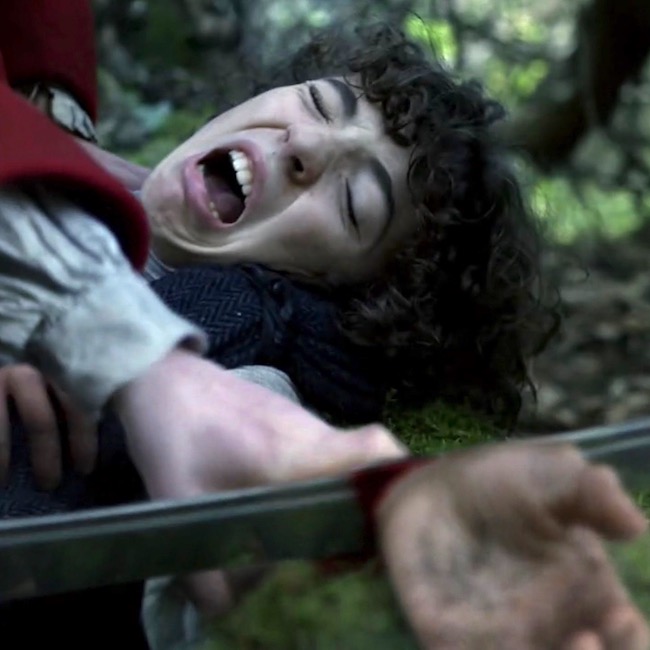
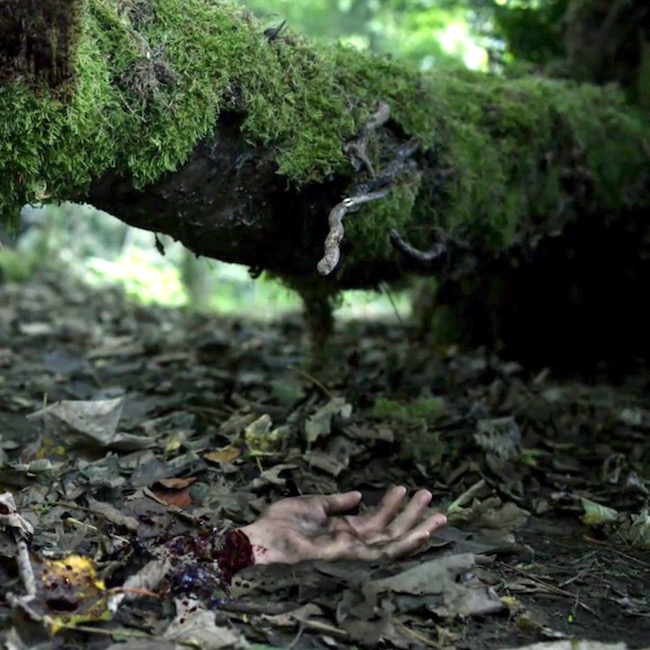
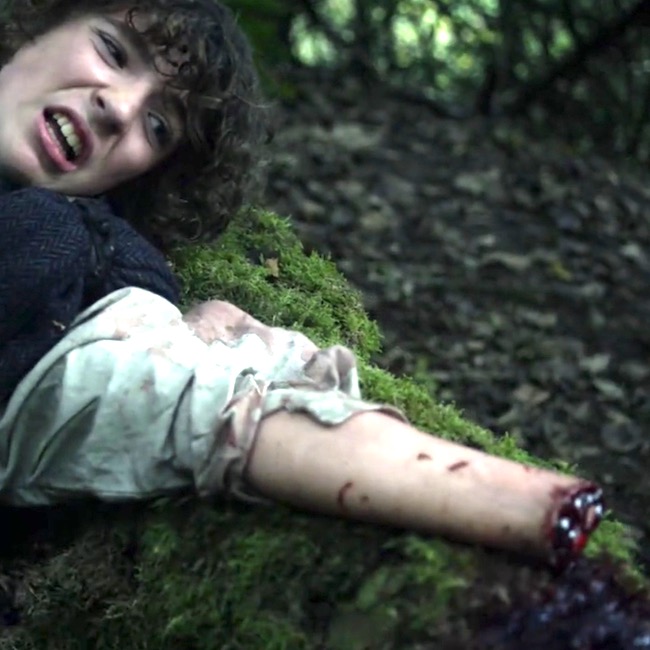
A volley of yells, a brief struggle, a flash of the sword and… the unbelievable! Fergus’ clever hand with its nimble fingers is gone! From Voyager book, we share Jamie’s disbelief: 

The shouting ceased abruptly in shocked silence. He scarcely heard when it resumed; it sounded so much like the roaring in his ears. His knees gave way, and he realized dimly that he was about to faint. His vision darkened into reddish black, shot with stars and streaks of light

And more sad words from Voyager book to describe the horrific event: 

…but not even the encroaching dark would blot out the final sight of Fergus’s hand, that small and deft and clever pickpocket’s hand, lying still in the mud of the track, palm turned upward in supplication.

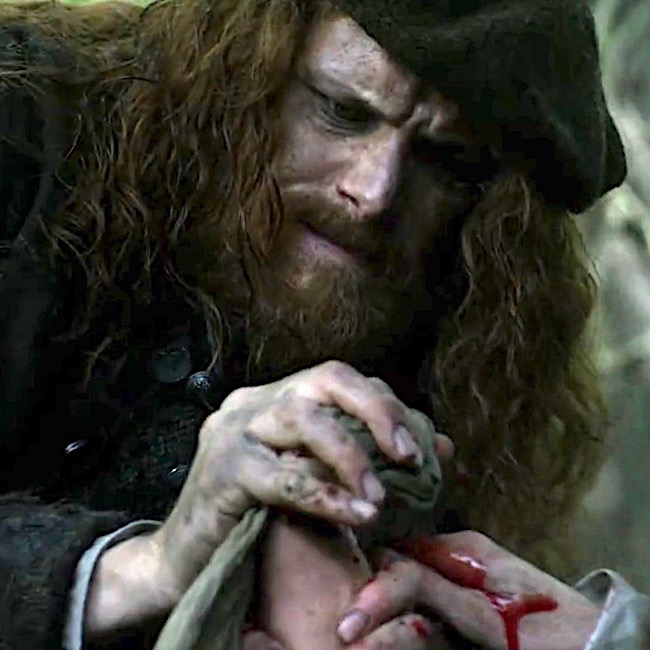
In the TV version, Jamie rushes to the rescue, applying a pressure bandage to end of Fergus’ forearm, followed by a belt tourniquet. Jamie knows the drill, having watched his white woman deal with similar wounds of war. (Psst… in Voyager book, the Redcoats have the decency to return Fergus to Lallybroch) 

Why, oh, why didn’t Jamie intervene to alter Fergus’ Fate? In emotional agony, he declares to his sib:

I should have stopped them!

Never one to mince words, TV Jenny tells it true: 

Then ye’d be dead and so would he. We’d all be dead!

Jenny uses her own hard-earned wisdom derived from Ian’s leg loss to mend and attend Fergus’ stump.

Later, sitting up, but preferring French wine to Scotch whisky, Fergus tells Jamie “In one stroke, I have become a man of leisure!” Translation: Jamie must heed his Paris pledge to support a maimed Fergus for the rest of his life!

Jamie asks if it hurts, and Fergus answers that the wound:

Hurts a bit. Sometimes, it feels warm or scratchy or hurts like it is still there. 

Later, Ian reassures Jamie:

My leg. It’s not there as anyone can plainly see. And, yet, it pains me terrible. 

So, how is it that Ian’s missing leg stills pains him and how can Fergus still feel a hand left behind on the forest floor?

Anatomy Lesson to the rescue! 

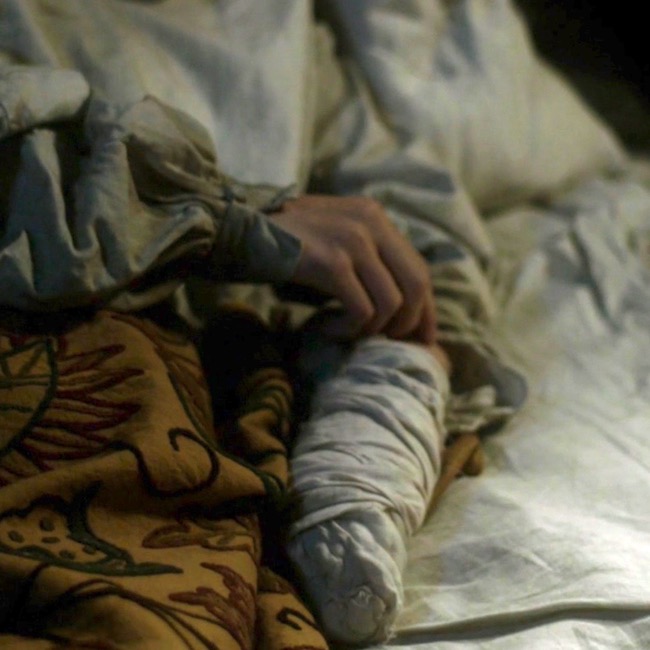
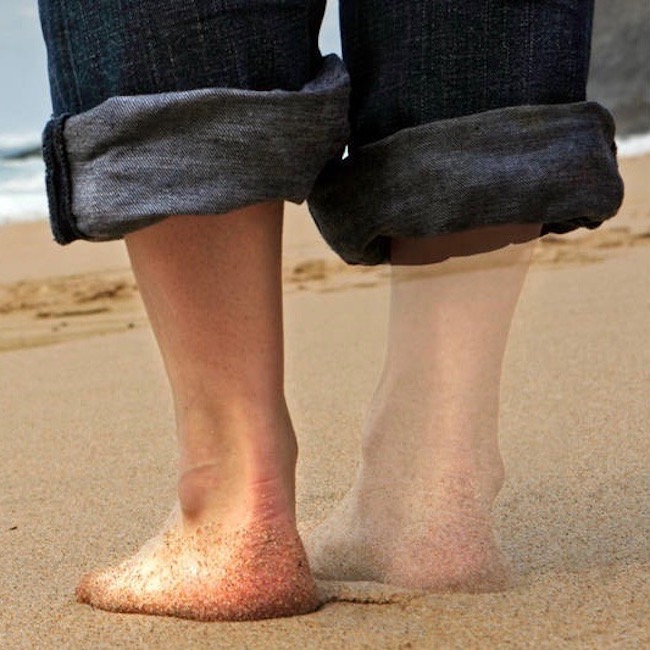
Phantom Limb Syndrome (PLS): Fergus and Ian describe sensations known as Phantom limb syndrome or PLS. PLS is the feeling that a lost limb is still present. Some 60 to 80% of amputees experience the sensation of an amputated limb and/or lost digits still being attached (Image A). Even people born with an absent limb or digit can experience PLS.

Interestingly, although PLS refers to the loss of a limb (and/or digits), some people report phantom sensation following the loss of other body parts such as breast, eye, nose, tongue, bowel, urinary bladder, or male phallus! Yes, they can perceive such missing parts as if still present!

Image A 

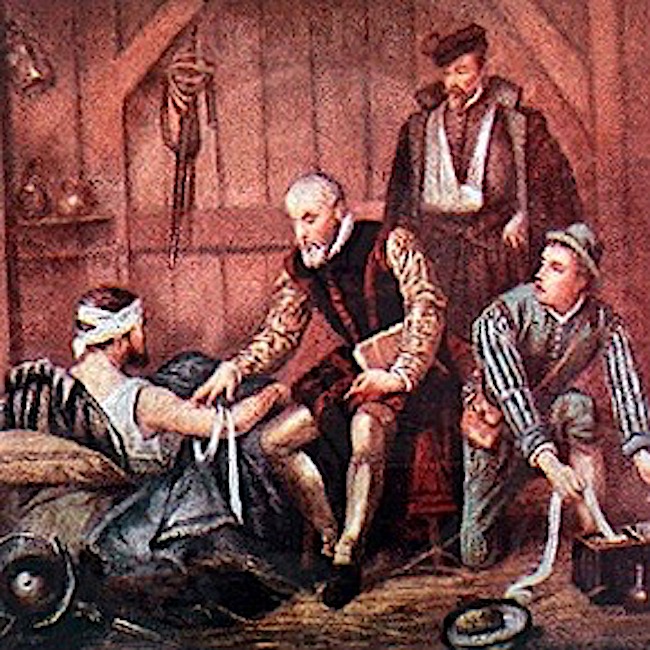
History: Understand that PLS is not new; it was first described almost 500 years ago by the brilliant French surgeon, Ambroise Paré. Paré operated on wounded soldiers and wrote in detail about patients who complained of pain in amputated limbs (Image B). Just so you know, Paré came up with such inspired and innovative surgeries to cope with physical trauma, he earned the sobriquet, the Father of Modern Surgery!

Image B

Herself does a fine job explaining phantom limb syndrome. Here, a quote from Voyager book, albeit from much later in the voyage! <G> 

Innes came voluntarily to call upon me in my cabin a week later. “I am wondering, mistress,” he said politely, “whether there might be a medicine for something as isna there.” “What?” I must have looked puzzled at this description, for he lifted the empty sleeve of his shirt in illustration. “My arm,” he explained. “It’s no there, as ye can plainly see. And yet it pains me something terrible sometimes.” He blushed slightly. “I did wonder for some years was I only a bit mad,” he confided, in lowered tones. “But I spoke a bit wi’ Mr. Murphy, and he tells me it’s the same with his leg that got lost, and Fergus says he wakes sometimes, feeling his missing hand slide into someone’s pocket.” … “So I thought maybe if it was a common thing, to feel a limb that wasn’t there, perhaps there was something that might be done about it.”

“I see.” I rubbed my chin, pondering.“Yes, it is common; it’s called a phantom limb, when you still have feelings in a part that’s been lost. As for what to do about it.…”

Back to the lesson! So sorry, but the next three slides and accompanying text are dense with new words and concepts. No way around it, so please hang in there!

Phantom Limb Pain (PLP): People with PLS report sensations in the missing part including itching, motion, burning, gesturing, tickling, pain, etc. Sadly, pain is by far the most common experience. For some amputees, PLP is intermittent and the frequency and intensity of attacks may decline over time. With others, limb loss leads to debilitating pain. Although theories are plentiful, scientists have not been able to fully explain PLP.

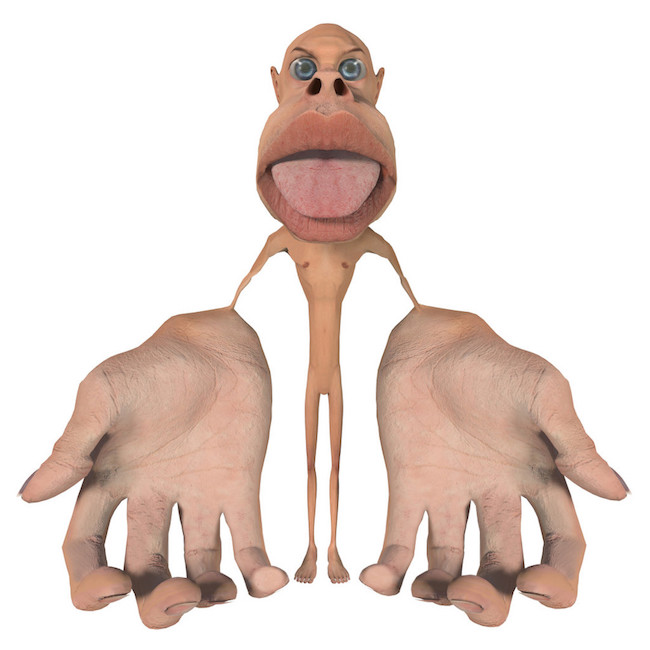
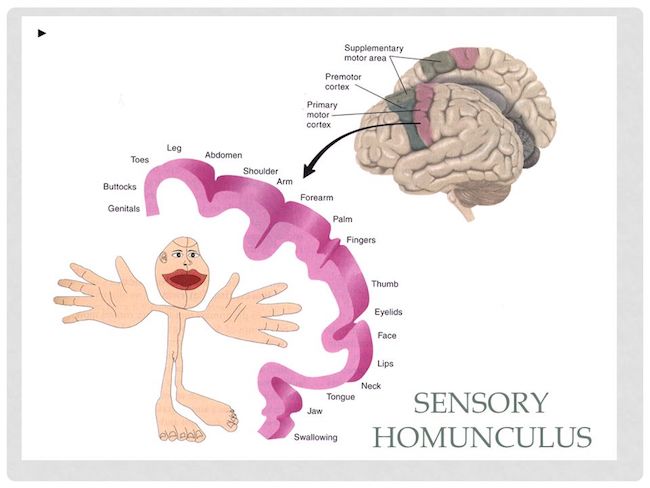
You might recall this fellow from yesterday’s teaser (Image C)? This is the sensory homunculus (i.e. very small humanoid creature). Weird looking, it is a visual representation of sensations the brain recognizes from different areas of the body. Understanding the homunculus will help us understand the theories used to explain PLS and PLP. 

Image C 

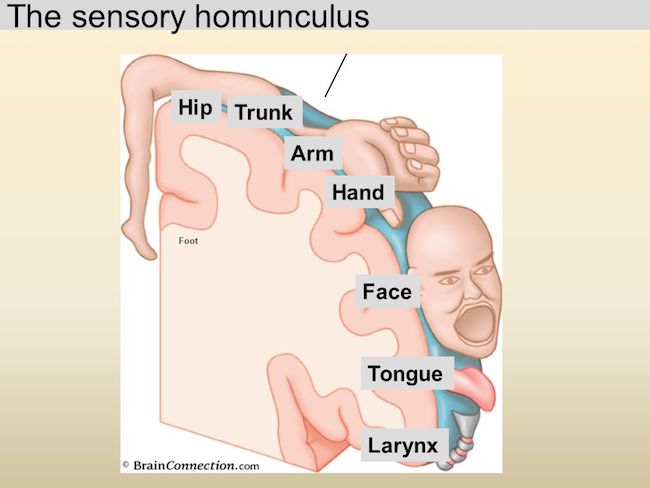
Sensory Homunculus: Scientists do know this (short and sweet): The entire human body, excepting brain and spinal cord (go figure!), is supplied with specialized sensory receptors. When stimulated, these receptors send signals to brain cells (neurons) of the sensory cortex (Image D – pink strips). Here, incoming sensory signals are interpreted as pain, heat, cold, touch, pressure, vibration, etc. There is a sensory cortex for the right side of body and one for the left.

And, just to be thorough, a similar adjacent area (Image D – green strip), the motor cortex, contains motor neurons which send outgoing signals to skeletal muscles, stimulating them to contract. Same for the motor cortex: one for the right side and for the left side of body.

Image D 

Sensory Homunculus (cont.): Those signals sent by sensory receptors are carried to prescribed areas of the sensory cortex based on their origin. Thus, if nerve endings in the great toe are stimulated, these signals end up in the area of the sensory cortex assigned to the big toe. If signals originate at the tongue, they end up in the sensory cortex assigned to the tongue. Ergo, the entire body is mapped out in the sensory cortex so signals are directed to their proper destination.

Such a sensory map assumes the shape of a small human and hence the term, sensory homunculus. BTW, the enlarged face, hands and feet (and genitals, which for the sake of sensitivity are not shown) aren’t meant for humor, these simply indicate anatomical areas with the greatest number/density of sensory receptors (Image E). 

Image E 

Theories: All of this sensory cortex business produces theories designed to explain phantom limb syndrome.

  • Neuroma: Amputation severs sensory nerves, depriving them of contact with their sensory receptors. The traumatized nerve stumps develop neuromas (benign nodules). This theory proposes neuromas are hyper-excitable and discharge spontaneously sending anomalous signals to the brain that are interpreted as pain. Operating under this assumption, surgeons have performed second amputations, shortening the stumps, to remove the dysfunctional nerve endings in the hope of relieving pain. Tragically, sufferers can be left with pain not only from the original phantom limb but also the new phantom stump! A better approach uses chemical compounds to alter neuroma hypersensitivity, although this doesn’t work on all amputees.
  • Spinal Cord: Most sensory nerves transmit messages up the spinal cord before they end in the brain’s sensory cortex. The spinal cord theory suggests that connections between the cut sensory nerves and the spinal cord are compromised resulting in hypersensitivity that is perceived as pain. This theory is problematic because some people born without limbs experience PLS and PLP even though they lack truncated sensory nerves. And, it fails to explain people who report phantom symptoms after the loss of nose or tongue. Sensation from the face bypasses the spinal cord, passing directly to the brain so the theory doesn’t account for routes that bypass the spinal cord. Hence, more studies are needed.
  • Brain: The brain appears to contain an innate, hard-wired template of fully-formed body parts (neuromatrix). This template is continuously updated by ongoing conscious awareness and perception of the body, a process known as neural plasticity. Deprived of input, as with amputation, the brain generates an abnormal body perception that is interpreted as pain. Pretty interesting. But, get this: The brain most certainly can rewire itself because touching the stump of a missing arm is felt on the face of some amputees. Here, it is reasoned that facial neurons of the sensory cortex, located close to arm sensory neurons, take over after amputation, thus rearranging the neuromatrix. 

The bottom line? Scientists have yet to prove which if any of these theories are correct. Perhaps each possesses a piece of the puzzle? Much research is being focused on this issue because there are far more amputees in today’s western world due to war. 

The following is an excellent video quickly explaining PLS and PLP. Unfortunately, it doesn’t stop at the end and other videos begin to p lay. Just click on the stop bars to halt it. Hope you watch, anyway!

Back to Outlander: When TV Claire first encounters the tragedy of Fergus’ hand, he has adopted an 18th century prosthesis (Starz ep 307, A. Malcolm) to help compensate for his loss. 

And, Marsali, aboard the Artemis, gives us a clue that TLC can be a big comfort to an amputee (Starz ep 309, The Doldrums)!

 PLS Treatments: Today, there is hope as medical treatments for PLS and PLP are varied and imaginative! These include:

  • Pharmaceuticals: NSAIDS, opioids, antidepressants, etc., with varying results.
  • Nerve Stimulation: Nerves of the stump are stimulated with electrical currents to relieve pain. Varied success.
  • Biofeedback:  Acupuncture, biofeedback, ECT (electroshock therapy) to relieve PLP have yielded mostly inconsistent results. 
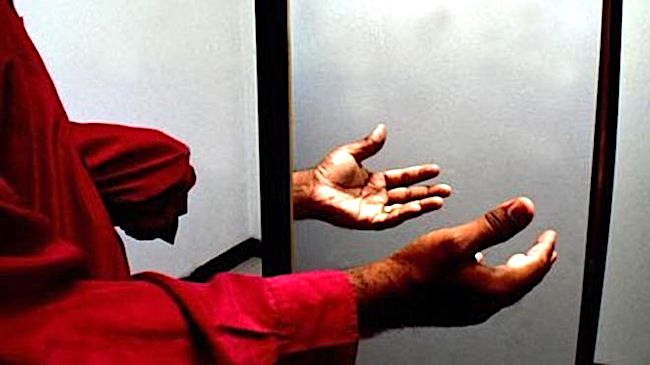
  • Mirror Box Therapy: In this interesting therapy, an amputee places the amputated limb behind a mirror while the intact limb is viewed in the mirror (Image F). The patient moves the intact limb while observing its image in the mirror. This “tricks” the brain into perceiving that the absent limb is moving. The technique has yielded some amazing success. The above video described a woman born with three fingers and a partial thumb. She accidentally lost the hand, subsequently experiencing unbearable PLP in the missing limb. Using a mirror box, she exercised her intact hand in the mirror, creating the illusion that the missing hand performed the tasks. After two weeks, she was able to “move” her phantom fingers and found pain relief! Even more amazing, she now perceives her absent hand as having five digits, all of normal lengths. More work to be done, but it has produced some very promising results! 
  • Limb Regeneration: Hot off the presses! The Dec. 2017 issue of New Scientist reports researchers at Tufts University have used bioelectricity to grow heads and tails on worms and boost the frog’s natural ability to regrow severed limbs. New experiments are planned to stimulate mice to regrow missing digits. Human limbs will be attempted at some point in the future.

Image F 

Swift and to the point, but the above pretty info much summarizes the current state of PLS and PLP research. OK, enough neuroscience. Back to Outlander!

Special Effects: I cannot let this pass unnoticed! How do you rate the special effects of Outlander ep 302, Surrender?  Thumbs up? Thumbs down? I give two thumbs up! Here’s three good reasons why. 

  • Does blood spurt from a cut artery? Why, yes it can and does. This occurs at first because blood pressure through arteries is much higher than through veins. Shortly after being cut, the muscular walls of a severed artery spasm to help slow blood loss. And, the loss of blood through the open artery diminishes its blood pressure. Ergo, lower pressure = lower flow. 
  • Is Jamie’s first aid helpful? Yes! Applying pressure to cut vessels and application of a tourniquet help diminish blood loss; the first by reducing blood escaping from the open wound and the second by diminishing the amount of blood entering the damaged vessel. 

Make sense? Awesome sauce! Way to go, Outlander team!

Hopefully, you learned something new in this lesson. Wish the definitive answer to PLS and PLP was available but research continues, unabated. 

Let us close this lesson with a verra fine example of neuroplasticity!

Two hundred and two years and thousands of miles away, Claire experiences her own type of phantom pain! Missing her heart, she visualizes the core of her loss (Outlander episode 302, Surrender). Phantom, indeed! Hehe…. 

The deeply grateful,

Outlander Anatomist

Follow me on:

Photo creds: Sony/Starz; www.painresource.com (Image A); www.robotspacebrain.com (Image B); www.gravitywerks.com (Image C); www.slideplayer.com (Image D, E); www.bbc.com (Image F)

Anatomy Lesson #56: Achy Brachial Artery

Greetings, anatomy students! One might reasonably assume this lesson is about Billy Ray Cyrus, but, one would be wrong. This anatomy lesson discusses the very important, brachial artery, and its parent, the axillary artery

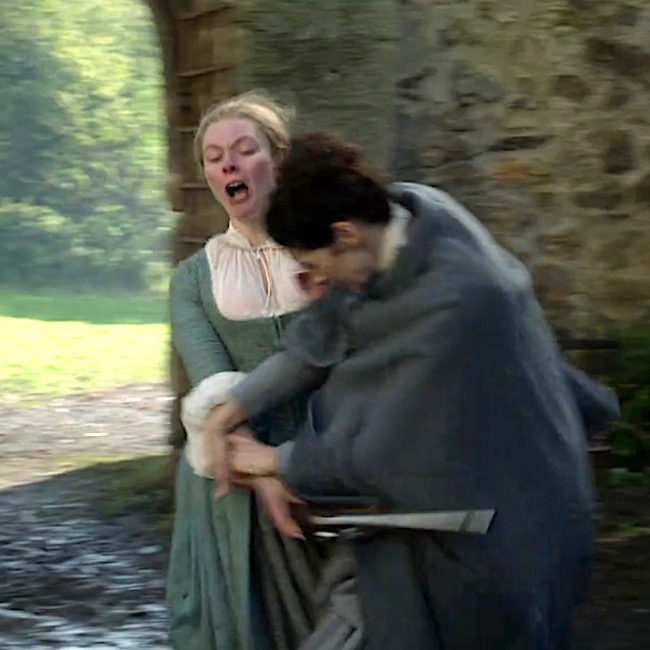
And, what spurs a lesson about these vessels? Why, twisted-sista, Laoghaire, is to blame (Starz Outlander episode 308, First Wife)! 

Who is in her sights – Jamie? Claire? Or, will she fell both with a single shot?

Blamo! A fouling piece discharges a fowling piece!

Dear Laoghaire: 

On the day that you were born,

The angels got together……

And, were severely reprimanded!

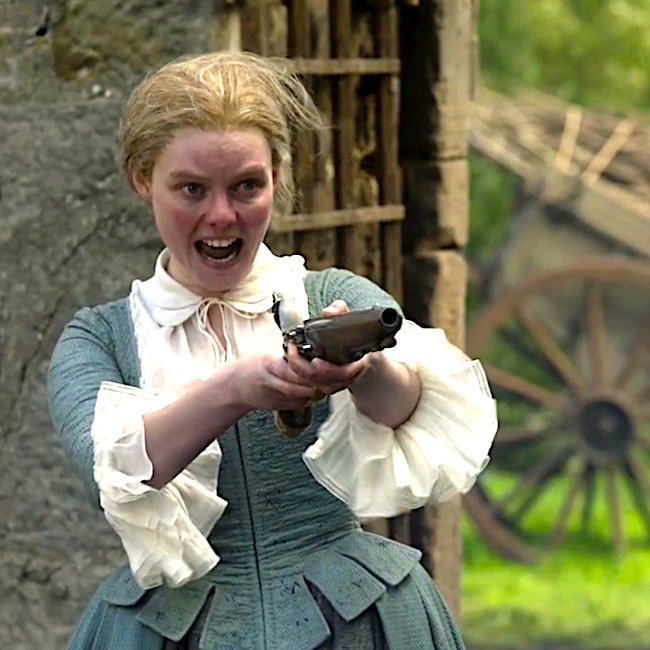
Shoot <g>! Laoghaire peppers Jamie with birdshot! Alas-lass, Granny Fitz probably wouldn’t be proud of her progeny. 

Laoghaire, Laoghaire, quite contrary,

How does your vengeance grow?

Jamie fell, amid bloody hell,

And, Claire became your foe!

Dinna mess with the Sassenach. Drop that weapon!  

Now, book readers ken that things didn’t go down quite this way in Voyager book. Herself envisioned Claire fleeing Lallybroch upon finding that Jamie has a harem. Young Ian (bless his wee Scottish heart), catches up to her in the mountains and says:

“But Auntie Claire, it’s not that!” 

“What’s not that?” Caught by his tone of desperation, I glanced up. His long, narrow face was tight with the anguished need to make me understand. 

“Uncle Jamie didna stay to tend Laoghaire!”

“Then why did he send you?” He took a deep breath, renewing his grip on my reins. 

“She shot him. He sent me to find ye, because he’s dying.”

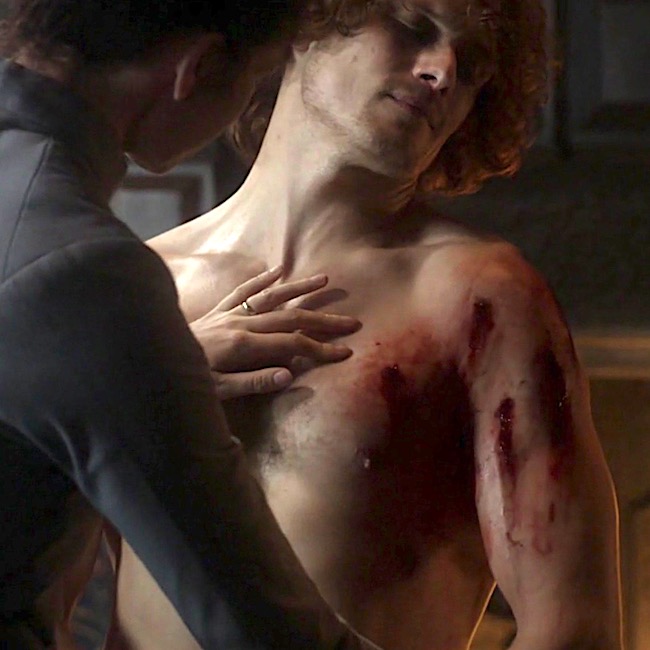
Back to the TV version. Perhaps aiming for his heart, Laoghaire’s birdshot turns Jamie’s left chest, shoulder and arm into mincemeat. But, harboring absolute faith in his beloved he assures us:

 “It’s only birdshot, nothing serious…..It’s nothing Claire canna fix!”

Back to Voyager book, Claire assesses Laoghaire’s assault: 

“Let’s have a look at it.”

The wound itself was a ragged dark hole, scabbed at the edges and faintly blue-tinged. I pressed the flesh on either side of the wound; it was red and angry-looking, and there was a considerable seepage of pus. Jamie stirred uneasily as I drew my fingertips gently but firmly down the length of the muscle. “You have the makings of a very fine little infection there, my lad,” I said. “Young Ian said it went into your side; a second shot, or did it go through your arm?” 

“It went through. Jenny dug the ball out of my side. That wasna so bad, though. Just an inch or so in.”

A bit of difference between the two versions but either way, Jamie needs his Claire! BTW, the special effects are terrific!

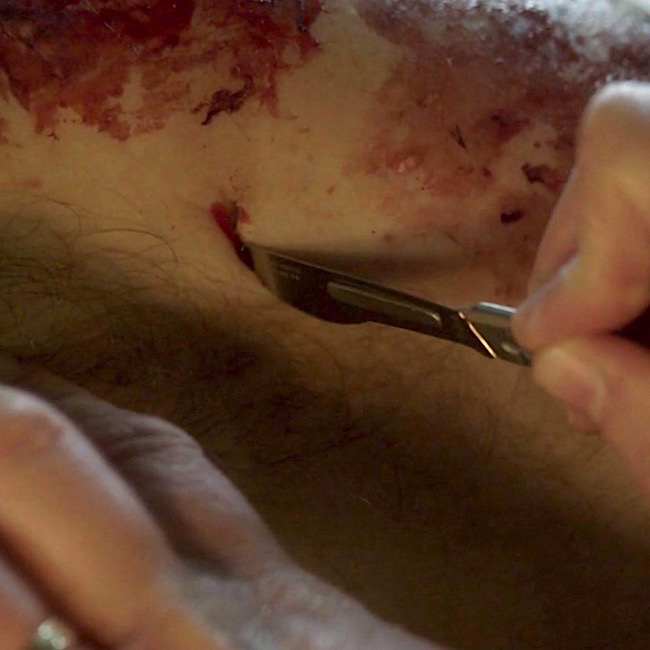
Back to TV: No surprise – Claire must remove those pesky pellets! Following the surgeon’s creed: a chance to cut, is a chance to cure, Claire sets to work! 

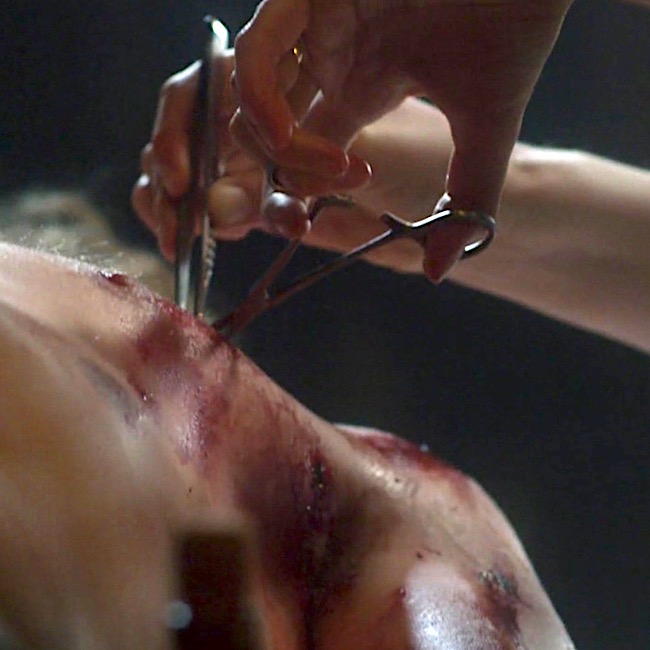
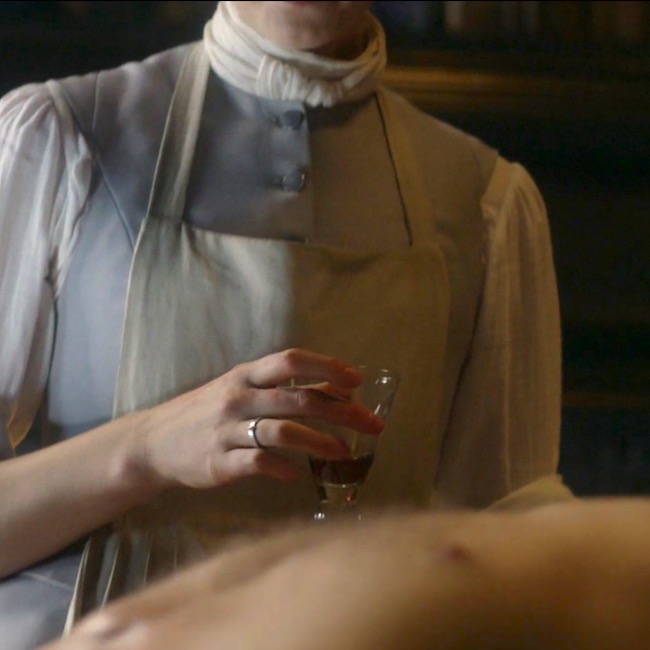
Several big swigs of Scotch whisky and Jamie lolls unconscious… that stuff is potent! Armed with tools from her medical kit, Claire dives for those wee bits of lead!

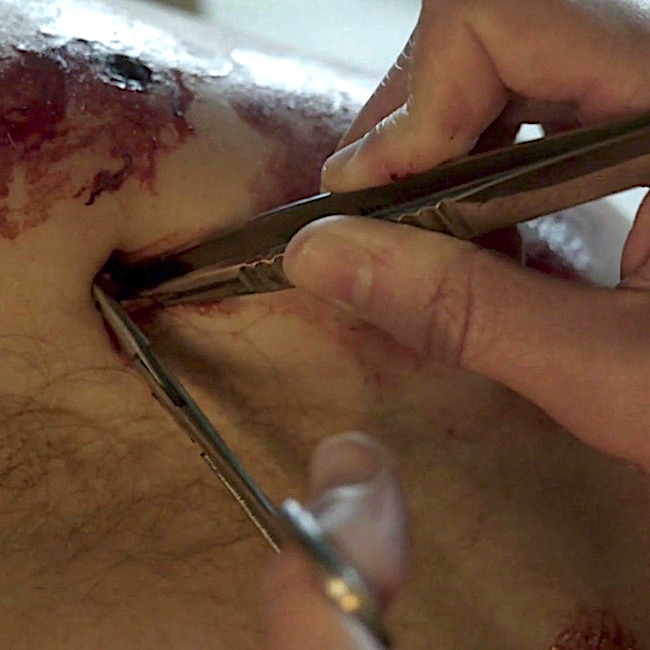
One by one, she carefully retrieves the pellets.

Mostly, the bird shot is superficial but one sits in a precarious position. She cut downs to reach the deep-lying pellet explaining to young Ian, she must avoid damaging the artery!  Jamie could bleed to death if the vessel is injured by pellet or nicked by blade. 

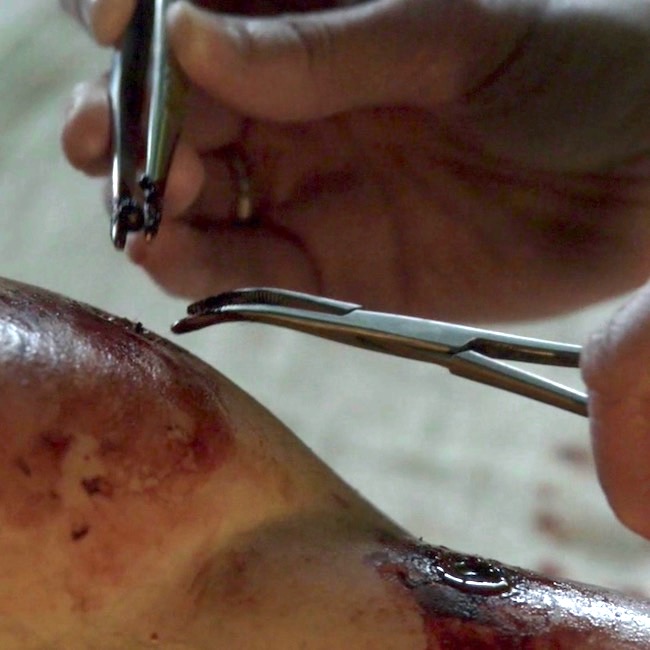
The next image exhibits a high yuk factor for some students, but Clair dutifully digs, dives and delves for the perilous pellet! 

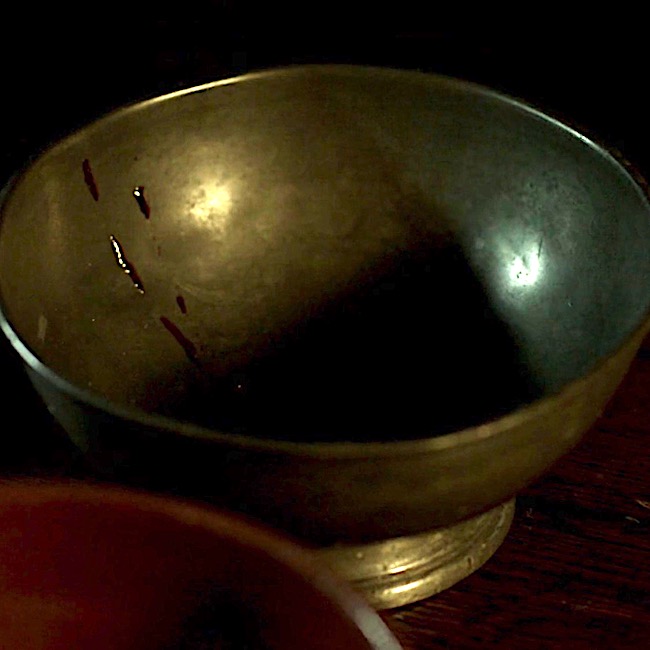
Into the brass vessel it goes –  joining its brothers in crime.  

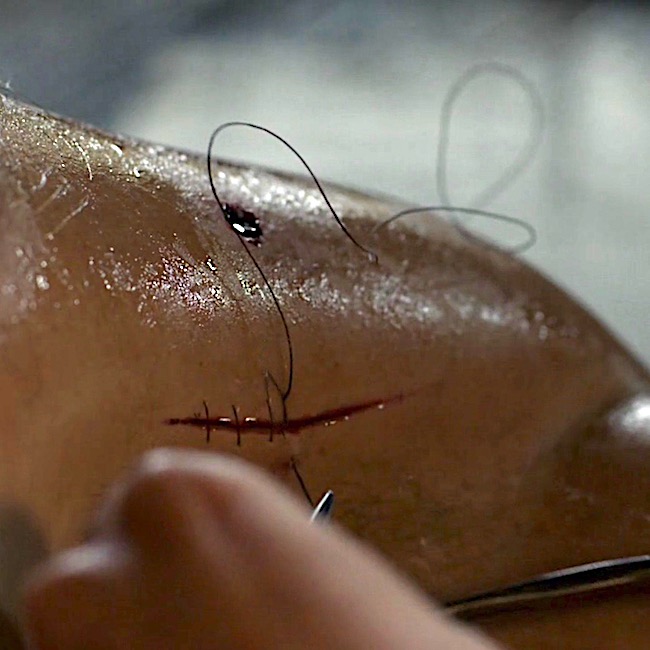
Still royally pissed at Jamie’s deceit, Claire carefully stitches the incision (Anatomy Lesson #35, Outlander Owies!) and our Highland Hero is saved. This lass takes pride in her work!

Anatomy Lesson: Sigh… time to leave Outlander and get to our lesson! Now, which artery does Claire believe is at risk? Let’s tease out the answer. 

Judging from the location of the incision, we may reasonably surmise that Claire’s Concern is directed toward one of these two arteries:

  • Axillary artery
  • Achy brachial artery

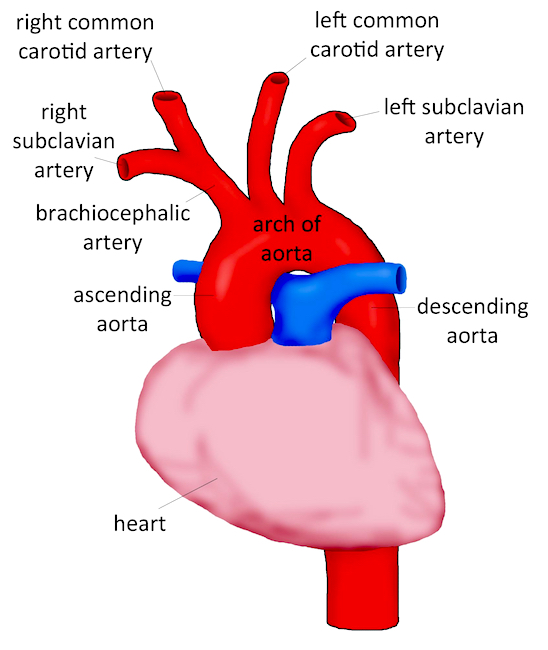
Origins: To properly understand how these two arteries might be at risk from bird shot or scalpel blade, let’s study their ancestry.com. We begin at the heart. Image A is a highly simplified view of the heart (pink) and its major arteries (red and blue). 

Aorta: The ascending aorta, the large red vessel, arises from the heart (left ventricle) and curves, becoming the arch of aorta. The arch is then renamed the descending aorta as it dives downward through chest and abdomen.

Anatomic Note #1: Traditionally, arteries appear red to denote they carry oxygenated blood. However, some arteries carry de-oxygenated blood such as the two blue vessels shown in Image A; these are right and left pulmonary arteries (from right ventricle). Their blood becomes oxygenated as it travels through the lungs. Not critical to today’s lesson, so more about these vessels in a later session!

Aortic Branches: Typically, the aortic arch gives rise to three large arteries. In 75% of people, aortic branches follow the pattern shown in Image A. But in 25% of folks, a different branching pattern ensues. My experience in the dissection lab is that blood vessels show the greatest variation of any anatomical structure. None-the-less, the typical branching pattern is:

  • Brachiocephalic artery (dividing into)
    • Right common carotid artery 
    • Right subclavian artery
  • Left common carotid artery
  • Left subclavian artery

Anatomic Note #2: The left side (on your right) typically lacks a brachiocephalic artery, so left common carotid and subclavian arteries branch directly off the aorta. On the right, the short brachiocephalic artery soon branches into right common carotid and subclavian arteries. Embryonic development produces this odd asymmetry.

Image A 

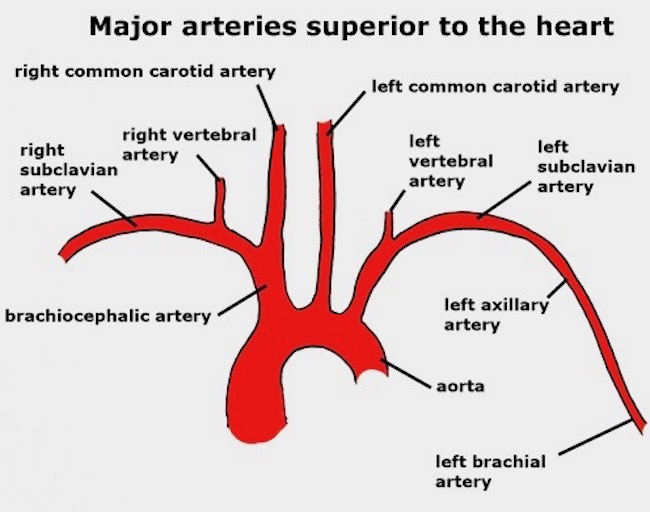
Destination: Once the brachiocephalic artery divides, its branches follow the same pattern as the left side (Image B): 

  • Right and left common carotid arteries ascend to supply head and neck
  • Right and left subclavian arteries arch through base of neck.
  • Name change #1: At outer border of the 1st ribs, subclavian arteries are renamed right and left axillary arteries
  • Name change #2: At lower border of teres major muscle (Anatomy Lesson #10, Jamie’s Back or Aye, Jamie’s Back!), axillary arteries are renamed right and left brachial arteries

Gasp! Pray tell, who thought  so many name changes would prove helpful? Early anatomists are to blame, waaay back in 1578!

Image B 

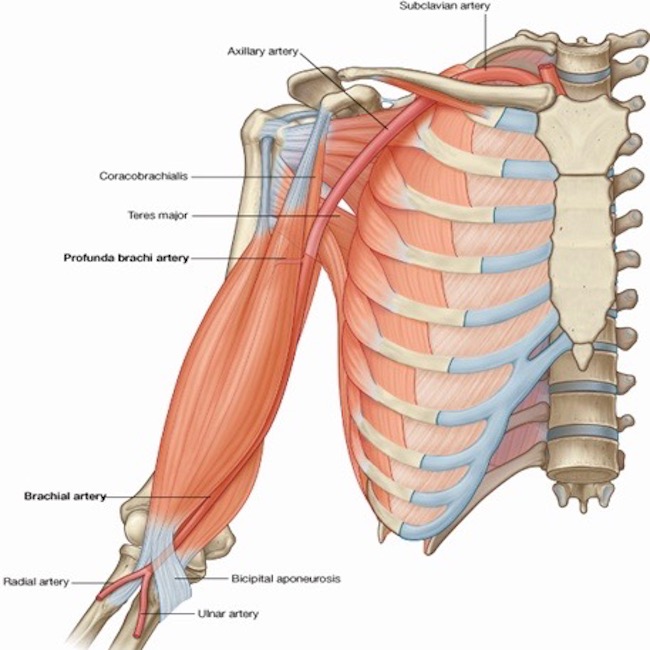
Axillary Artery: Subclavian arteries give off branches and then, like many city streets, each changes its name to axillary artery

The word, axillary, comes from the Latin axillaris meaning “armpit,” because the axillary artery lies deep in the armpit, skirting outer ribs and angling through the oxter toward the arm (image C). Its important branches supply blood to:

Situated so deep in the armpit, axillary artery is protected and rather difficult to reach except by needle, open dissection, or bird shot! 

Image C 

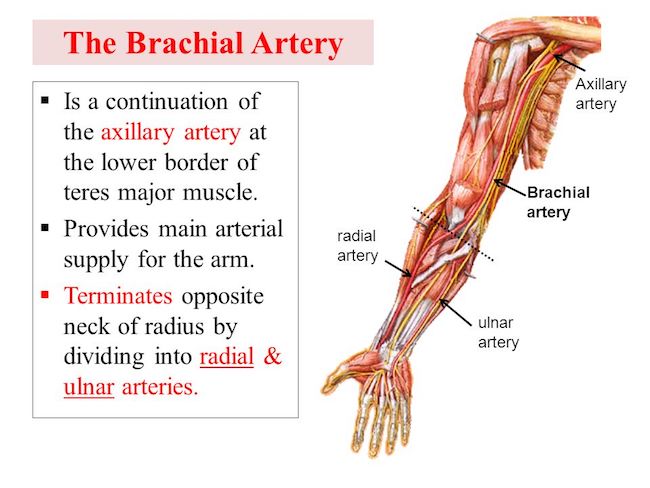
Brachial Artery: At the lower border of teres major muscle, each axillary artery is renamed the brachial artery, the major artery supplying each arm (Image D). Brachial comes from the Latin brac(c)hium meaning “arm.”  The brachial artery continues into the arm supplying blood to its structures; then, ends near the elbow by dividing into radial and ulnar arteries (Anatomy Lesson #19, To Arms, Too Arms, Two Arms!).

Image D 

Importance: The brachial artery is THE major blood vessel of the upper limb (Anatomy Lesson #19, To Arms, Too Arms, Two Arms!), providing each with almost a liter of blood (.95 qt.) per minute! Understand, this is a huge blood flow given that the entire human body typically contains only 4.7 – 5.5 liters of blood.

Note #1: Blood flow through the subclavian artery, the parent of brachial artery, is difficult to measure because it lies so deep, but it’s blood flow would be slightly higher than the axillary artery.

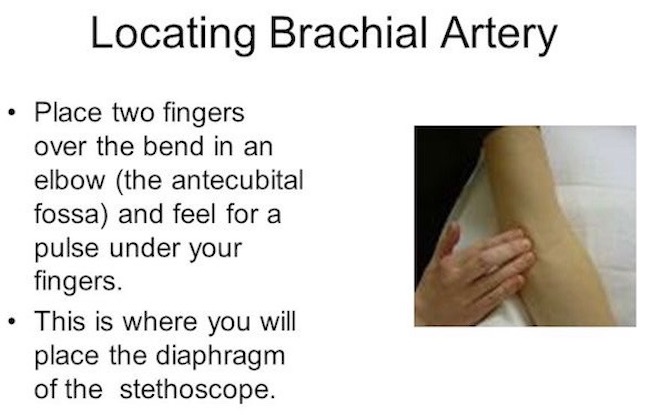
Try This: This could be fun! The brachial artery carries so much blood, its pulse can be taken to determine heart rate. This is how you can find your brachial pulse. Identify your biceps with the contralateral (opposite) hand. Move middle and ring fingers along its inner border toward the inner elbow and apply moderate pressure (Image E). Feel it? Yay!

Note #2: Today, pulse is often taken using a finger clip device (pulse oximeter) but, a thorough education also includes the manual technique.

Horror: I see many examples on the Internet advising students to take a pulse with their thumb!!! These grieves me, because one should never take a pulse with the thumb. The thumb has its own substantial artery, the princeps pollicis, with its own pulse  – large enough to interfere with determining a patient’s pulse! In some people, the index finger also has a strong pulse, so using the middle and ring fingers are best. 


Image E 

Should you be interested, here is a nice video about locating the brachial artery pulse. The demonstrator uses a slightly different approach than the one described above, but either works well:

Conclusion: Two arteries are candidates for Claire’s Concern: left axillary or left brachial. Each has a huge blood flow and if their wall is torn or cut, a person could easily exsanguinate through the breach. 

But, which one? The location of her incision informs our choice. Back to an earlier image: Claire’s tools are inserted just under the outer border of Jamie’s pectoralis major muscle (mercy!) and above the armpit (oxter hair lies below).  One may reasonable conclude that her tools’ trajectory towards the armpit is most consistent with the pathway of the axillary artery; the brachial artery should be further out towards the arm. Ergo, Claire is concerned that birdshot or tools may harm the axillary artery

But, know this….it is difficult to be absolutely sure sans a proper visual evaluation of the area accompanied with palpation. I volunteer! He he.

So, we have answered our initial query: Likely, Claire was fearful of damaging Jamie’s axillary artery not his achy brachial artery, but either would suffice.  

Cosmic Question: Now, comes the most critical question of all!

How can a surgeon operate on an intoxicated patient, with dim lighting, using fairly cumbersome tools, answering questions from a curious nephew, removing multiple bloody foreign objects, and yet complete her tour of duty with an absolutely pristine apron????  Not a drop of blood in sight! 

Because, she is the Sassynach Surgeon in her bad-ass bat suit and Claire can fix pretty much anything!

Arteries might not be the sexiest of anatomical topics, but we can understand and appreciate their value, especially if they are damaged or dysfunctional. Let’s join Claire with a  toast to our awesome arteries: Slàinte Mhath!

A deeply grateful,

Outlander Anatomist

Photo Creds:

Starz: Outlander episode 308, First Wife; www.biology.stackexchange.com (Image B); www.earthslab.com (Image C); www.humananatomly.com (Image A); www.slideplayer.com (Image D, E)