Anatomy Lesson #55: Formidable Formicidae!

Prof! What in the world does  Formicidae mean and what might it have to do with anatomy? Well, folks, let’s find out. Today’s lesson includes a smidge of entomology, one of my fav college courses, so please read on!

In Starz episode 311, Uncharted, our heroic heroine jumps off Perilous Porpoise into unknown waters, at night no less! Anything to get away from Lousy Lieutenant Leonard!

After reaching land, Claire wanders through sandy scrub terrain seeking signs of human life. Lacking water, food and pretty much every creature comfort, she keeps moving onward. At the end of day one, she stokes a fire with fluff from her homemade bum roll – an impressive bum-roll burn (Image A) . Clever lass; a fie on all bum rolls!!

Image A 

Next morn, Claire is rudely awakened by a most unpleasant sensation (Image B). What the….????
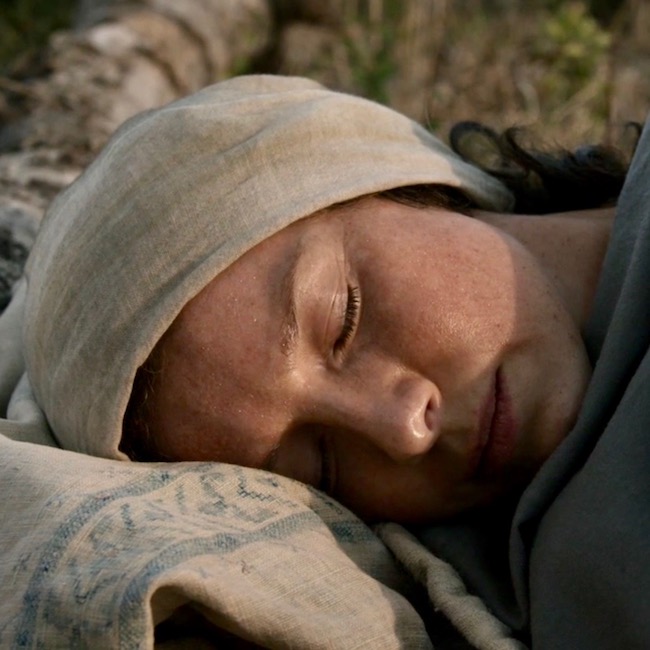
Image B

Claire, wake up! Your gams are covered with busy black beasties (Image C)!
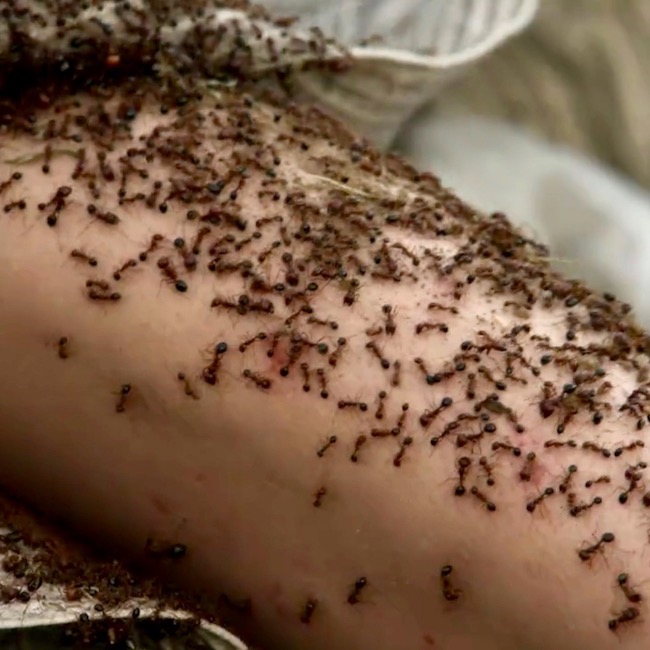
Image C

Claire, get up! Your rest-nest has been messed (Image D)!
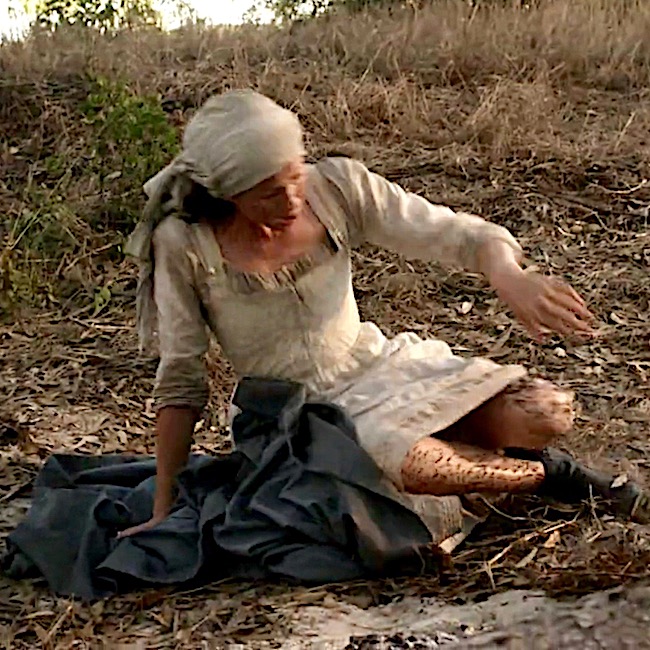
Image D

Whoa! Horrified, Claire slaps at the creepy crawlers to dislodge them from her perfect pins (Image E).
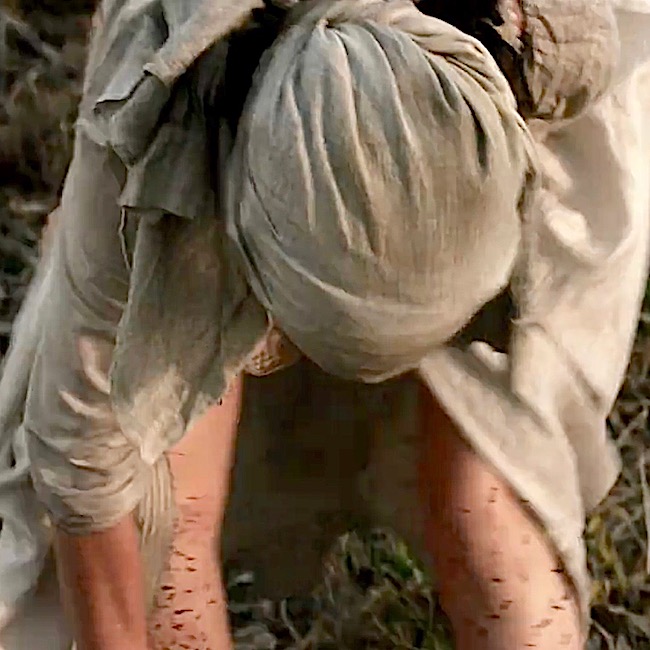
Image E

What in the world happened? Well, unwittingly, Sassynach Surgeon bedded down over creature city, which didn’t care for Claire’s intrusion into its metro boundaries (Image F).

What are these wee demons? If you think ants, you are likely correct. Real ants or CGI magic?  We do not ken, but the overall effect was highly convincing! (Psst….update! A reader just shared the 311 script annotation with me and real but harmless ants were used and no ants were harmed in the filming <G>).
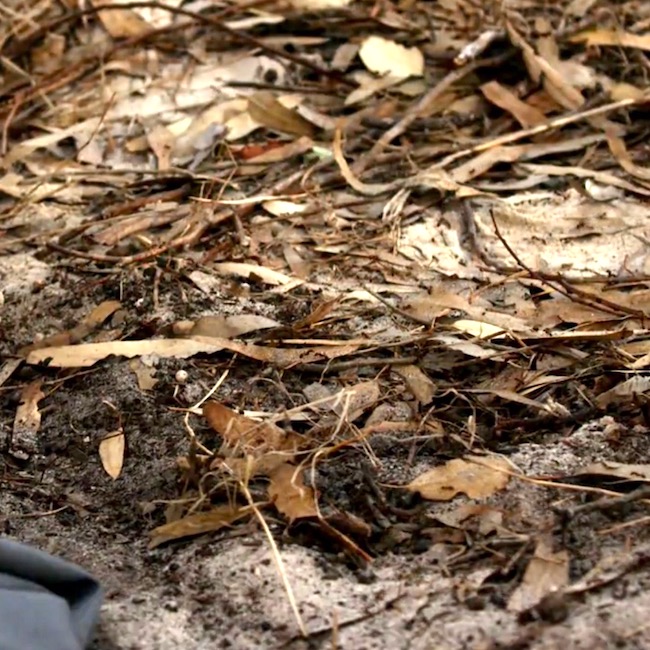
Image F

Classification of Life: Now, dinna run away screaming; this science is verra interesting! All life is divided into increasingly specialized groups (from top to bottom) based upon shared characteristics. In the case of ants, the ranking is:

  • Kingdom – Animalia
  • Phylum – Arthropoda
  • Class – Insecta
  • Order – Hymenoptera
  • Family – Formicidae <fȯrˈmisəˌdē>
  • Genus 
  • Species

The family name, Formicidae, comes from the Latin formica meaning ant + Greek eidos meaning appearance. (Hehe, this particular formica doesn’t grace kitchen countertops.) This extended family is loaded with some of our fav frenemies: sawflies, wasps, bees and ants! Here are some fascinating facts about ants: 

  • About 22,000 species of ants roam the earth. We know neither genus nor species of Claire’s attackers –  but, stay tuned – a guess is coming up!!
  • Ants have elbowed (jointed) antennae and thorn-like nodes at slender waists (Image G – red arrow).
  • Most ants form colonies, or superorganisms, because they operate as a unified entity.
  • Ants have colonized every continent except Antarctica. Greenland, Iceland, parts of Polynesia, and a few other remote islands also lack native ants.
  • The total number of ants alive at any given moment is estimated between 1 and 10 quadrillion; about 10x the biomass of all living mammals! Who knew? 
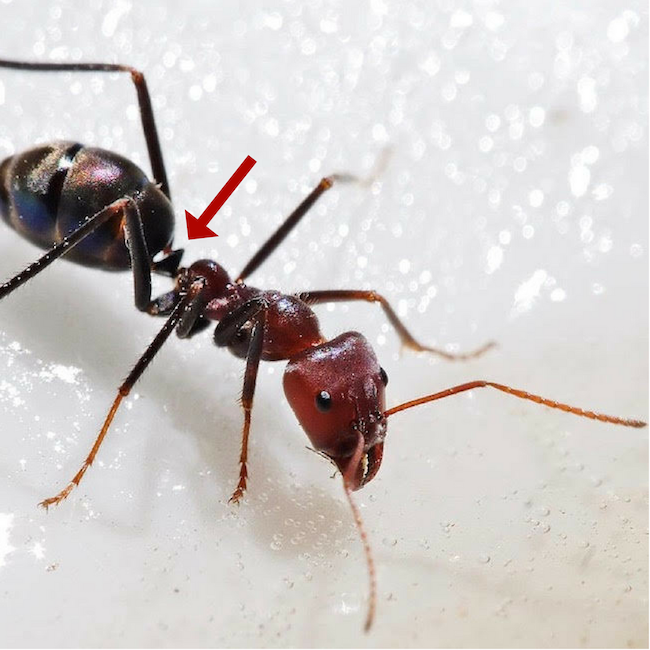
Image G

Truth or Fiction? Did episode 311 pull our collective legs or could Claire truly have had ants-in-her-pants on Hispaniola? Indeed, this tropical tête-à-tête was most certainly feasible! 

During the 1700s, eye-witness accounts reported several major ant invasions on Hispaniola and the Lesser Antilles. Ants became so prolific that people placed bedposts in pots of water in an attempt to exclude the party crashers! These accounts describe an ant with a painful bite that lived in colonies near the roots of trees. One current-day entomologist concludes the culprits were tropical fire ants, Solenopsis geminata (genus + species)! Perfect match for Claire’s pesky pests!

Armed with this bit of historical data, I bravely conclude that Courageous Claire likely was attacked by tropical fire ants

So, what did these pests do to Claire’s loooong lovely limbs (Image H)?
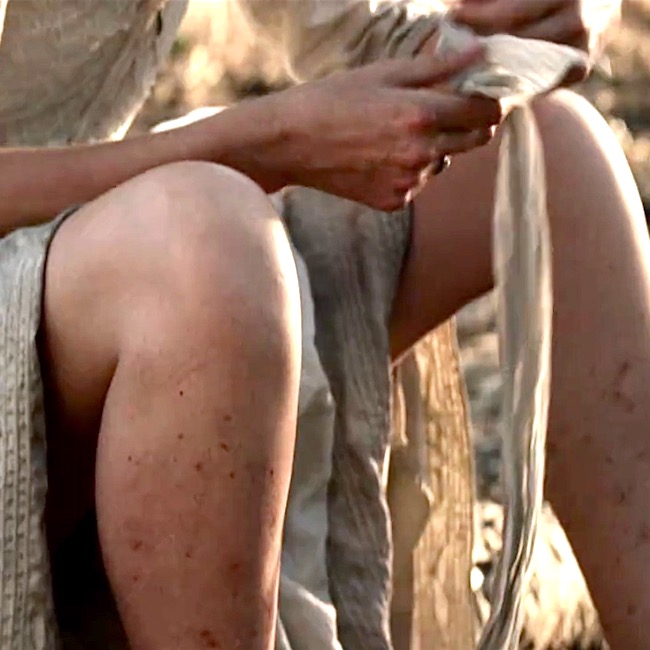
Image H

To Bite or to Sting? To bite or not to bite, that is the question! Some ants, such as the North American carpenter ant, sink mandibles (jaws) into their victims, delivering formic acid via the bite. But, other ants deliver venom via stingers! The venom is an alkaloid, a class of powerful compounds including morphine, atropine, etc. Such venom is potent and capable of producing anaphylaxis in those who have developed sensitivity to the venom.  

Fire ants fall into the latter category; they are aggressive, venomous insects with pinching mandibles on the head and sharp stingers at the rear which, in turn, are connected to internal venom sacs. Take a wee keek at that stinger (Image I). Och!
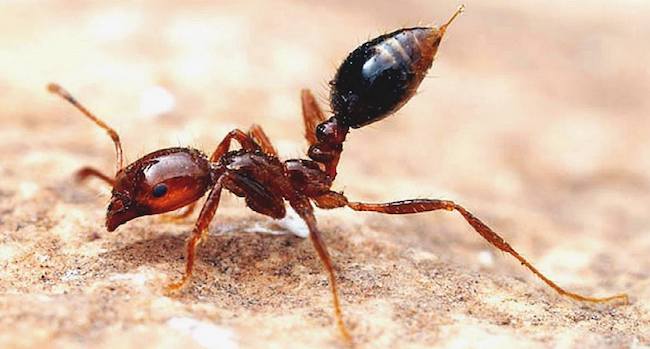
Image I 

Bite and Sting: So, get this: fire ants deliver an impressive coup de grâce because they bite and sting (Image J). Gasp!

Disturbed, as in an exhausted woman sleeping on their nest, fire ants grip the skin with paired mandibles, pierce the epidermis with stingers and deliver venom into the dermis (Anatomy Lesson #5, Claire’s Skin – Opals, Ivory and White Velvet)! Feet or legs are most often stung, usually after accidentally stepping on a fire ant mound. So, Claire was the perfect victim for a swinging-stinging fire ant soiree!
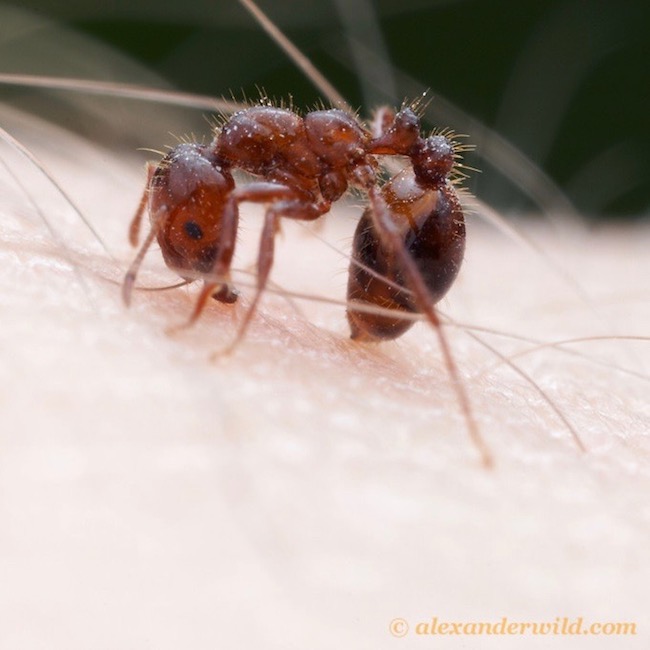
Image J 

And, should you choose to witness the little buggers in action, here is a fine example via YouTube:

What to do? Back at the island, Claire slaps and brushes the pests to dislodge them (Image K).

Is this a good idea? Some sources recommend killing fire ants by slapping them off your body, although they don’t die that easily. Others don’t recommend slapping because it further enrages the beasties. Probably best to pick them off or brush them away, although this is a challenge with clingly-Klingons, especially when they attack en masse!
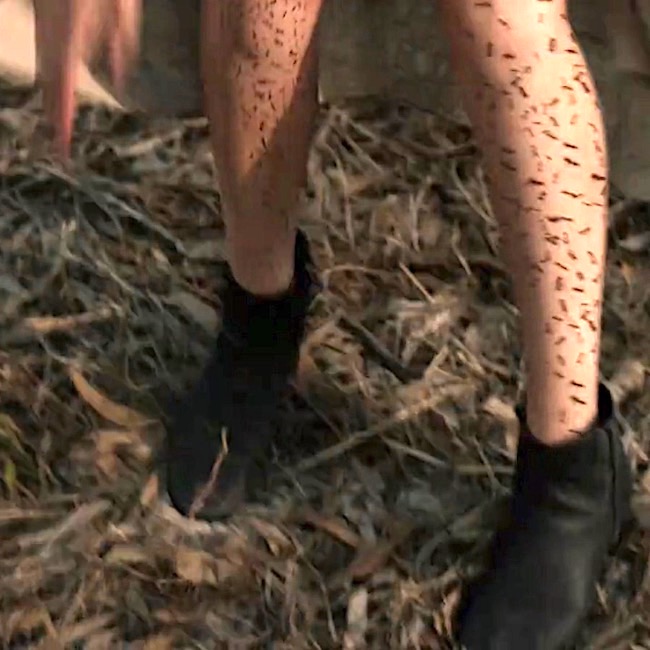
Image K

Things to do for Relief:

  • Elevate affected area – Nope! Claire canna stop to elevate her legs; she must keep moving to find help for Jamie and herself!
  • Bathe stings with soapy water – No soap, much less water, available for cleansing stings; our lass is dying of thirst, here!
  • Use a cold compress or ice – If only!
  • Take an antihistamine or apply a hydrocortisone cream – Not on 18th century Hispanola!

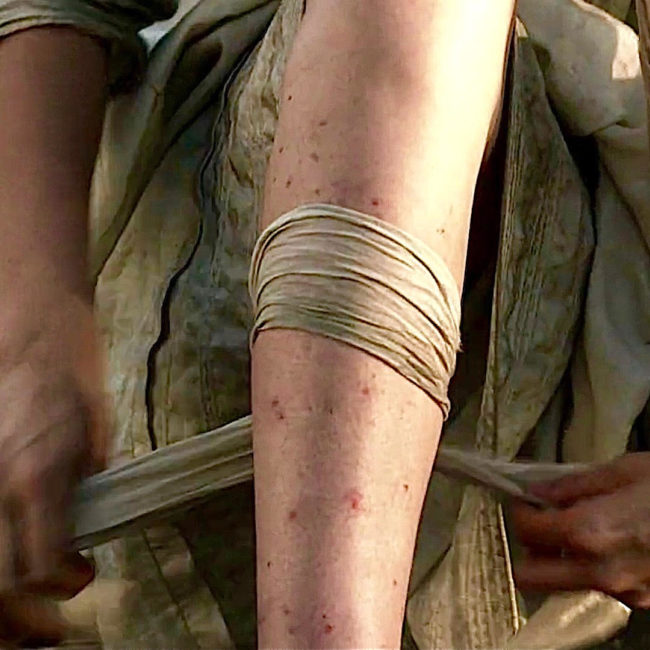
So, Claire does the next best thing! After slapping away her tormentors, she assesses the red lesions covering her splendid shanks (Anatomy Lesson #27, Colum’s Legs and Other Things, Too!). She rips strands of fabric (18th century shifts come in mighty handy – <G>) to wrap her limbs (Image L). This helps keep air away from the wounds thereby lessening skin irritability and protecting the bumps from further depredation as she trudges through rough tropical vegetation.
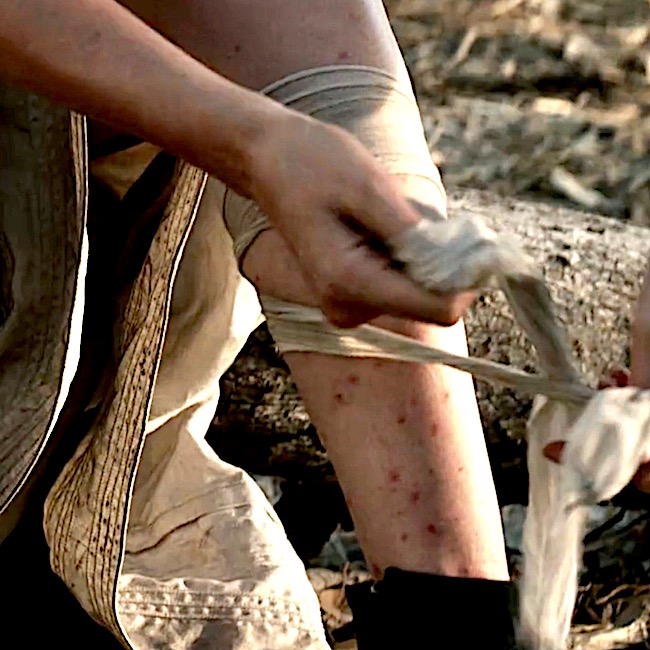
Image L 

Then What Happens? Usually fire ant stings cause small, itchy lumps which resolve within a few hours. But, occasionally, the lumps turn into blisters filled with a fluid that looks like pus. Such is the fate of Claire’s fiery stings.

Much later, dragging through the tropical forest, she checks her legs and, oh sweet Claire, what will Jamie say!!!!  Her red bumps have converted into swollen, fluid-filled pustules that itch (Image M)! The pus-like fluid is a mixture of dead cells – a local demolition derby caused by the venom. Although such an intense local reaction occurs less often, the pustules are very obtrusive and extremely uncomfortable!

Disoriented from lack of water, thoroughly traumatized and alone, Claire scratches the pustules. No, Claire, dinna do that! Scratching breaks the skin barrier, leaving underlying tissues vulnerable to secondary infection. Remember, your penicillin is far far away, floating on the Artemis with Big Red.
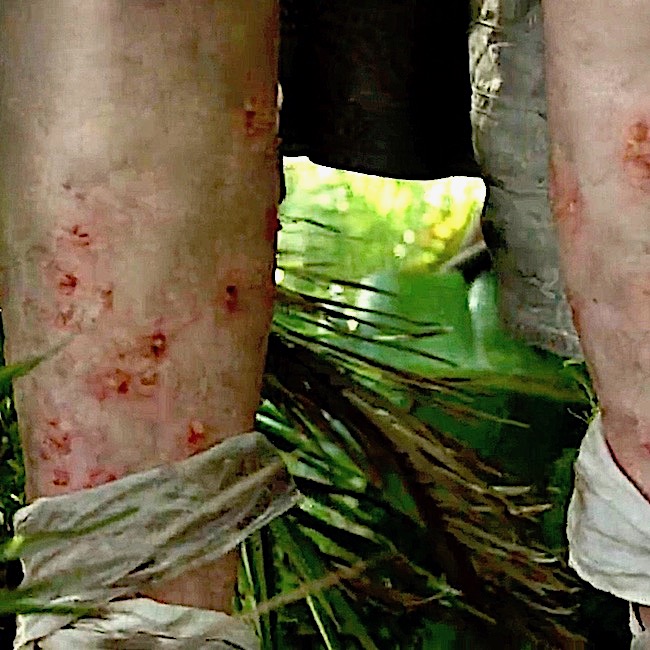
Image M 

After Ludo – bless his wee doggie heart – finds Claire on a path, she awakens tied to a bed, her legs covered with greenish matter and she is damned thirsty. Gimme water!

Prickly Mamacita ‘splains: “This was the only way to keep you from scratching.” As inhospitable as Mamacita is, she is spot-on about the scratching bit. The pustules are itchy and uncomfortable but, as mentioned above, scratching can induce secondary infection, even ulceration and scarring!

Green Poultice: I immediately thought of aloe vera when the green goo came into view – a plant that could offer some soothing relief. But, unfortunately, aloe vera was not introduced to Hispanola until the 19th century, 100 years in the future. So nada aloe for our suffering sassenach! Abiding history,  possibly a clay poultice or some other macerated plant matter might have been applied for relief. Whatever it is, the sting lesions resolve shortly and she resumes “earnestly seeking Jamie.” 

BTW, kudos to Father Fogden for exhibiting gentlemanly behavior while helping Claire to a seated position (Image N). Well done, Father! 
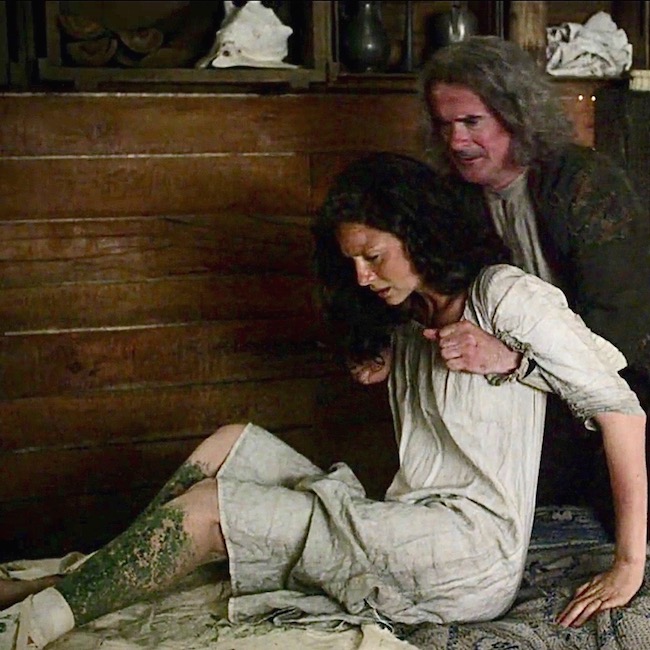
Image N 

True Story: Some years ago, I lived adjacent to Buffalo Bayou in Houston, Texas, where cutting grass often is an absolute necessity. One fine summer day, wearing shorts and halter, I was mowing. Industriously tamping out grass collected in the mower bag, I tucked it under my arm to re-zip. Yikes, my oxter suddenly was on fire! Hah! Well, not really. Rather, my arm pit was filled with a writhing mass of wee nasty fire ants. Rushing to the faucet, I tried washing them off. A bad idea, as the water irritated them even more. Like Claire, I finally brushed them from my abused pit with my free hand! 

There is good reason why these beasties are called fire ants – the wounded area burns and stings like the dickens! Soon, the burning gives way to serious itching. My stings never turned into the large pustules that Claire suffered, but, I now know that during the summer, fire ants develop the greatest load of venom and therefore the stings are largest and most painful.

Warning! Keep your distance from fire ant mounds!

Image O illustrates the side of a knee covered with multiple fire ant lesions, giving you a keen idea of pustules, courtesy of fire ants!

Moral to the Story: Be careful where you tamp your grass! <G> 
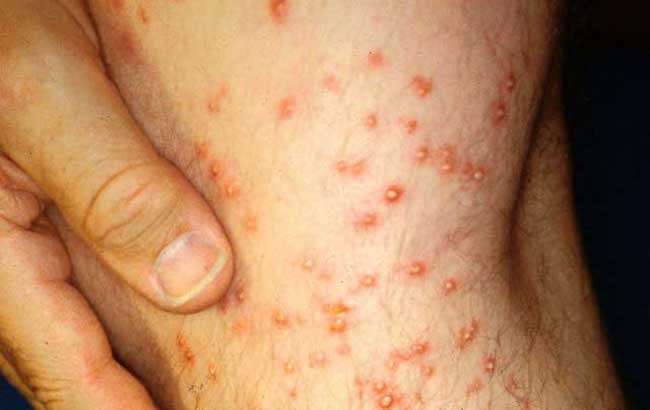
Image O 

Always Pests? Ants are routinely treated as pests because they don’t offer a lot of plusses. But, did you know they aid soil aeration and decomposition by digging tunnels and turning over the dirt? Further, in Africa and South America, ants provide surgical sutures. There, wound margins are pressed together and ants applied. The ant seizes the edges of the wound with its mandibles (jaws) and locks them in place. The body is pinched off but head and mandibles remain closed until the wound heals. 

George Washington Williams (Samuel L. Jackson) applied ant mandibles to Tarzan’s (Alexander Skarsgȯrd) bite wound, in the 2016 film, The Legend of Tarzan. Yep, those black bumps are ant heads and mandibles (Image P)! 

Image P 

So, in episode 311, Claire faced a formidable Formicidae foe in the form of tropical fire ants. Not only did her legs burn, the sting wounds could have become secondarily infected, ulcerated and scarred. Or worse, she might have experienced anaphylactic shock from the fire ant venom, with no Jamie to rescue her! 

The terrific ant scene was written for TV Outlander only, as it does not appear in Diana’s Voyager book. However, in this splendid book, stranded Claire encounters red-throated birds  (Portugese-man-of-war birds?), tiny purple crabs, fish that walk on pectoral fins and appear to have four eyes, and one “Lawrence Stern, Doctor of Natural Philosophy, of the Gesellschaft von Naturwissenschaft Philosophieren, Munich.” Diana always provides such imaginative detail, we readers feel as if we are there with Claire. Thank you, Diana!

Claire the Girl Scout: Now, I must close with a special note of praise for Claire; despite stinging legs, desperate thirst, exhaustion and being lost, like a responsible camper, the good lass took time to douse her bum fire with sand (Image Q).  A fine example to us all. Go, Smokey-the-Bear, Claire! 
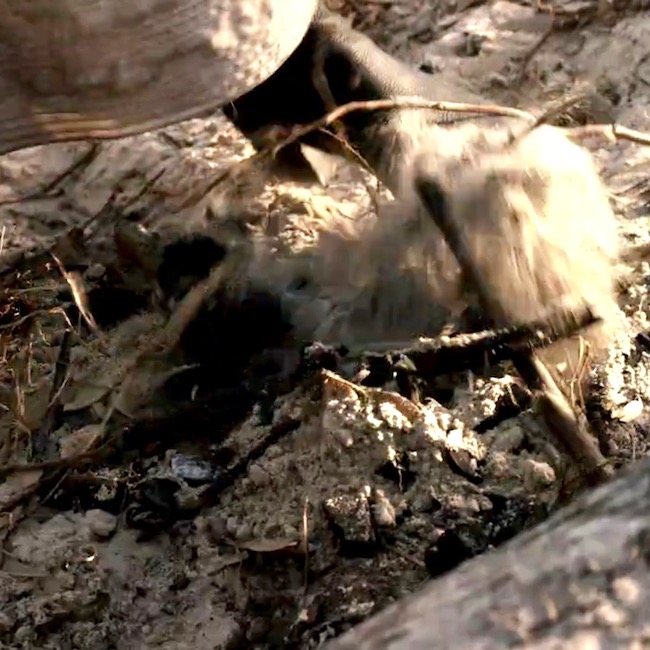
Image Q 

The deeply grateful,

Outlander Anatomist

Photo Creds: Starz, Outlander episode 311, Uncharted (Images A-F, H, K-N, Q); www.alexanderwild.com (Image J – fire ant stinging); www.en.wikipedia.org (Image G – ant node); www.bluebird-electric.net (Image I – fire ant stinger); www.healcure.org (Image O – fire ant stings); www.wegotthiscovered.com (Image P – Tarzan)
Anatomy Lesson #54 Typhoid!!!

Greetings, all anatomy students! Today’s lesson explores Clarie’s Conundrum as presented in Starz episode 309, The Doldrums, and Starz episode 310, Heaven and Earth. Turns out, typhoid is not only interesting but timely. Today, western countries report so few cases of typhoid that it has largely faded from our collective consciousness. However, travelers to some parts of the world should beware and be aware!

The Doldrums has Claire confronted with threatening news! British man-of-war, the Porpoise, has hailed the Artemus, demanding she “heave” to (Ha ha! Shades of Jamie!) and be boarded. Captain/acting Captain/formerly third lieutenant Thomas Leonard needs a ship surgeon, post haste!

Described by Herself in Voyager book:

“You are the captain of this ship?” The Englishman’s eyes were red-rimmed from tiredness, but he picked Raines from the crowd of grim-faced hands at a glance. “I am acting captain Thomas Leonard, of His Majesty’s ship Porpoise. For the love of God,” he said, speaking hoarsely, “have you a surgeon aboard?”

Retiring to Captain Raine’s quarters, Leonard declares that Porpoise’s crew is plagued with Ship Fever!

  • 100 men are ill, 80 have died
  • griping pains in the belly
  • terrible vomiting (is there any other kind?)
  • fever
  • belly rash (via Claire’s prompting)
  • blazing shites… What? Gah!

Again, Voyager book offers a vastly more graphic description of the felled Porpoise crew:

Leonard blinked once, but then took a deep breath and nodded. “Yes. Well, it seems to start with griping pains in the belly, and a terrible flux and vomiting. The afflicted men complain of headache, and they have considerable fever. They …”

“Do some of them have a rash on their bellies?” I interrupted. He nodded eagerly. “They do. And some of them bleed from the arse as well. Oh, I beg pardon, ma’am,” he said, suddenly flustered.

With Supercargo overseeing his precious cargo, Sassenach Surgeon curtly dispenses  Rules to Captain Porpoise (Image A): 

  • You should have stayed on your own ship!
  • Do not touch anyone while on board!

Image A

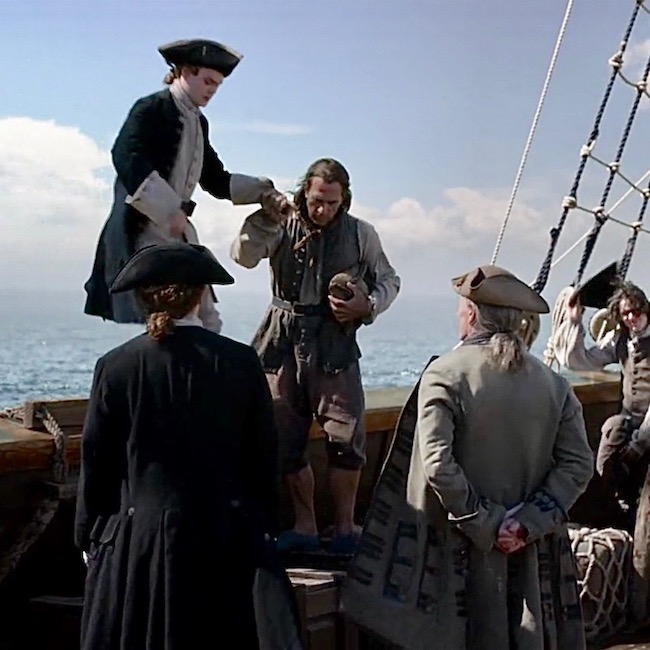
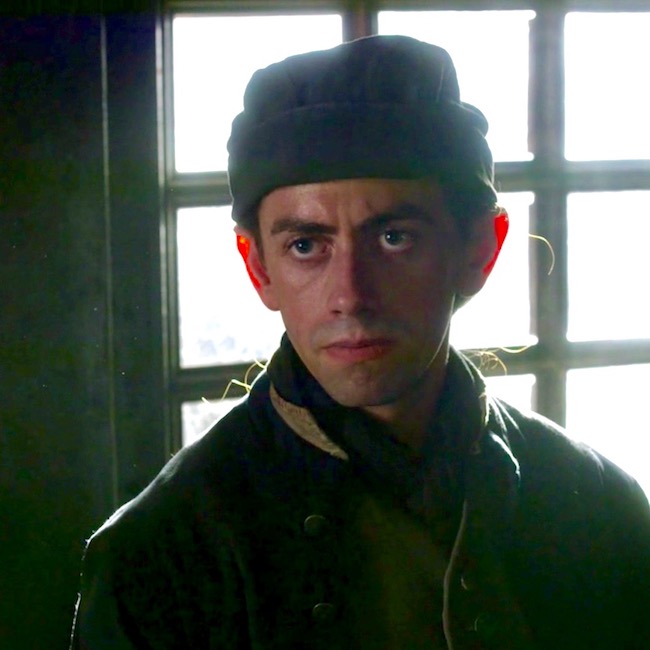
Erm, too late Dr. Claire….. Acting-Capitan Leonardo not only boarded the Artemis, but accepted the hand of Mr. Warren (Image B)!!! 

Oh, dear –  so much for Ben Franklin’s sage advice:  “an ounce of prevention is worth a pound of cure”!

Image B

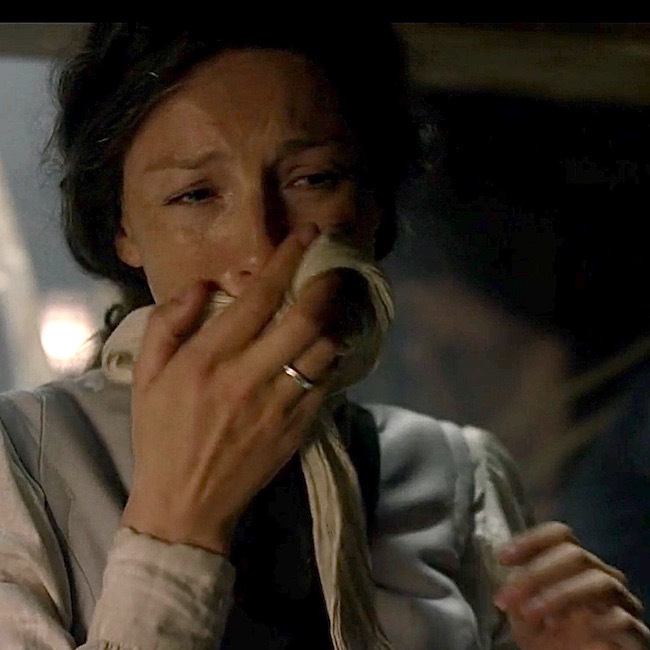
Soon, Claire is in the belly of the Porpoise, ripe with the foul odors of spilled bodily fluids –  the ship, not Claire! Such sounds and smells would have felled a lesser lass than our Daring Doctor (Image C).

Claire describes the gory scene in vivid detail from Voyager book:

It was dark in the tween-decks, the confined space lit by small oil lamps that hung from the ceiling, swaying gently with the rise and fall of the ship,… The stench was overpowering. Worse than unwashed seamen was the reek of vomitus and the ripe, throat-clogging smell of blood-streaked diarrhea, which liberally spattered the decking beneath the hammocks… My shoes stuck to the deck, coming away with a nasty sucking noise as I made my way cautiously into the area.

Image C 

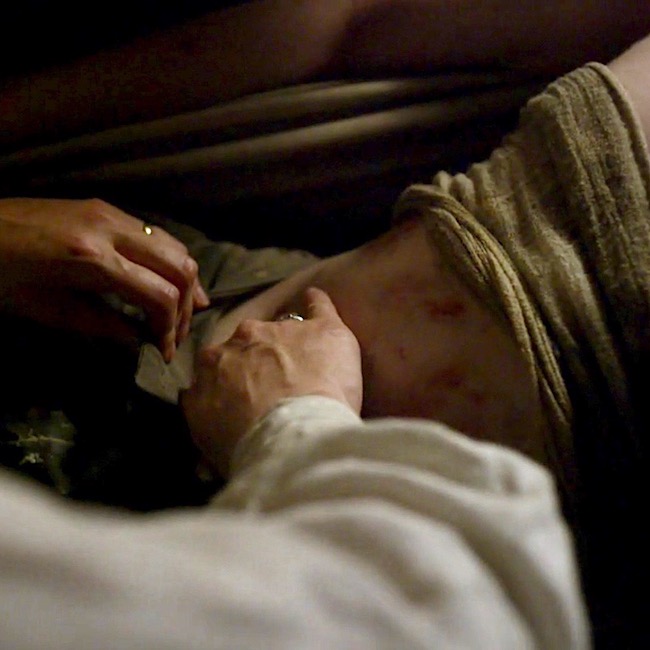
Approaching a felled seaman, she asks permission to touch. “Aye, mum,” he mutters,  and Claire gently lifts his filthy wrap to find a belly covered with flat rose-colored spots. Such rose spots can appear on the abdominal skin but also on the chest.

Next, she presses fingers into his lower abdomen (Image D). EEK! What is she doing? Well, she is not being fresh. She could be checking inguinal lymph nodes to rule in or out, bubonic plague. Or, she might be pressing down over his cecum (Anatomy Lesson #48, The Big Guy!) or small bowel to gauge bowel pain. In case you do not ken, the cecum (caecum) is the first segment of the large intestine. The suffering seaman from Voyager book:

The occupant groaned and turned away his face as the light struck him. He was flushed with fever, and his skin hot to the touch. I pulled his shirt up and felt his stomach; it too was hot, the skin distended and hard. As I prodded gently here and there, the man writhed like a worm on a hook, uttering piteous groans. I pulled back the eyelid; his pupil shrank in the light, leaving his eyes brown and red-rimmed with suffering.

Image D 

Her survey of the ill complete, Claire delivers the sad diagnosis to Captain Thomas Leonard (Image E). His crew has typhoid, not ship fever! 

She explains to Captain Leonard the vagaries of typhoid symptoms (Voyager book):

That seaman didn’t have the characteristic belly rash, nor the next, but the third one did. The light red rosettes were plain on the clammy white skin. I pressed firmly on one, and it disappeared, blinking back into existence a moment later, as the blood returned to the skin

“It’s typhoid,” I told the Captain.

Devoted Doc that she is, Considerate-Claire offers to stay aboard the Porpoise a wee bit longer to instruct healthy crew members on how to manage and contain the epidemic.

Image E

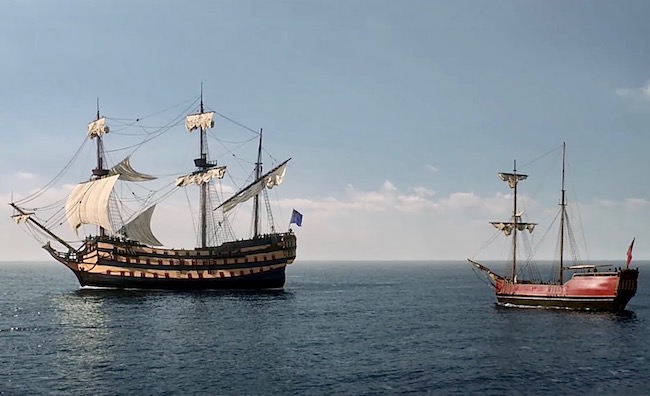
Sure, thinks Tricky-Thomas, stay aboard just a wee bit and off we go! Once we are done with Mistress Claire, we’ll dump her on Jamaica!  Skunky Captains Leonard and Raines “porpoisely” strike an under-the-sails deal, and Claire is swept away – abducted against her will! Sails unfurl and the ship flees (Image F). Ta ta, Artemus!

Claire speaks her mind about being swept away in Voyager book:

I burst onto the deck to find a cloud of sails overhead, set and drawing, and the Artemis falling rapidly behind us. Captain Leonard was standing by the helmsman, looking back to the Artemis, as the master bawled commands to the men overhead. “What are you doing?” I shouted. “You bloody little bastard, what’s going on here?”

Apologists will say Captain Leonard had no other choice than to abduct Claire but I don’t buy that. Make no mistake, he had other options, he just chose the one that suited him and his ship the best. Wait until Jamie gets hold of him….. yikes!!!!

Image F 

Lesson Time!  Notebooks out – pencils sharpen. Let’s go, students! <G>

What is Typhoid:  Terrible Typhoid, a.k.a. typhoid fever, is a highly contagious bacterial infection!

What causes Typhoid: A fuzzy-looking bacterium known as Salmonella typhi causes typhoid fever. First, it attacks small intestines and then enters the bloodstream and disperses through liver, spleen and bone marrow (Image G – purple rods). The long strings seen in Image G are flagella, motile, whip-like appendages that propel the organism.

Unfortunately, some people (3-5%) have no idea they have had typhoid but continue to carry the bacterium, harbored in protective cells (macrophages) and other body sites (Anatomy Lesson #49, Our Liver – The Life Giver!). They may have a brief, mild flu-like bout, dismissing it as insignificant. Although asymptomatic, they can spread the disease to others!

Image G 

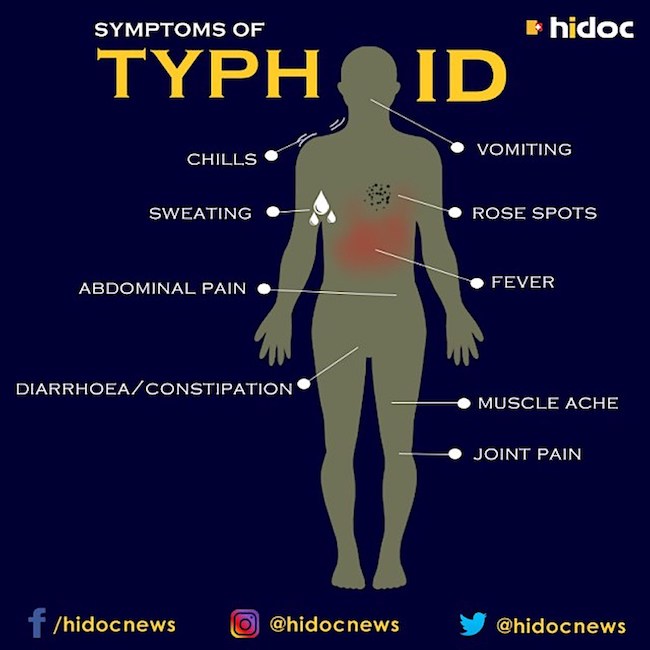
Symptoms of Typhoid: A “nice” visual of typhoid symptoms is summarized in Image H. Captain Leonard accurately reported five of these nine symptoms in his crew. 

Notice one seemingly paradoxical symptom? How is it that typhoid produces either “blazing” shites or constipation? Well…

Different strokes for different folks. Truth!

Image H

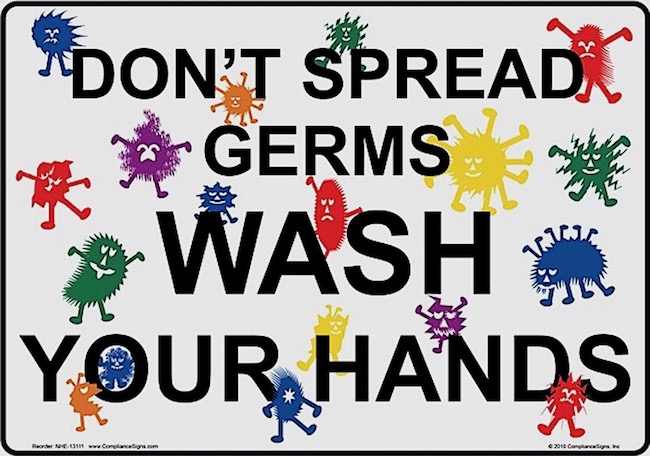
How is Typhoid Spread? Although typhoid is caused by a bacterium, it is transmitted among people by eating food or drinking water contaminated with waste from an infected person. Yuk!  Poor sanitation, bad drinking water and awful personal hygiene help spread the disease (Image I).

Also, only humans can contract typhoid. As there are no animal vectors for this disease, only humans can spread the disease.  If a person becomes infected, they should not prepare food for others until the infection is proven to be cured (via blood or stool tests)!

Good mamas taught us – wash those hands!

Not only does Claire identify the cagy culprit, she is clear about how it is spread. Again, from Voyager book:

Caused by a bacillus of the Salmonella genus, it was normally spread by ingestion of the bacillus, carried on hands contaminated by urine or feces.

Image I 

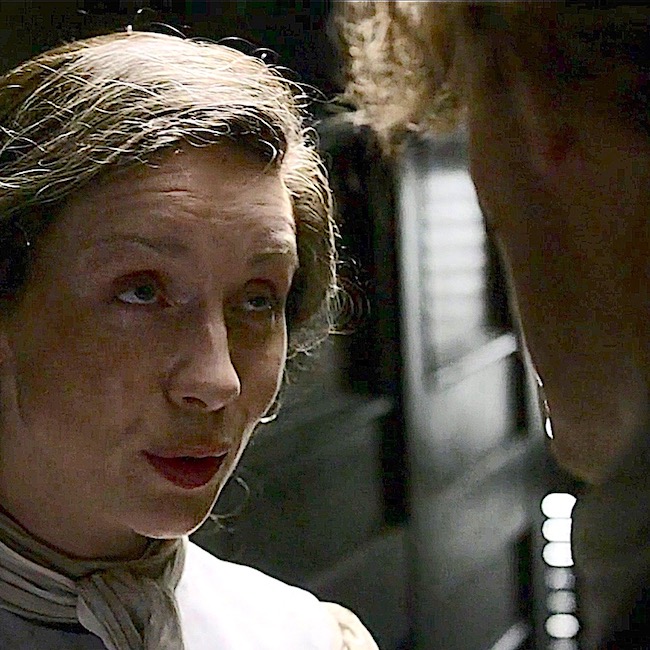
Are Typhoid and Typhus Identical? No! Claire correctly ‘splains to Jame: typhoid and typhus are not the same disease (Image J).

Oh, really, Claire? Then, why are the names soooo similar?

Because: the word “typhoid” was coined in the early 19th century; derived from the English typhus + oid meaning “to look like.” Ergo, typhoid literally means “typhus-like.” Why? Because both diseases share similar symptoms making them difficult to distinguish. Nevertheless, these are distinct diseases caused by different bacteria. And, typhoid is spread by contaminated food and water, whereas typhus is spread by body lice, fleas and chiggers! Feeling itchy? Scratch! Scratch!

These similar symptoms led Porpoise’s now deceased ship surgeon to diagnose its crew with ship fever, an old name for epidemic typhus (spread by body lice), which was fairly common aboard old sailing ships.

Image J 

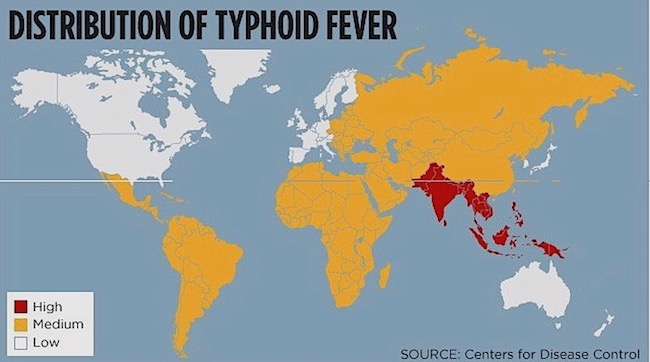
Travel and Typhoid: Today, those who travel to certain countries may be at risk for exposure to typhoid. If journeys take you to red and/or orange regions shown in Image K, a typhoid vaccine is recommended. The CDC (https://wwwnc.cdc.gov/travel/diseases/typhoid) has great advice regarding travel to regions where cases of typhoid are high.

But, be aware! The typhoid vaccine isn’t permanent! The vaccine should be administered a month before intended travel with boosters every two to three years for repeat travelers to at-risk regions.

Thus, although Dr. Claire is good-to-go on the Porpoise, after a few short years, her immunity will wane, as does ours.

In the event that unvaccinated individuals or those with waning immunity contract typhoid, antibiotics to the rescue! About ten antibiotic compounds are used to treat typhoid.

Warning! Lest we become complacent, Salmonella typhi is developing antibiotic resistance! Thus, it is best not to risk traveling unvaccinated.

Image K 

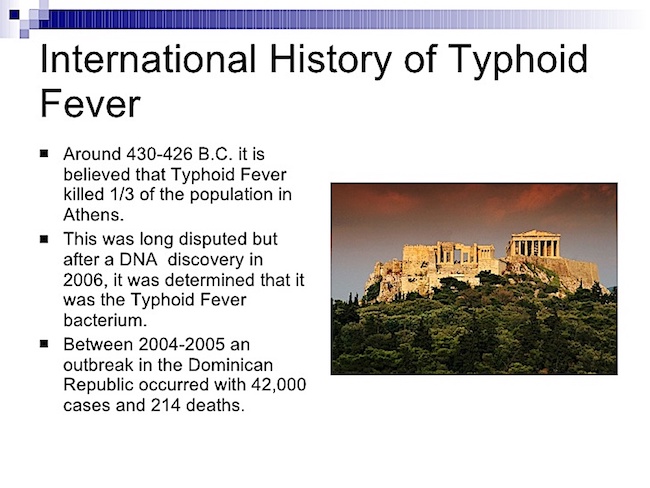
History of Typhoid: History is chock-full of typhoid fever; its sticky fingers have plagued humans for a very long time.

  • In 430 BCE, typhoid likely killed one-third of the population of Athens.
  • Probably destroyed the English colony of Jamestown, Virginia
  • From 1607-1624, killed more than 6,000 New World settlers.
  • During American Civil War, killed 81,360 Union soldiers, far more than died of battle wounds.
  • During Spanish–American War, killed more soldiers than battle wounds.
  • Almost killed Edward VII of England (1871).
  • English novelist, Arnold Bennett died of typhoid, two months after drinking a glass of water in a Paris hotel to prove it was safe!
  • Killed William Wallace Lincoln, 11 y.o. son of President Abraham Lincoln.
  • 2014 data shows 21 million worldwide cases annually with 222,000 deaths.

In the early 20th Century, western countries mounted public campaigns to teach the benefits of good hygiene, dramatically curtailing the incidence of typhoid (Image L). Public water works helped provide safe drinking water. Some students may not be thrilled to read this, but chlorination of drinking water has led to dramatic decreases in the transmission of typhoid fever in UK, US and other western countries. Today the US reports only about 400 cases per year; Great Britain, less than 100.

Image L

Mary-Mary Quite Contrary: Let’s turn to the tale of notorious, Mary Mallon (1907)! Better known as Typhoid Mary, she was the first carrier of typhoid to be identified in the US.

Mary was employed as a private cook in NY state (Image M). Over the course of a few short years, she infected 53 people and caused 3 deaths! Why? Because, health officials argued, Salmonella typhi took up “squatters rights” in Mary’s gallbladder – so, she continuously shed bacteria into the food she prepared for others! Eek! 

Her personal habits contributed to her “trail of tears:”

  • She eschewed hand washing! Considered the practice unnecessary.
  • She declined to use soap – again, not interested.
  • She loved serving desserts, such as fresh sliced peaches over ice cream (cooking kills the bacterium).
  • When employers fell ill, she moved on without a forwarding address.

As if this wasn’t enough, Mary had major authority issues. After a sanitary engineer tracked her down, she was given several options but refused all:

  • She decline cholecystectomy (gallbladder removal) – the bacterial reservoir (nowadays, we know the bacteria also harbors in other body sites).. 
  • She declined to live in permanent quarantine. 
  • She promised not to work as a cook but resumed as soon as health officials looked away.
  • She assumed aliases and slipped away, causing more infections. 

Apprehended again, she spent the last 26 years of her life in quarantine. To the very end she belligerently denied she caused typhoid because she, herself, was healthy. 

Some modern-era folks have since questioned the ethics of the NY Board of Health, but before we apply our current sensibilities to early 20th century health practices, we might recall that antibiotics against typhoid were not available; Fleming (he was Scottish) didn’t discover penicillin until 1929 and it really didn’t become used for medical treatment until the 1940s.

Image M 

Back to the Porpoise: Let’s return to HMS Porpoise, this time to Starz episode 310, Heaven and Earth

Claire, sleuthing the captain’s log book,  informs Captain Leonard that Porpoise has its own kitchen carrier! Typhoid Joe (Howard), working in the galley, outsources the disease in the crew’s food and drink! 

Like Typhoid Mary, he cries “I am fine and dandy!” (Image N). No problemo – madam!

Cranky Cook Cosworth jumps into the fray – he doesn’t want his grub-gopher quarantined, especially on the word of a cursed woman who speaks gibberish! He points out the obvious: men are still dying despite her efforts, to which Clare crisply comments:

Men are still dying because the source of the disease is serving the food! 

Image N

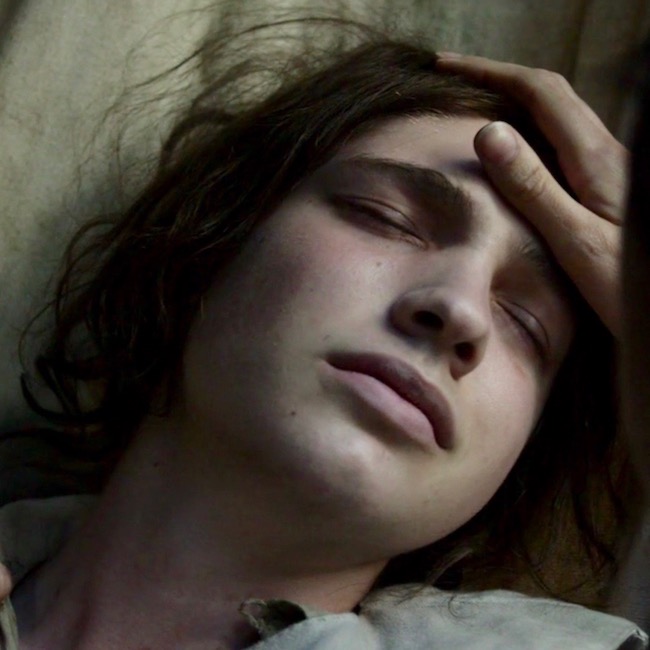
Bottom line, Joe-the-foe is quarantined and new cases cease, except for one. Claire’s boy-champion, Elias Pound, passes away in Claire’s arms (Image O). 

Herself recorded the sad event in Voyager book:

Elias Pound died of the typhoid four days later. It was a virulent infection; he came to the sickbay heavy-eyed with fever and wincing at the light; six hours later he was delirious and unable to rise. The next dawn he pressed his cropped round head against my bosom, called me “Mother,” and died in my arms.

Her sorrow, and ours, is profound! He was a lovely lad!

?Sing me a song of a lad that is gone…………………..!?


Image O

Let the take home message for today’s lesson be:

  • Typhoid is a nasty disease that, to this day, remains a killer-at-large.
  • This is an indiscriminate disease that strikes young, hale, frail, the middle-aged, the old, the pregnant, etc.
  • Obtain a typhoid vaccine before traveling to countries with iffy water supply, food sources, and sanitation.
  • People can be carriers of typhoid while appearing completely asymptomatic.
  • Antibiotics can cure typhoid but strains are becoming resistant.

Let’s stay vigilant and healthy, people!

A deeply grateful,

Outlandish Anatomist

Photo Creds: Starz Outlander episode 03×09, The Doldrums (Images A, B, C, D, E, F, J); Starz Outlander episode 03×10, Heaven and Earth (Images N, O); www.cnn.com (Image K); www.compliancesigns.com (Image I); www.dovemed.com (Image G); www.hidoc.com (Image H); www.slideshare.com (Image L); www.youtube.com (Image M)